
药物难治性癫痫中大脑半球切除术与偏瘫的相关性
Correlation between Hemispherectomy and Hemiparesis in Drug Resistant Epilepsy.
作者信息
Mashael Al Khateeb, Maryam Haris, Ayesha Razack Raidah
机构信息
Department of Neurosciences, King Faisal Specialist Hospital and Research Center, Riyadh, Saudi Arabia.
Alfaisal University, College of Medicine, Riyadh, Saudi Arabia.
出版信息
J Epilepsy Res. 2021 Jun 30;11(1):32-38. doi: 10.14581/jer.21005. eCollection 2021 Jun.
BACKGROUND AND PURPOSE
Refractory epilepsy is when seizures are unresponsive to two or more medications. Hemispherectomy, one of the treatment options, is the complete removal or functional disconnection of a cerebral hemisphere. Hemiparesis, a symptom of epilepsy, is defined as weakness of one side of the body. Patients with refractory epilepsy, who experience extreme seizure frequency, are subjected to hemispherectomy. This study focuses on finding the correlation between hemispherectomy and hemiparesis, discovering a pattern in its severity levels before and after surgery.
METHODS
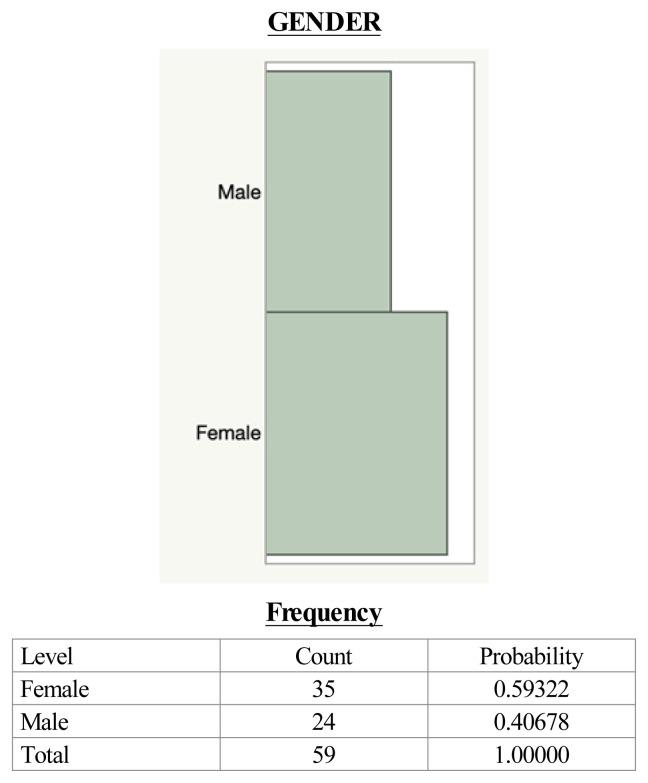
Data was collected from 59 epileptic patients suffering from refractory epilepsy, who underwent hemispherectomy, at the King Faisal Specialist Hospital and Research Centre, from 1998 to 2014. Each patient was monitored over a period of 1-year post-surgery. In this study, we wanted to further explore the correlation between hemispherectomy and hemiparesis.
RESULTS
Upon analyzing the sample size, the level of hemiparesis pre and post hemispherectomy remained the same for 32 patients, of which 13 patients had mild levels pre-surgery and 19 patients had moderate to severe levels pre-surgery. However, 20 of the patients who had moderate to severe levels of hemiparesis before the surgery had either no hemiparesis or a mild level after surgery, which signified an improvement in their severity level. On the other hand, seven of the patients went from having no hemiparesis before the surgery to having moderate or severe levels of hemiparesis post-surgery. Although the results were clinically significant, they were not statistically significant as the -value obtained was 0.31.
CONCLUSIONS
After analyzing the results, it can be concluded that hemispherectomy does decrease the severity of hemiparesis in an epileptic patient, thereby improving his/her quality of life drastically.
背景与目的
难治性癫痫是指癫痫发作对两种或更多种药物无反应。大脑半球切除术是治疗选择之一,即完全切除或功能性离断一个大脑半球。偏瘫是癫痫的一种症状,定义为身体一侧的无力。经历极端癫痫发作频率的难治性癫痫患者会接受大脑半球切除术。本研究着重于找出大脑半球切除术与偏瘫之间的相关性,发现手术前后其严重程度水平的模式。
方法
收集了1998年至2014年在费萨尔国王专科医院和研究中心接受大脑半球切除术的59例难治性癫痫患者的数据。每位患者在术后1年期间接受监测。在本研究中,我们想进一步探究大脑半球切除术与偏瘫之间的相关性。
结果
分析样本量后,32例患者大脑半球切除术前和术后的偏瘫水平保持不变,其中13例患者术前为轻度水平,19例患者术前为中度至重度水平。然而,术前有中度至重度偏瘫水平的20例患者术后要么没有偏瘫,要么为轻度水平,这表明其严重程度有所改善。另一方面,7例患者从术前无偏瘫变为术后有中度或重度偏瘫水平。尽管结果具有临床意义,但由于获得的P值为0.31,所以在统计学上不显著。
结论
分析结果后可以得出结论,大脑半球切除术确实会降低癫痫患者偏瘫的严重程度,从而极大地改善其生活质量。



 Zotero 插件