
植物源生物活性皂苷在胶体多相食品体系中的最新进展与应用。
Recent Advances and Applications of Plant-Based Bioactive Saponins in Colloidal Multiphase Food Systems.
机构信息
Laboratory of Food Proteins and Colloids, School of Food Science and Engineering, Guangdong Province Key Laboratory for Green Processing of Natural Products and Product Safety, South China University of Technology, Guangzhou 510640, China.
Overseas Expertise Introduction Center for Discipline Innovation of Food Nutrition and Human Health (111 Center), Guangzhou 510640, China.
出版信息
Molecules. 2021 Oct 8;26(19):6075. doi: 10.3390/molecules26196075.
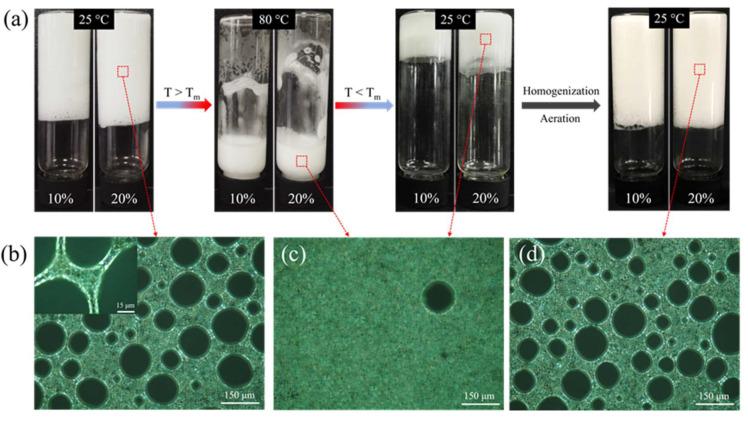
The naturally occurring saponins exhibit remarkable interfacial activity and also possess many biological activities linking to human health benefits, which make them particularly attractive as bifunctional building blocks for formulation of colloidal multiphase food systems. This review focuses on two commonly used food-grade saponins, Quillaja saponins (QS) and glycyrrhizic acid (GA), with the aim of clarifying the relationship between the structural features of saponin molecules and their subsequent self-assembly and interfacial properties. The recent applications of these two saponins in various colloidal multiphase systems, including liquid emulsions, gel emulsions, aqueous foams and complex emulsion foams, are then discussed. A particular emphasis is on the unique use of GA and GA nanofibrils as sole stabilizers for fabricating various multiphase food systems with many advanced qualities including simplicity, ultrastability, stimulability, structural viscoelasticity and processability. These natural saponin and saponin-based colloids are expected to be used as sustainable, plant-based ingredients for designing future foods, cosmetics and pharmaceuticals.
天然存在的皂苷表现出显著的界面活性,并且具有许多与人类健康益处相关的生物活性,这使得它们作为胶体多相食品系统配方的双功能构建块特别有吸引力。本综述重点介绍两种常用的食品级皂苷,Quillaja 皂苷(QS)和甘草酸(GA),旨在阐明皂苷分子的结构特征与其随后的自组装和界面性质之间的关系。然后讨论了这两种皂苷在各种胶体多相系统中的最新应用,包括液体乳液、凝胶乳液、水基泡沫和复杂乳液泡沫。特别强调的是,GA 和 GA 纳米纤维作为唯一稳定剂在制备各种多相食品系统中的独特用途,这些系统具有许多先进的特性,包括简单性、超稳定性、可刺激性、结构粘弹性和可加工性。这些天然皂苷和基于皂苷的胶体有望作为可持续的、基于植物的成分,用于设计未来的食品、化妆品和药品。


 Zotero 插件