
SARS-CoV-2 的刺突蛋白通过整合素 α5β1 和 NF-κB 信号诱导血管内皮炎症。
The spike protein of SARS-CoV-2 induces endothelial inflammation through integrin α5β1 and NF-κB signaling.
机构信息
Instituto de Neurobiología, Universidad Nacional Autónoma de México (UNAM), Querétaro, México.
Instituto de Neurobiología, Universidad Nacional Autónoma de México (UNAM), Querétaro, México.
出版信息
J Biol Chem. 2022 Mar;298(3):101695. doi: 10.1016/j.jbc.2022.101695. Epub 2022 Feb 7.
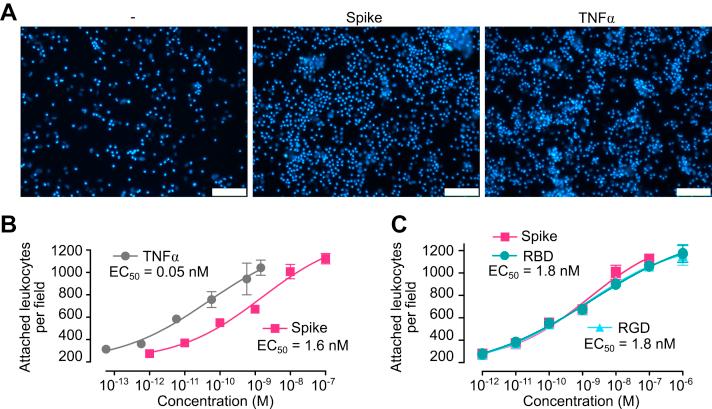
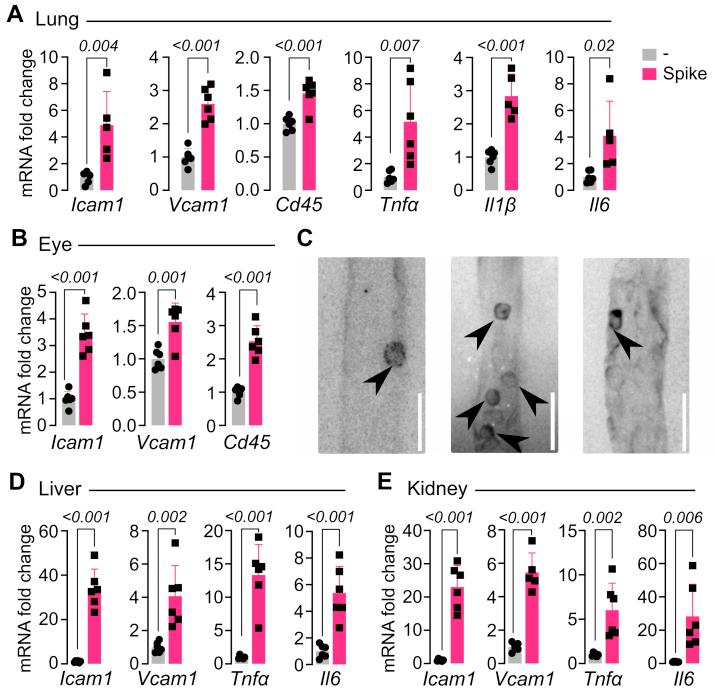
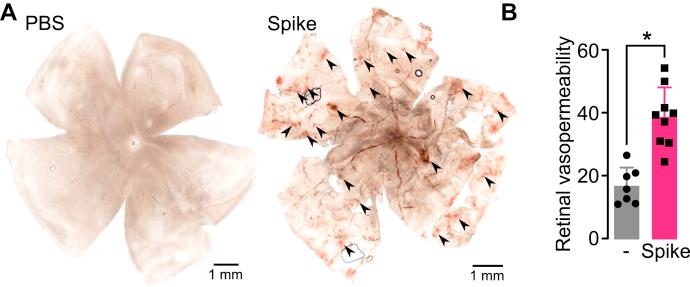
Vascular endothelial cells (ECs) form a critical interface between blood and tissues that maintains whole-body homeostasis. In COVID-19, disruption of the EC barrier results in edema, vascular inflammation, and coagulation, hallmarks of this severe disease. However, the mechanisms by which ECs are dysregulated in COVID-19 are unclear. Here, we show that the spike protein of SARS-CoV-2 alone activates the EC inflammatory phenotype in a manner dependent on integrin ⍺5β1 signaling. Incubation of human umbilical vein ECs with whole spike protein, its receptor-binding domain, or the integrin-binding tripeptide RGD induced the nuclear translocation of NF-κB and subsequent expression of leukocyte adhesion molecules (VCAM1 and ICAM1), coagulation factors (TF and FVIII), proinflammatory cytokines (TNFα, IL-1β, and IL-6), and ACE2, as well as the adhesion of peripheral blood leukocytes and hyperpermeability of the EC monolayer. In addition, inhibitors of integrin ⍺5β1 activation prevented these effects. Furthermore, these vascular effects occur in vivo, as revealed by the intravenous administration of spike, which increased expression of ICAM1, VCAM1, CD45, TNFα, IL-1β, and IL-6 in the lung, liver, kidney, and eye, and the intravitreal injection of spike, which disrupted the barrier function of retinal capillaries. We suggest that the spike protein, through its RGD motif in the receptor-binding domain, binds to integrin ⍺5β1 in ECs to activate the NF-κB target gene expression programs responsible for vascular leakage and leukocyte adhesion. These findings uncover a new direct action of SARS-CoV-2 on EC dysfunction and introduce integrin ⍺5β1 as a promising target for treating vascular inflammation in COVID-19.
血管内皮细胞 (ECs) 形成了血液和组织之间的关键界面,维持着全身的内稳态。在 COVID-19 中,EC 屏障的破坏导致水肿、血管炎症和凝血,这是这种严重疾病的标志。然而,EC 失调的机制在 COVID-19 中尚不清楚。在这里,我们表明,SARS-CoV-2 的刺突蛋白本身就可以通过整合素 ⍺5β1 信号依赖性方式激活 EC 的炎症表型。用全长刺突蛋白、其受体结合域或整合素结合三肽 RGD 孵育人脐静脉 EC,可诱导 NF-κB 核转位,随后表达白细胞黏附分子 (VCAM1 和 ICAM1)、凝血因子 (TF 和 FVIII)、促炎细胞因子 (TNFα、IL-1β 和 IL-6) 和 ACE2,以及外周血白细胞的黏附和 EC 单层的高通透性。此外,整合素 ⍺5β1 激活抑制剂可阻止这些作用。此外,这些血管作用在体内发生,如静脉内给予刺突蛋白会增加肺、肝、肾和眼组织中 ICAM1、VCAM1、CD45、TNFα、IL-1β 和 IL-6 的表达,以及玻璃体内注射刺突蛋白会破坏视网膜毛细血管的屏障功能。我们认为,刺突蛋白通过其受体结合域中的 RGD 基序与 EC 中的整合素 ⍺5β1 结合,激活 NF-κB 靶基因表达程序,导致血管渗漏和白细胞黏附。这些发现揭示了 SARS-CoV-2 对 EC 功能障碍的新的直接作用,并将整合素 ⍺5β1 作为治疗 COVID-19 中血管炎症的有前途的靶点。





 Zotero 插件