
西尼罗河病毒感染的脑切片培养模型中小胶质细胞耗竭导致病毒滴度增加和细胞死亡。
Depletion of Microglia in an Brain Slice Culture Model of West Nile Virus Infection Leads to Increased Viral Titers and Cell Death.
机构信息
Department of Immunology and Microbiology, University of Colorado, Aurora, Colorado, USA.
Department of Neurology, University of Colorado, Aurora, Colorado, USA.
出版信息
Microbiol Spectr. 2022 Apr 27;10(2):e0068522. doi: 10.1128/spectrum.00685-22. Epub 2022 Apr 12.
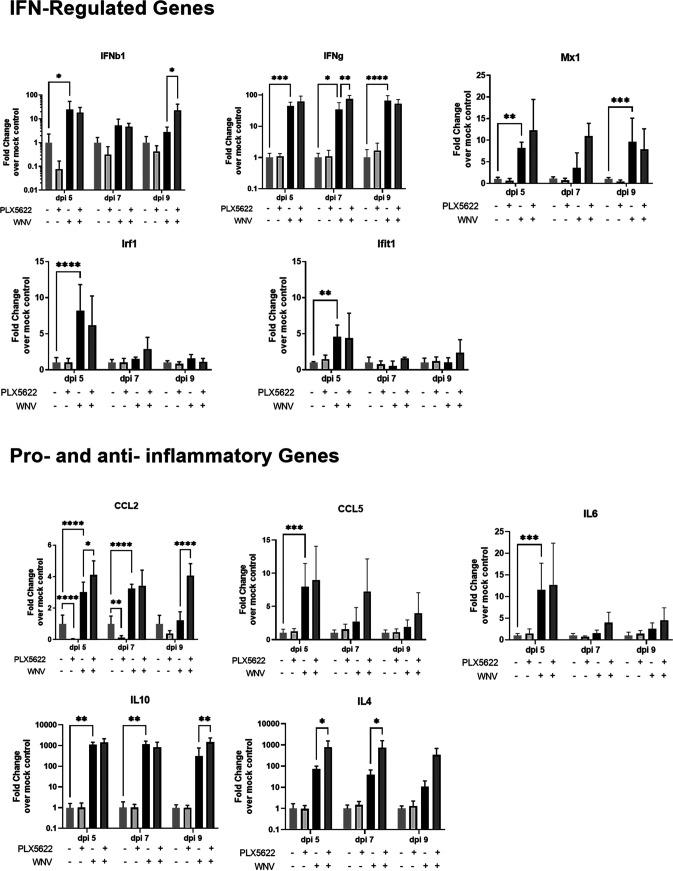
West Nile virus (WNV) is a major cause of viral encephalitis in the United States. WNV infection of the brain leads to neuroinflammation characterized by activation of microglia, the resident phagocytic cells of the central nervous system (CNS). In this study, depletion of CNS microglia using the CSF1R antagonist PLX5622 increased the viral load in the brain and decreased the survival of mice infected with WNV (strain TX02). PLX5622 was also used in brain slice cultures (BSCs) to investigate the role of intrinsic neuroinflammatory responses during WNV infection. PLX5622 effectively depleted microglia (>90% depletion) from BSCs resulting in increased viral titers (3 to 4-fold increase in PLX5622-treated samples) and enhanced virus-induced caspase 3 activity and cell death. Microglia depletion did not result in widespread alterations in cytokine and chemokine production in either uninfected or WNV infected BSCs. The results of this study demonstrated how microglia contribute to limiting viral growth and preventing cell death in WNV infected BSCs but were not required for the cytokine/chemokine response to WNV infection. This study highlighted the importance of microglia in the protection from neuroinvasive WNV infection and demonstrated that microglia responses were independent of WNV-induced peripheral immune responses. WNV infections of the CNS are rare but can have devastating long-term effects. There are currently no vaccines or specific antiviral treatments, so a better understanding of the pathogenesis and immune response to this virus is crucial. Previous studies have shown microglia to be important for protection from WNV, but more work is needed to fully comprehend the impact these cells have on neuroinvasive WNV infections. This study used PLX5622 to eliminate microglia in an brain slice culture (BSC) model to investigate the role of microglia during a WNV infection. The use of BSCs provided a system in which immune responses innate to the CNS could be studied without interference from peripheral immunity. This study will allow for a better understanding of the complex nature of microglia during viral infections and will likely impact the development of new therapeutics that target microglia.
西尼罗河病毒(WNV)是美国病毒性脑炎的主要病因。WNV 感染大脑会导致神经炎症,其特征是小胶质细胞(中枢神经系统(CNS)的常驻吞噬细胞)的激活。在这项研究中,使用 CSF1R 拮抗剂 PLX5622 耗尽中枢神经系统中的小胶质细胞会增加脑中的病毒载量并降低感染 WNV(TX02 株)的小鼠的存活率。PLX5622 还用于脑切片培养物(BSC)中,以研究 WNV 感染期间固有神经炎症反应的作用。PLX5622 可有效从 BSC 中耗尽小胶质细胞(>90%的耗竭),导致病毒滴度增加(PLX5622 处理样本的 3 至 4 倍增加),并增强病毒诱导的半胱天冬酶 3 活性和细胞死亡。小胶质细胞耗竭不会导致未感染或感染 WNV 的 BSC 中细胞因子和趋化因子产生广泛改变。这项研究的结果表明,小胶质细胞如何有助于限制 WNV 感染的病毒生长并防止 BSC 中的细胞死亡,但对于 WNV 感染的细胞因子/趋化因子反应并非必需。该研究强调了小胶质细胞在保护免受神经侵袭性 WNV 感染中的重要性,并证明了小胶质细胞的反应独立于 WNV 诱导的外周免疫反应。中枢神经系统(CNS)的 WNV 感染很少见,但可能会产生毁灭性的长期影响。目前尚无疫苗或特定的抗病毒治疗方法,因此,更好地了解该病毒的发病机制和免疫反应至关重要。先前的研究表明小胶质细胞对保护免受 WNV 至关重要,但需要做更多的工作来充分了解这些细胞对神经侵袭性 WNV 感染的影响。这项研究使用 PLX5622 在脑切片培养物(BSC)模型中耗尽小胶质细胞,以研究 WNV 感染期间小胶质细胞的作用。使用 BSC 提供了一个系统,可以在其中研究 CNS 固有免疫反应,而不会受到外周免疫的干扰。这项研究将有助于更好地了解病毒感染中小胶质细胞的复杂性质,并可能影响针对小胶质细胞的新疗法的开发。


 Zotero 插件