
食品温室气体排放税也能既健康又公平吗?来自新西兰的系统评价和建模研究。
Can a Greenhouse Gas Emissions Tax on Food also Be Healthy and Equitable? A Systemised Review and Modelling Study from Aotearoa New Zealand.
机构信息
Burden of Disease Epidemiology, Equity and Cost-Effectiveness Programme, Department of Public Health, University of Otago, Wellington 6021, New Zealand.
Department of Preventive and Social Medicine, University of Otago, Dunedin 9016, New Zealand.
出版信息
Int J Environ Res Public Health. 2022 Apr 7;19(8):4421. doi: 10.3390/ijerph19084421.
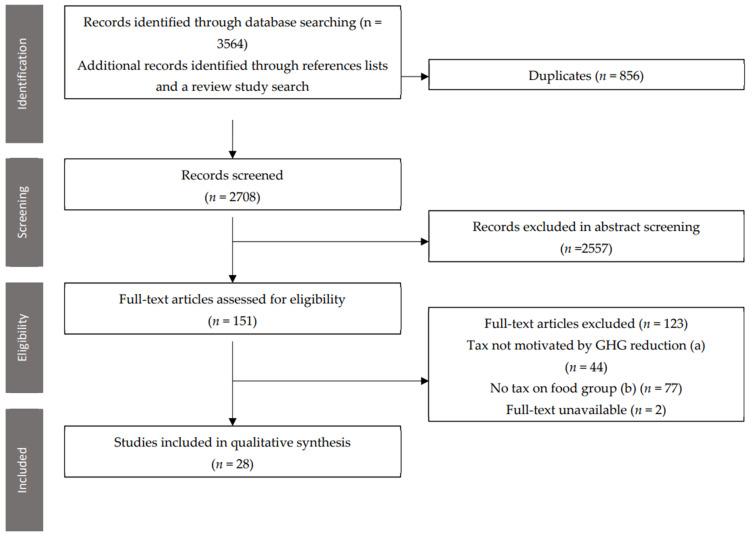
Policies to mitigate climate change are essential. The objective of this paper was to estimate the impact of greenhouse gas (GHG) food taxes and assess whether such a tax could also have health benefits in Aotearoa NZ. We undertook a systemised review on GHG food taxes to inform four tax scenarios, including one combined with a subsidy. These scenarios were modelled to estimate lifetime impacts on quality-adjusted health years (QALY), health inequities by ethnicity, GHG emissions, health system costs and food costs to the individual. Twenty-eight modelling studies on food tax policies were identified. Taxes resulted in decreased consumption of the targeted foods (e.g., -15.4% in beef/ruminant consumption, N = 12 studies) and an average decrease of 8.3% in GHG emissions (N = 19 studies). The "GHG weighted tax on all foods" scenario had the largest health gains and costs savings (455,800 QALYs and NZD 8.8 billion), followed by the tax-fruit and vegetable subsidy scenario (410,400 QALYs and NZD 6.4 billion). All scenarios were associated with reduced GHG emissions and higher age standardised per capita QALYs for Māori. Applying taxes that target foods with high GHG emissions has the potential to be effective for reducing GHG emissions and to result in co-benefits for population health.
减轻气候变化的政策至关重要。本文的目的是评估温室气体(GHG)食品税的影响,并评估在新西兰奥克兰实施这种税收是否也能带来健康益处。我们对 GHG 食品税进行了系统的综述,以提供四种税收情景,包括一种与补贴相结合的情景。这些情景被建模以估计对质量调整生命年(QALY)的终身影响、按族裔划分的健康不平等、GHG 排放、卫生系统成本和个人的食品成本。确定了 28 项关于食品税收政策的建模研究。税收导致目标食品消费减少(例如,牛肉/反刍动物消费减少 15.4%,12 项研究),GHG 排放平均减少 8.3%(19 项研究)。“所有食品的 GHG 加权税”情景具有最大的健康收益和成本节约(455,800 QALY 和 88 亿新西兰元),其次是税收-水果和蔬菜补贴情景(410,400 QALY 和 64 亿新西兰元)。所有情景都与减少 GHG 排放和毛利人年龄标准化人均 QALY 增加有关。对高 GHG 排放食品征税有可能有效减少 GHG 排放,并为人口健康带来共同效益。

 Zotero 插件