
煤炭处理对负载镍褐煤焦催化剂中镍负载机制的影响。
Influence of coal treatments on the Ni loading mechanism of Ni-loaded lignite char catalysts.
作者信息
Tipo Ronnachai, Chaichana Chatchawan, Noda Reiji, Chaiklangmuang Suparin
机构信息
Graduate Program in Industrial Chemistry, Faculty of Science, Chiang Mai University Chiang Mai 50200 Thailand.
Department of Industrial Chemistry, Faculty of Science, Chiang Mai University Chiang Mai 50200 Thailand
出版信息
RSC Adv. 2021 Nov 3;11(56):35624-35643. doi: 10.1039/d1ra05046j. eCollection 2021 Oct 28.
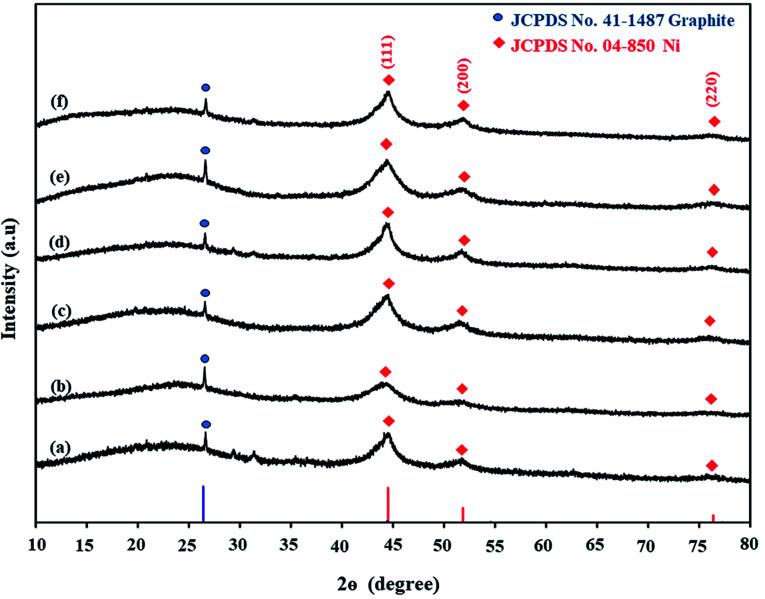
Many kinds of lignite coals have been used as catalyst supporters for preparing the Ni-loaded lignite char catalyst. However, these coals have different properties; especially ash content. The ash in coal affects the mechanism of Ni-loading on the position of the functional group structures in coal. In catalyst preparation, it is interesting that the difference in coal properties might directly influence the mechanism of Ni loading. To prove this point, the coal sample needed to be treated before the catalyst preparation. MM coal (original coal) was treated with acid (HClMM and AceMM coals), alkali (NaMM coal) and alkali followed by acid treatments (NaHClMM and NaAceMM coals). Then, Ni was loaded on the five treated coals by the ion-exchange technique. The Ni-loaded lignite coals were pyrolyzed at 650 °C under a N atmosphere to prepare the Ni-loaded lignite char catalysts. The Ni-loading mechanisms were studied FTIR, XRD, AAS and SEM-EDS analyses. The results showed that the different treatments affected the ash content and the functional groups in the coals. The decreases in the ash contents of HClMM, AceMM, NaHClMM and NaAceMM coals indicated that the exchangeable metallic species were removed by transforming metal-carboxylates into carboxyl groups. The transformations of metal-carboxylates were confirmed by the increased Δ(COO) value. For acid treatment, the ion exchange of Ni was controlled by carboxyl groups, while in alkali treatment it occurred through hydroxyl and metal-carboxyl groups. In alkali followed by acid treatment, Ni ions were exchanged with hydroxyl and carboxyl groups. The Ni ion forms, Ni(NH) and/or Ni(HO) , appeared on the modified coals. Through pyrolysis, the Ni ion was reduced to Ni metal that was observed in the XRD patterns of the catalysts. The Ni contents of the catalysts were in the range of 16.51-20.07 wt%. The thermal behaviours of the catalysts were presented TGA-DTG.
许多种类的褐煤已被用作制备负载镍的褐煤焦催化剂的催化剂载体。然而,这些煤具有不同的性质;尤其是灰分含量。煤中的灰分会影响镍负载在煤中官能团结构位置上的机制。在催化剂制备过程中,煤性质的差异可能直接影响镍负载机制,这一点很有意思。为了证明这一点,在催化剂制备之前需要对煤样进行处理。MM煤(原煤)分别用酸(HClMM煤和AceMM煤)、碱(NaMM煤)以及碱后接酸处理(NaHClMM煤和NaAceMM煤)。然后,通过离子交换技术将镍负载到这五种处理过的煤上。负载镍的褐煤在氮气气氛下于650℃热解,以制备负载镍的褐煤焦催化剂。通过傅里叶变换红外光谱(FTIR)、X射线衍射(XRD)、原子吸收光谱(AAS)和扫描电子显微镜-能谱分析(SEM-EDS)研究了镍负载机制。结果表明,不同的处理方式影响了煤中的灰分含量和官能团。HClMM煤、AceMM煤、NaHClMM煤和NaAceMM煤灰分含量的降低表明,通过将金属羧酸盐转化为羧基,可交换金属物种被去除。金属羧酸盐的转化通过增加的Δ(COO)值得到证实。对于酸处理,镍的离子交换由羧基控制,而在碱处理中,镍的离子交换通过羟基和金属羧酸盐发生。在碱后接酸处理中,镍离子与羟基和羧基进行交换。镍离子形式Ni(NH) 和/或Ni(HO) 出现在改性煤上。通过热解,镍离子被还原为镍金属,这在催化剂的XRD图谱中可以观察到。催化剂中的镍含量在16.51 - 20.07 wt%范围内。通过热重-微商热重分析(TGA-DTG)展示了催化剂的热行为。




 Zotero 插件