
一种新型树鼩实验性慢性自身免疫性葡萄膜炎模型及其破坏应用。
A Novel Tree Shrew Model of Chronic Experimental Autoimmune Uveitis and Its Disruptive Application.
机构信息
Laboratory Animal Center, Chongqing Medical University, Chongqing, China.
Chongqing Engineering Research Center for Rodent Laboratory Animals, Chongqing, China.
出版信息
Front Immunol. 2022 May 27;13:889596. doi: 10.3389/fimmu.2022.889596. eCollection 2022.
BACKGROUND
Previous studies have established several animal models for experimental autoimmune uveitis (EAU) in rodents without the fovea centralis in the human retina. This study aimed to develop and explore the application of a novel EAU model in tree shrews with a cone-dominated retina resembling the human fovea.
METHODS
Tree shrews were clinically and pathologically evaluated for the development and characteristics of EAU immunized with six inter-photoreceptor retinoid-binding proteins (IRBPs). IRBP-specific T-cell proliferation and serum cytokine of tree shrews were evaluated to determine the immune responses. Differentially expressed genes (DEGs) were identified in the eyes of tree shrews with EAU by RNA-sequencing. The disruptive effects of the DEG RGS4 inhibitor CCG 203769 and dihydroartemisinin on the EAU were investigated to evaluate the potential application of tree shrew EAU.
RESULTS
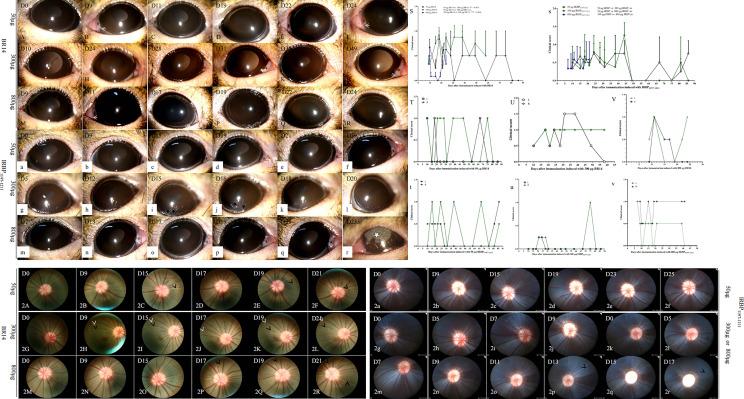
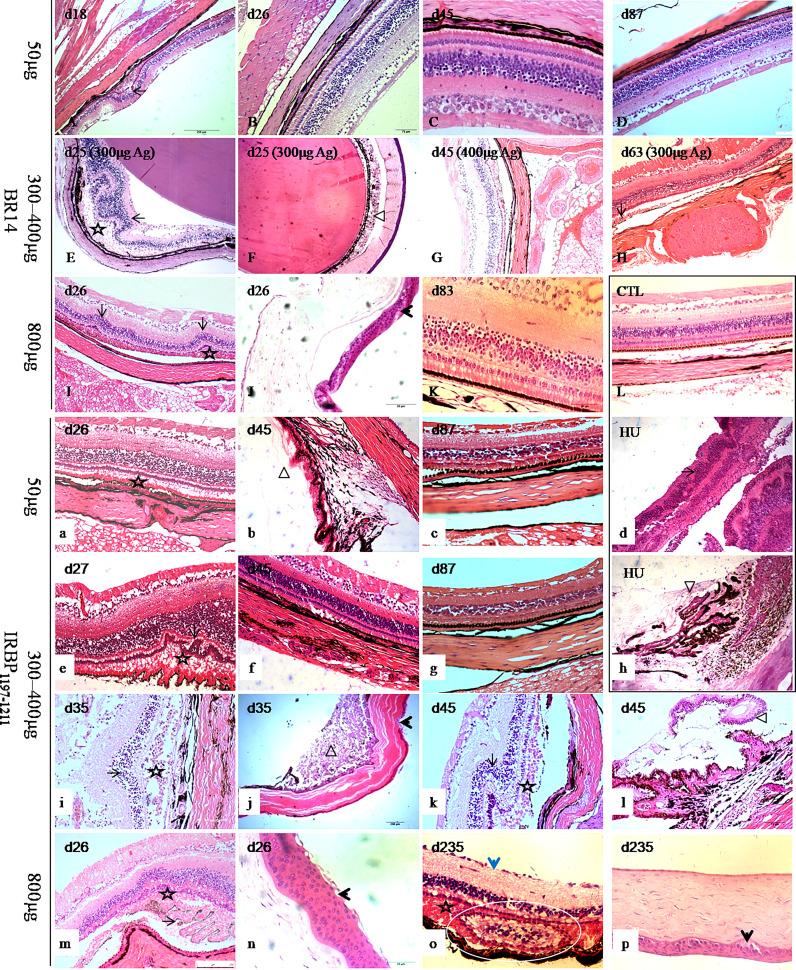
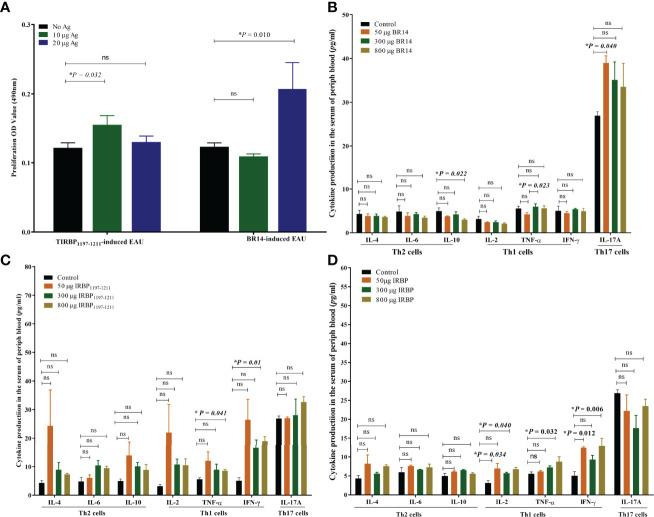
IRBP and R14 successfully induced chronic EAU with subretinal deposits and retinal damage in the tree shrews. The immunological characteristics presented the predominant infiltration of microglia/macrophages, dendritic cells, and CD4-T-cells into the uvea and retina and pathogenic T helper (Th) 1 and Th17 responses. The subretinal deposits positively expressed amyloid β-protein (Aβ), CD8, and P2Y purinoceptor 12 (P2RY12). The crucial DEGs in R14-induced EAU, such as and , were enriched for several pathways, including inflammatory mediator regulation of transient receptor potential (TRP) channels. The upregulated in IRBP-induced EAU was associated with mitogen-activated protein kinase (MAPK) activity. RGS4 inhibition and dihydroartemisinin could significantly alleviate the retinal pathological injuries of IRBP-induced EAU by decreasing the expression of CD4 T-cells.
CONCLUSION
Our study provides a novel chronic EAU in tree shrews elicited by bovine R14 and tree shrew IRBP characterized by retinal degeneration, retinal damage with subretinal Aβ deposits and microglia/macrophage infiltration, and T-cell response, probably by altering important pathways and genes related to bacterial invasion, inflammatory pain, microglial phagocytosis, and lipid and glucose metabolism. The findings advance the knowledge of the pathogenesis and therapeutics of the fovea-involved visual disturbance in human uveitis.
背景
先前的研究已经在没有人类视网膜中央凹的啮齿动物中建立了几种实验性自身免疫性葡萄膜炎(EAU)的动物模型。本研究旨在开发并探索一种新型 EAU 模型在具有类似于人类中央凹的锥体主导型视网膜的树鼩中的应用。
方法
对用六种光感受器间视黄醇结合蛋白(IRBP)免疫的树鼩进行临床和病理评估,以研究 EAU 的发生和特征。评估 IRBP 特异性 T 细胞增殖和树鼩血清细胞因子,以确定免疫反应。通过 RNA 测序鉴定 EAU 树鼩眼中的差异表达基因(DEG)。用 RGS4 抑制剂 CCG 203769 和青蒿琥酯对 DEG 进行干扰,以评估树鼩 EAU 的潜在应用。
结果
IRBP 和 R14 成功诱导了树鼩慢性 EAU,并伴有视网膜下沉积物和视网膜损伤。免疫特征表现为小胶质细胞/巨噬细胞、树突状细胞和 CD4-T 细胞主要浸润葡萄膜和视网膜,以及致病性辅助性 T 细胞(Th)1 和 Th17 反应。视网膜下沉积物阳性表达淀粉样β蛋白(Aβ)、CD8 和 P2Y 嘌呤能受体 12(P2RY12)。R14 诱导的 EAU 中关键的 DEG,如和,富集了几个途径,包括炎症介质对瞬时受体电位(TRP)通道的调节。IRBP 诱导的 EAU 中上调的与丝裂原活化蛋白激酶(MAPK)活性相关。RGS4 抑制和青蒿琥酯可以通过降低 CD4 T 细胞的表达,显著减轻 IRBP 诱导的 EAU 的视网膜病理损伤。
结论
本研究提供了一种新型的树鼩慢性 EAU,由牛 R14 和树鼩 IRBP 诱导,其特征是视网膜变性、视网膜损伤伴视网膜下 Aβ 沉积物和小胶质细胞/巨噬细胞浸润以及 T 细胞反应,可能通过改变与细菌入侵、炎症性疼痛、小胶质细胞吞噬作用和脂质及葡萄糖代谢相关的重要途径和基因。这些发现为人类葡萄膜炎中涉及中央凹的视觉障碍的发病机制和治疗提供了新的认识。





 Zotero 插件