
人脱落乳牙干细胞对大鼠气管瘘模型的治疗效果。
The therapeutic effect of stem cells from human exfoliated deciduous teeth on a rat model of tracheal fistula.
机构信息
School of Medicine, South China University of Technology, Guangzhou, 510006, China.
Second Department of Elderly Respiratory, Guangdong Provincial People's Hospital, Guangdong Academy of Medical Sciences, Guangdong Provincial Geriatrics Institute, Guangzhou, 510080, China.
出版信息
Stem Cell Res Ther. 2022 Jul 15;13(1):310. doi: 10.1186/s13287-022-02994-x.
BACKGROUND
Tracheal fistulas (TF) can be dangerous and even fatal in patients. The current treatment is really challenging. Previous studies reported that mesenchymal stem cells (MSCs) could be used to treat respiratory tract fistulas. Stem cells from human exfoliated deciduous teeth (SHED) are considered to be MSC-like cells that may also have the potential to treat the tracheal fistulas. In this study, we investigated the therapeutic effects of SHED in rat tracheal fistula models.
METHODS
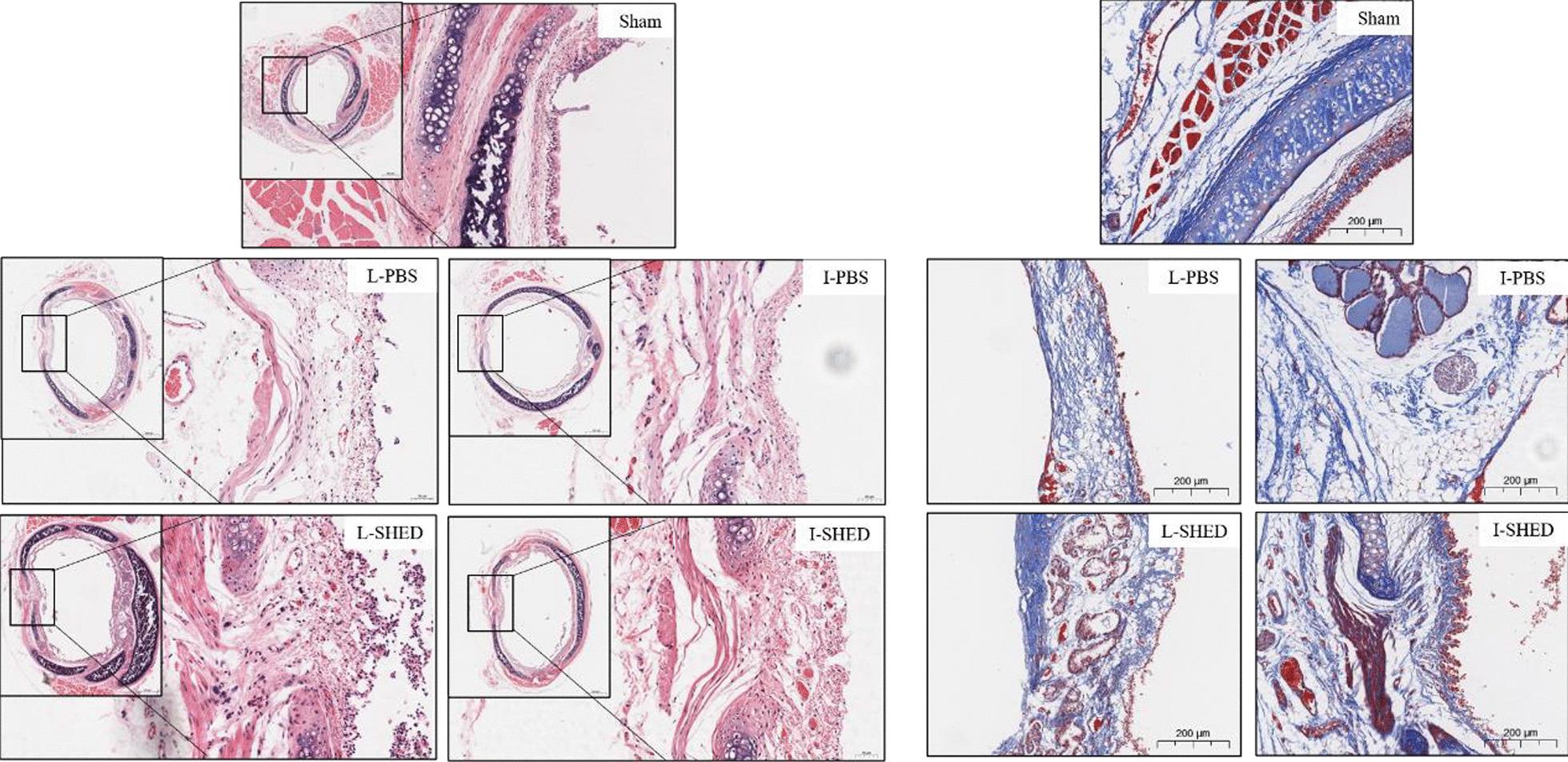
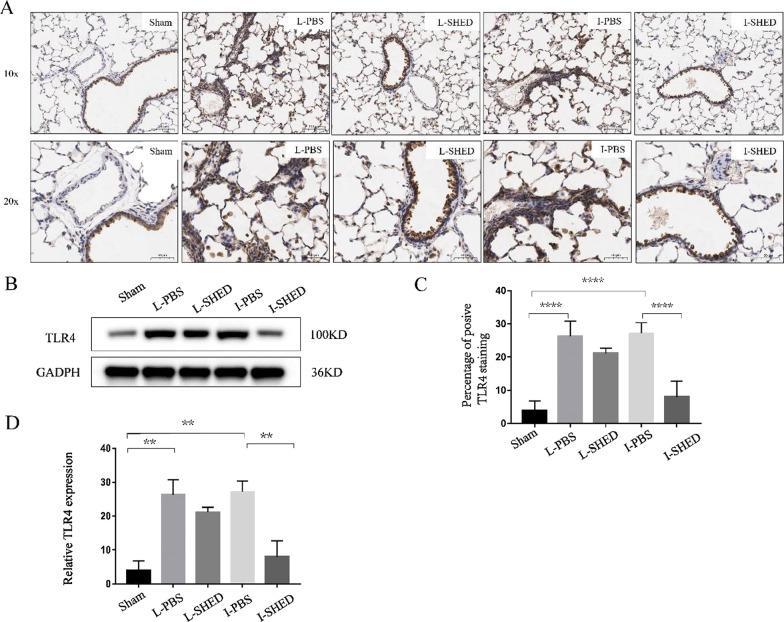
A total of 80 SD rats were randomly divided into five groups: a sham-operated group, a local PBS group (L-PBS), an intravenous PBS group (I-PBS), a local SHED treatment group (L-SHED), and an intravenous SHED treatment group (I-SHED). The L-SHED and I-SHED groups were given a topical application around the fistula or an intravenous injection of 1*10 SHED via the tail vein, respectively, while the L-PBS and I-PBS groups were given an equivalent volume of PBS through local or intravenous administration. A stereomicroscope was used to observe fistula healing on the 2nd, 3rd, and 5th days following transplantation. On the 7th day, the survival of SHED was observed by immunofluorescence. The pathology of the lungs and fistulas was observed by hematoxylin and eosin (H&E) and Masson staining. The expression levels of the Toll-like receptor 4 (TLR4), interleukin (IL)-1β, IL-33, and IL-4 were measured using immunohistochemistry. The expression levels of TLR4, high mobility group box 1 (HMGB1), and myeloid differentiation factor 88 (MYD88) were studied using western blotting. On day 14, airway responsiveness of rats was detected and analyzed.
RESULTS
Fistula healing in the L-SHED and I-SHED groups was faster than that in their respective PBS groups after transplantation. The fistula diameters in the L-SHED and I-SHED groups were significantly smaller than those in the L-PBS and I-PBS groups on the 3rd day. Moreover, the phenomenon of fibroblast proliferation and new blood vessel growth around the fistula seemed more pronounced in the L-SHED and I-SHED groups. Although no discernible difference was found in airway responsiveness after SHED treatment, the degree of inflammation in the lungs was reduced by intravenous SHED treatment. However, there was no significant reduction in lung inflammation by local SHED treatment. The expression levels of IL-1β and IL-33 were decreased in the I-SHED group, while IL-4 was elevated compared with the I-PBS group. Interestingly, intravenous SHED treatment inhibited the activation of HMGB1/TLR4/MYD88 in the lung tissues of TF rats.
CONCLUSIONS
SHED transplantation accelerated the rate of fistula healing in rats. Intravenous SHED treatment reduced lung inflammation. Thus, SHED may have potential in the treatment of tracheal fistula, providing hope for future therapeutic development for TF.
背景
气管瘘(TF)可危及患者生命,目前的治疗极具挑战性。既往研究报道间充质干细胞(MSCs)可用于治疗呼吸道瘘。人脱落乳牙牙髓干细胞(SHED)被认为是 MSC 样细胞,也可能有潜力治疗气管瘘。本研究旨在探讨 SHED 对大鼠气管瘘模型的治疗作用。
方法
80 只 SD 大鼠随机分为五组:假手术组、局部 PBS 组(L-PBS)、静脉 PBS 组(I-PBS)、局部 SHED 治疗组(L-SHED)和静脉 SHED 治疗组(I-SHED)。L-SHED 和 I-SHED 组分别给予瘘口周围局部应用或经尾静脉注射 1*10 SHED,L-PBS 和 I-PBS 组分别给予局部或静脉给予等容量 PBS。移植后第 2、3 和 5 天,立体显微镜观察瘘口愈合情况。第 7 天,免疫荧光观察 SHED 存活情况。苏木精和伊红(H&E)和 Masson 染色观察肺和瘘管的病理变化。免疫组化法检测 Toll 样受体 4(TLR4)、白细胞介素(IL)-1β、IL-33 和 IL-4 的表达水平。采用 Western blot 法研究 TLR4、高迁移率族蛋白 1(HMGB1)和髓样分化因子 88(MYD88)的表达水平。第 14 天,检测并分析大鼠气道反应性。
结果
移植后,L-SHED 和 I-SHED 组瘘口愈合速度快于各自 PBS 组。L-SHED 和 I-SHED 组瘘口直径在第 3 天明显小于 L-PBS 和 I-PBS 组。此外,L-SHED 和 I-SHED 组瘘口周围纤维母细胞增殖和新血管生长现象更为明显。尽管 SHED 治疗后气道反应性无明显差异,但静脉 SHED 治疗减轻了肺组织炎症。然而,局部 SHED 治疗并未显著减轻肺炎症。I-SHED 组 IL-1β 和 IL-33 表达降低,IL-4 升高,与 I-PBS 组相比。有趣的是,静脉 SHED 治疗抑制了 TF 大鼠肺组织中 HMGB1/TLR4/MYD88 的激活。
结论
SHED 移植可加快大鼠瘘口愈合速度。静脉 SHED 治疗可减轻肺组织炎症。因此,SHED 可能具有治疗气管瘘的潜力,为 TF 的治疗发展带来希望。



 Zotero 插件