
基于原始对偶分裂法的密集频率信号检测
Dense-Frequency Signal-Detection Based on the Primal-Dual Splitting Method.
作者信息
Zheng Jiaoyu, Liao Zheng, Ma Xiaoyang, Jin Yanlin, Ma Huangqi
机构信息
The College of Electrical Engineering, Sichuan University, Chengdu 610065, China.
出版信息
Entropy (Basel). 2022 Jul 18;24(7):991. doi: 10.3390/e24070991.
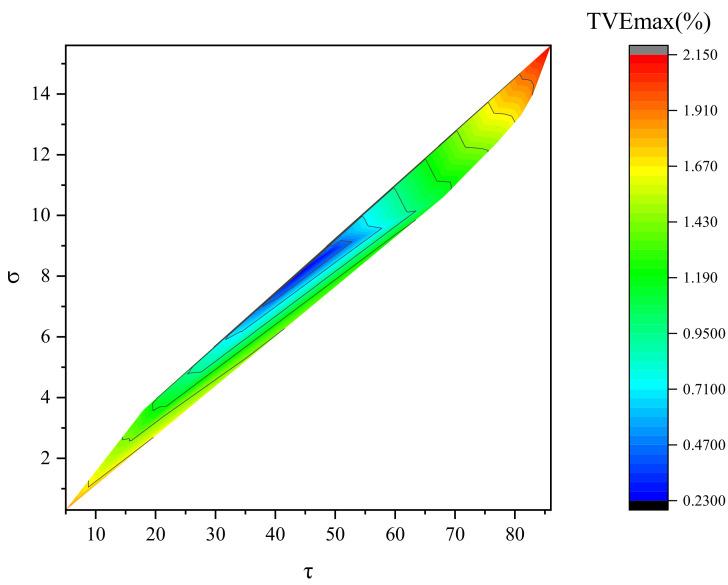
Aiming to solve the problem of dense-frequency signals in the power system caused by the growing proportion of new energy, this paper proposes a dense-frequency signal-detection method based on the primal-dual splitting method. After establishing the Taylor-Fourier model of the signal, the proposed method uses the sparse property of the coefficient matrix to obtain the convex optimization form of the model. Then, the optimal solution of the estimated phasor is obtained by iterating over the fixed-point equation, finally acquiring the optimal estimation result for the dense signal. When representing the Taylor-Fourier model as a convex optimization form, the introduction of measuring-error entropy makes the solution of the model more rigorous. It can be further verified through simulation experiments that the estimation accuracy of the primal-dual splitting method proposed in this paper for dense signals can meet the M-class PMU accuracy requirements.
针对新能源占比不断增大导致电力系统中出现密集频率信号的问题,本文提出一种基于原始对偶分裂法的密集频率信号检测方法。在所建立信号的泰勒 - 傅里叶模型后,该方法利用系数矩阵的稀疏特性得到模型的凸优化形式。然后,通过定点方程迭代得到估计相量的最优解,最终获得密集信号的最优估计结果。在将泰勒 - 傅里叶模型表示为凸优化形式时,引入测量误差熵使模型的求解更加严谨。通过仿真实验进一步验证,本文提出的原始对偶分裂法对密集信号的估计精度能够满足M类PMU精度要求。


 Zotero 插件