
救护车转运途中实施心肺复苏的罕见并发症:连枷胸病例报告
A rare complication of cardiopulmonary resuscitation applied during transportation by ambulance: A case report of flail chest.
作者信息
Yurtsever Güner, Yamanoglu Adnan, Bora Ejder Saylav, Topal Fatih Esad
机构信息
Department of Emergency Medicine, Izmir Kâtip Celebi University, Ataturk Training and Research Hospital, Izmir, Turkey.
出版信息
Turk J Emerg Med. 2022 Jul 1;22(3):159-162. doi: 10.4103/2452-2473.348437. eCollection 2022 Jul-Sep.
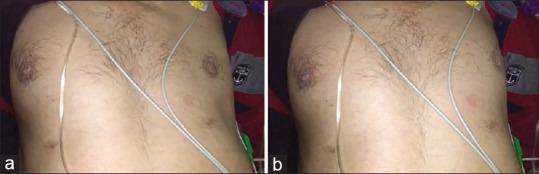
Cardiopulmonary resuscitation (CPR) to be applied during patient transfer by ambulance differs from CPR applied in the field or in the hospital in terms of physical condition. Especially the deeper and faster chest compressions recommended in the latest CPR guidelines, when administered during ambulance transport, may result in a further increase in traumatic CPR complications. However, in the current CPR guidelines, there are no clear recommendations regarding additional measures that can be taken to reduce the complications and increase the efficiency of CPR during patient transport. In this study, a case of flail chest that developed after short-term CPR application during ambulance transport is presented. The aim of this study was to evaluate the flail chest complication and solution suggestions that may occur due to chest compressions applied during transportation.
在通过救护车转运患者期间实施的心肺复苏(CPR),在身体状况方面与在现场或医院实施的CPR有所不同。特别是最新CPR指南中推荐的更深、更快的胸部按压,在救护车转运期间进行时,可能会导致创伤性CPR并发症进一步增加。然而,在当前的CPR指南中,对于在患者转运期间可采取的减少并发症并提高CPR效率的额外措施,并没有明确的建议。在本研究中,呈现了一例在救护车转运期间短期实施CPR后发生连枷胸的病例。本研究的目的是评估因转运期间胸部按压可能发生的连枷胸并发症及解决建议。

 Zotero 插件