
PEBP4 通过调控 mTORC1 和 mTORC2 来指导肝癌细胞的恶性行为。
PEBP4 Directs the Malignant Behavior of Hepatocellular Carcinoma Cells via Regulating mTORC1 and mTORC2.
机构信息
Jiangxi Province Key Laboratory of Tumor Pathogenesis and Molecular Pathology, Nanchang University, Nanchang 330031, China.
Department of Pathology, School of Basic Sciences, Nanchang University, Nanchang 330031, China.
出版信息
Int J Mol Sci. 2022 Aug 8;23(15):8798. doi: 10.3390/ijms23158798.
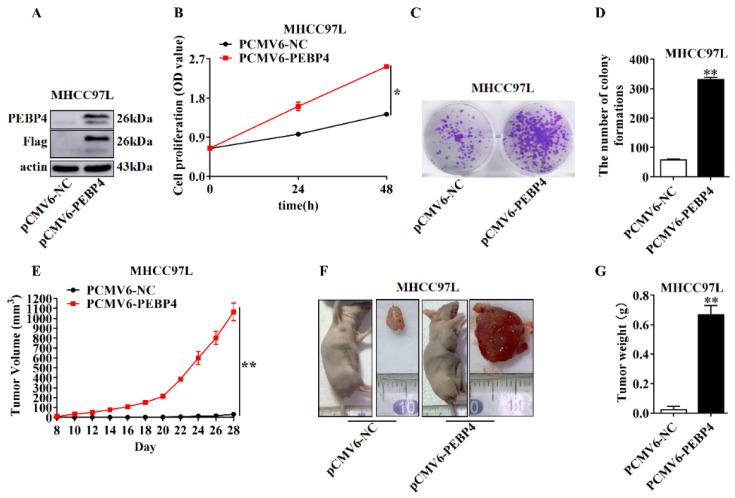
Phosphatidylethanolamine binding protein 4 (PEBP4) is an understudied multifunctional small protein. Previous studies have shown that the expression of PEBP4 is increased in many cancer specimens, which correlates to cancer progression. The present study explored the mechanism by which PEBP4 regulates the growth and progression of hepatocellular carcinoma cells. Thus, we showed that knockdown of PEBP4 in MHCC97H cells, where its expression was relatively high, diminished activities of serine/threonine protein kinase B (PKB, also known as Akt), mammalian target of rapamycin complex 1(mTORC1), and mTORC2, events that were not restored by insulin-like growth factor 1 (IGF-1). Conversely, overexpression of PEBP4 in MHCC97L cells with the low endogenous level yielded opposite effects. Furthermore, physical association of PEBP4 with Akt, mTORC1, and mTORC2 was observed. Interestingly, introduction of AktS473D mutant, bypassing phosphorylation by mTORC2, rescued mTORC1 activity, but without effects on mTORC2 signaling. In contrast, the effect of PEBP4 overexpression on the activity of mTORC1 but not that of mTORC2 was suppressed by MK2206, a specific inhibitor of Akt. In conjunction, PEBP4 knockdown-engendered reduction of cell proliferation, migration and invasion was partially rescued by Akt S473D while increases in these parameters induced by overexpression of PEBP4 were completely abolished by MK2206, although the expression of epithelial mesenchymal transition (EMT) markers appeared to be fully regulated by the active mutant of Akt. Finally, knockdown of PEBP4 diminished the growth of tumor and metastasis, whereas they were enhanced by overexpression of PEBP4. Altogether, our study suggests that increased expression of PEBP4 exacerbates malignant behaviors of hepatocellular cancer cells through cooperative participation of mTORC1 and mTORC2.
磷酯酰乙醇胺结合蛋白 4(PEBP4)是一种研究较少的多功能小蛋白。先前的研究表明,PEBP4 在许多癌症标本中的表达增加,与癌症的进展相关。本研究探讨了 PEBP4 调节肝癌细胞生长和进展的机制。因此,我们表明,在 MHCC97H 细胞中敲低 PEBP4,其表达相对较高,会减弱丝氨酸/苏氨酸蛋白激酶 B(PKB,也称为 Akt)、雷帕霉素靶蛋白复合物 1(mTORC1)和 mTORC2 的活性,而胰岛素样生长因子 1(IGF-1)不能恢复这些活性。相反,在 MHCC97L 细胞中过表达低内源性水平的 PEBP4 则产生相反的效果。此外,观察到 PEBP4 与 Akt、mTORC1 和 mTORC2 的物理结合。有趣的是,引入 AktS473D 突变体,绕过 mTORC2 的磷酸化,挽救了 mTORC1 的活性,但对 mTORC2 信号没有影响。相比之下,PEBP4 过表达对 mTORC1 活性的影响,但对 mTORC2 没有影响,被 Akt 的特异性抑制剂 MK2206 抑制。此外,PEBP4 敲低导致的细胞增殖、迁移和侵袭减少部分被 Akt S473D 挽救,而 PEBP4 过表达引起的这些参数的增加则被 MK2206 完全消除,尽管上皮间质转化(EMT)标志物的表达似乎完全受 Akt 活性突变体调节。最后,敲低 PEBP4 减少了肿瘤的生长和转移,而过表达 PEBP4 则增强了肿瘤的生长和转移。总之,我们的研究表明,PEBP4 表达增加通过 mTORC1 和 mTORC2 的协同参与加剧了肝癌细胞的恶性行为。



 Zotero 插件