
暴露于纳米二氧化钛材料的藻类的代谢变化。
Metabolic alterations in alga exposed to nTiO materials.
作者信息
Liu Wei, Li Mengting, Li Weiwei, Keller Arturo A, Slaveykova Vera I
机构信息
University of Geneva, Faculty of Sciences, Earth and Environment Sciences, Department F.-A. Forel for Environmental and Aquatic Sciences, Environmental Biogeochemistry and Ecotoxicology Uni Carl Vogt, 66 Blvd Carl-Vogt CH 1211 Geneva Switzerland
Bren School of Environmental Science & Management, University of California Santa Barbara California 93106-5131 USA.
出版信息
Environ Sci Nano. 2022 Jul 1;9(8):2922-2938. doi: 10.1039/d2en00260d. eCollection 2022 Aug 11.
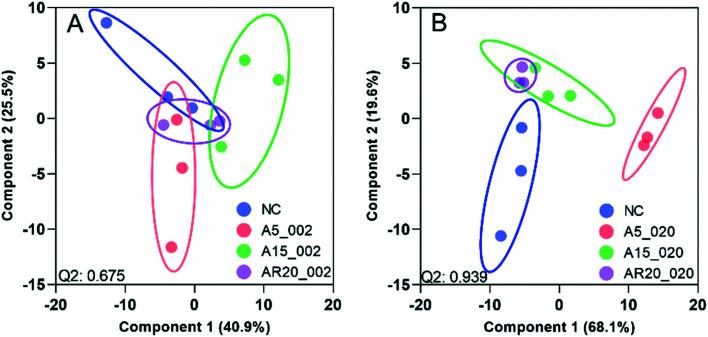
Nano-sized titanium dioxide (nTiO) is one of the most commonly used materials, however the knowledge about the molecular basis for metabolic and physiological changes in phytoplankton is yet to be explored. In the present study we use a combination of targeted metabolomics, transcriptomics and physiological response studies to decipher the metabolic perturbation in green alga exposed for 72 h to increasing concentrations (2, 20, 100 and 200 mg L) of nTiO with primary sizes of 5, 15 and 20 nm. Results show that the exposure to all three nTiO materials induced perturbation of the metabolism of amino acids, nucleotides, fatty acids, tricarboxylic acids, antioxidants but not in the photosynthesis. The alterations of the most responsive metabolites were concentration and primary size-dependent despite the significant formation of micrometer-size aggregates and their sedimentation. The metabolic perturbations corroborate the observed physiological responses and transcriptomic results and confirmed the importance of oxidative stress as a major toxicity mechanism for nTiO. Transcriptomics revealed also an important influence of nTiO treatments on the transport, adenosine triphosphate binding cassette transporters, and metal transporters, suggesting a perturbation in a global nutrition of the microalgal cell, which was most pronounced for exposure to 5 nm nTiO. The present study provides for the first-time evidence for the main metabolic perturbations in green alga exposed to nTiO and helps to improve biological understanding of the molecular basis of these perturbations.
纳米二氧化钛(nTiO)是最常用的材料之一,然而,关于浮游植物代谢和生理变化的分子基础的知识仍有待探索。在本研究中,我们结合靶向代谢组学、转录组学和生理反应研究,以破译绿藻在暴露于浓度不断增加(2、20、100和200 mg/L)的原生粒径为5、15和20 nm的nTiO 72小时后的代谢扰动。结果表明,暴露于所有三种nTiO材料均会引起氨基酸、核苷酸、脂肪酸、三羧酸、抗氧化剂代谢的扰动,但不会影响光合作用。尽管形成了大量微米级聚集体并发生沉降,但最敏感代谢物的变化仍与浓度和原生粒径有关。代谢扰动证实了观察到的生理反应和转录组学结果,并确认了氧化应激作为nTiO主要毒性机制的重要性。转录组学还揭示了nTiO处理对转运、三磷酸腺苷结合盒转运蛋白和金属转运蛋白的重要影响,表明微藻细胞的整体营养受到扰动,这在暴露于5 nm nTiO时最为明显。本研究首次提供了绿藻暴露于nTiO后主要代谢扰动的证据,并有助于增进对这些扰动分子基础的生物学理解。




 Zotero 插件