
使用手术评估工具对亚马逊州的手术能力进行评估。横断面研究。
Surgical capacity assessment in the state of Amazonas using the surgical assessment tool. Cross-sectional study.
机构信息
- University of the State of Amazonas, Department of Surgery - Manaus - AM - Brasil.
- Harvard Medical School, Program in Global Surgery and Social Change, Department of Global Health and Social Medicine - Boston - Massachusetts - Estados Unidos.
出版信息
Rev Col Bras Cir. 2022 Sep 19;49:e20223368. doi: 10.1590/0100-6991e-20223368-en. eCollection 2022.
OBJECTIVE
Brazil is a country with universal health coverage, yet access to surgery among remote rural populations remains understudied. This study assesses surgical care capacity among hospitals providing care for the rural populations in the Amazonas state of Brazil through in-depth facility assessments.
METHODS
a stratified randomized cross-sectional evaluation of hospitals that self-report providing surgical care in Amazonas was conducted from July 2016 to March 2017. The Surgical Assessment Tool (SAT) developed by the World Health Organization and the Program in Global Surgery and Social Change at Harvard Medical School was administered at remote hospitals, including a retrospective review of medical records and operative logbooks.
RESULTS
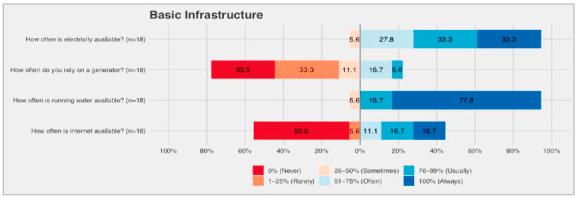
18 hospitals were surveyed. Three hospitals (16.6%) had no operating rooms and 12 (66%) had 1-2 operating rooms. 14 hospitals (77.8%) reported monitoring by pulse oximetry was always present and six hospitals (33%) never have a professional anesthesiologist available. Inhaled general anesthesia was available in 12 hospitals (66.7%), but 77.8% did not have any mechanical ventilation device. An average of 257 procedures per 100,000 were performed. 10 hospitals (55.6%) do not have a specific post-anesthesia care unit. For the regions covered by the 18 hospitals, with a population of 497,492 inhabitants, the average surgeon, anesthetist, obstetric workforce density was 6.4.
CONCLUSION
populations living in rural areas in Brazil face significant disparities in access to surgical care, despite the presence of universal health coverage. Development of a state plan for the implementation of surgery is necessary to ensure access to surgical care for rural populations.
目的
巴西是一个全民医保的国家,但偏远农村地区的手术可及性仍研究不足。本研究通过深入的医疗机构评估,评估巴西亚马孙州为农村人口提供医疗服务的医院的外科护理能力。
方法
2016 年 7 月至 2017 年 3 月,对自我报告在亚马孙州提供外科护理的医院进行了分层随机横断面评估。世界卫生组织(WHO)和哈佛医学院全球外科学和社会变革计划开发的外科评估工具(SAT)在偏远医院进行了评估,包括对病历和手术日志的回顾性审查。
结果
调查了 18 家医院。3 家医院(16.6%)无手术室,12 家医院(66%)有 1-2 间手术室。14 家医院(77.8%)报告始终有脉搏血氧饱和度监测,6 家医院(33%)从不配备专业麻醉师。12 家医院(66.7%)可提供吸入全身麻醉,但 77.8%的医院没有任何机械通气设备。每 10 万人中有 257 例手术。10 家医院(55.6%)没有专门的麻醉后护理病房。在这 18 家医院覆盖的地区,有 497492 名居民,平均外科医生、麻醉师和产科人员密度为 6.4。
结论
尽管巴西实行全民医保,但生活在农村地区的人口在获得外科护理方面存在显著差异。有必要制定州级手术实施计划,以确保农村人口获得手术护理。




 Zotero 插件