
为什么领导的攻击性幽默会导致旁观者在工作场所的退缩行为?——基于认知-情感的双路径视角
Why does leader aggressive humor lead to bystander workplace withdrawal behavior?-Based on the dual path perspective of cognition- affection.
作者信息
Chen Hao, Wang Liang, Bao Jiaying
机构信息
School of Economics and Management, Wuhan University, Wuhan, China.
Chinese Graduate School, Panyapiwat Institute of Management, Pak Kret, Thailand.
出版信息
Front Psychol. 2022 Sep 20;13:925029. doi: 10.3389/fpsyg.2022.925029. eCollection 2022.
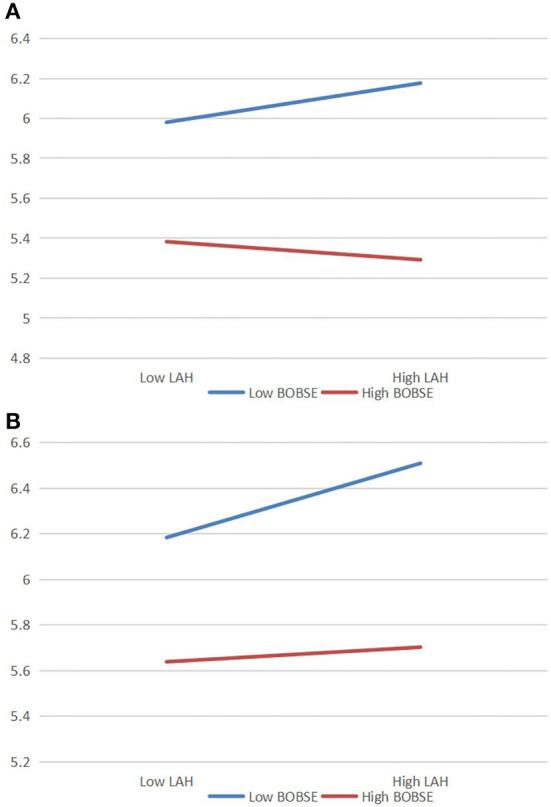
Based on the Cognitive-Affective Personality System Theory, this study takes 443 employees of several Chinese enterprises and their direct superiors as the research objects, then a 1:1 paired survey is carried out at three different time points, and data is processed by Mplus 7.4 software. This study finds from a bystander perspective: leader aggressive humor plays a positive role in bystander affective rumination and bystander workplace anxiety. Both bystander affective rumination and bystander workplace anxiety play a mediation role between leader aggressive humor and bystander workplace withdrawal behavior. Besides, organization-based self-esteem alleviates the positive impact of leader aggressive humor on bystander affective rumination and bystander workplace anxiety, and then moderates the indirect impact of leader aggressive humor on bystander workplace withdrawal behavior through bystander affective rumination and bystander workplace anxiety, respectively. This study has practical guiding significance for promoting the organization to reduce the occurrence of aggressive humor, helping employees better integrate into the organization, and building a harmonious organizational environment.
基于认知-情感人格系统理论,本研究以几家中国企业的443名员工及其直接上级为研究对象,然后在三个不同时间点进行1:1配对调查,并使用Mplus 7.4软件处理数据。本研究从旁观者的角度发现:领导的攻击性幽默对旁观者的情感反刍和旁观者的工作场所焦虑具有积极作用。旁观者的情感反刍和旁观者的工作场所焦虑在领导的攻击性幽默和旁观者的工作场所退缩行为之间均起中介作用。此外,基于组织的自尊减轻了领导的攻击性幽默对旁观者的情感反刍和旁观者的工作场所焦虑的积极影响,进而分别调节了领导的攻击性幽默通过旁观者的情感反刍和旁观者的工作场所焦虑对旁观者的工作场所退缩行为的间接影响。本研究对于促进组织减少攻击性幽默的发生、帮助员工更好地融入组织以及构建和谐的组织环境具有实际指导意义。


 Zotero 插件