
在造血过程中,ABC 转运蛋白的差异表达导致 Aurora 激酶抑制剂偏向于中性粒细胞的毒性。
Differential ABC transporter expression during hematopoiesis contributes to neutrophil-biased toxicity of Aurora kinase inhibitors.
机构信息
Wyss Institute for Biologically Inspired Engineering at Harvard University, Boston, MA, USA.
Department of Pathology, Massachusetts General Hospital, Boston, MA, USA.
出版信息
Nat Commun. 2022 Oct 12;13(1):6021. doi: 10.1038/s41467-022-33672-4.
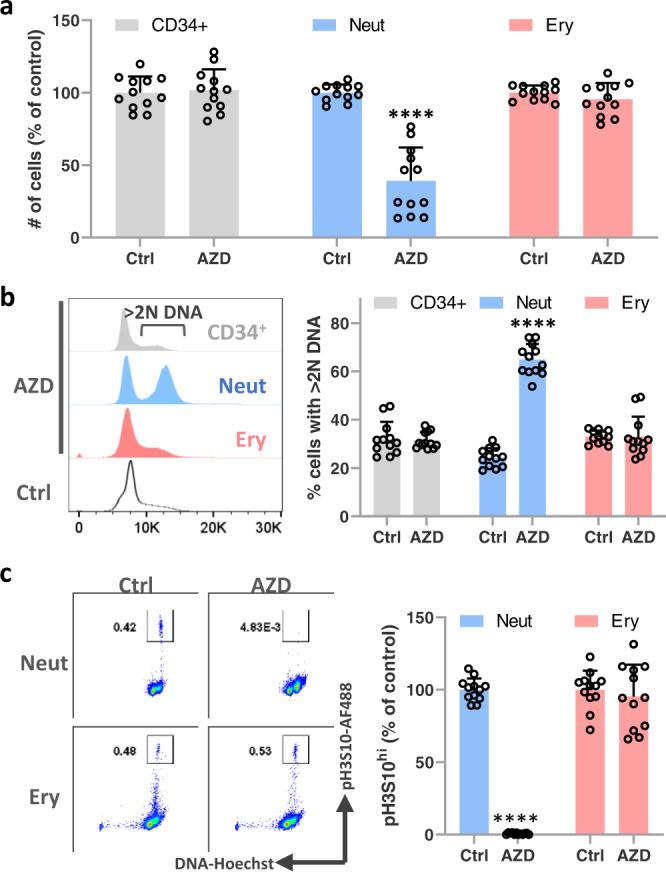
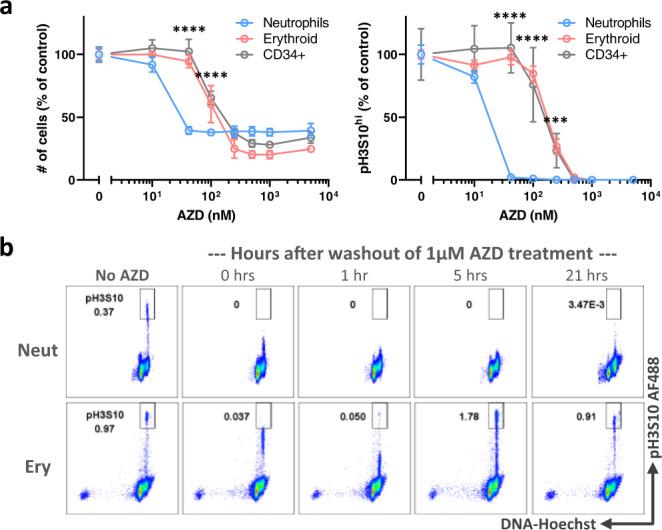
Drug-induced cytopenias are a prevalent and significant issue that worsens clinical outcomes and hinders the effective treatment of cancer. While reductions in blood cell numbers are classically associated with traditional cytotoxic chemotherapies, they also occur with newer targeted small molecules and the factors that determine the hematotoxicity profiles of oncologic drugs are not fully understood. Here, we explore why some Aurora kinase inhibitors cause preferential neutropenia. By studying drug responses of healthy human hematopoietic cells in vitro and analyzing existing gene expression datasets, we provide evidence that the enhanced vulnerability of neutrophil-lineage cells to Aurora kinase inhibition is caused by early developmental changes in ATP-binding cassette (ABC) transporter expression. These data show that hematopoietic cell-intrinsic expression of ABC transporters may be an important factor that determines how some Aurora kinase inhibitors affect the bone marrow.
药物引起的血细胞减少症是一个普遍且严重的问题,它会恶化临床结局并阻碍癌症的有效治疗。虽然血细胞数量减少与传统细胞毒性化疗药物有关,但也与新型靶向小分子药物有关,而且决定肿瘤药物血液毒性特征的因素尚未完全了解。在这里,我们探讨了为什么一些 Aurora 激酶抑制剂会导致嗜中性粒细胞减少症。通过研究体外健康人类造血细胞对药物的反应,并分析现有的基因表达数据集,我们提供的证据表明,中性粒细胞系细胞对 Aurora 激酶抑制的易感性增强是由于 ATP 结合盒(ABC)转运蛋白表达的早期发育变化所致。这些数据表明,造血细胞内在表达 ABC 转运蛋白可能是决定某些 Aurora 激酶抑制剂如何影响骨髓的一个重要因素。




 Zotero 插件