
一场血腥的阴谋——肿瘤微环境中的血管与免疫细胞
A Bloody Conspiracy- Blood Vessels and Immune Cells in the Tumor Microenvironment.
作者信息
Terrassoux Lisa, Claux Hugo, Bacari Salimata, Meignan Samuel, Furlan Alessandro
机构信息
Univ. Lille, CNRS, Inserm, CHU Lille, UMR9020-U1277-CANTHER-Cancer Heterogeneity Plasticity and Resistance to Therapies, F-59000 Lille, France.
Tumorigenesis and Resistance to Treatment Unit, Centre Oscar Lambret, F-59000 Lille, France.
出版信息
Cancers (Basel). 2022 Sep 21;14(19):4581. doi: 10.3390/cancers14194581.
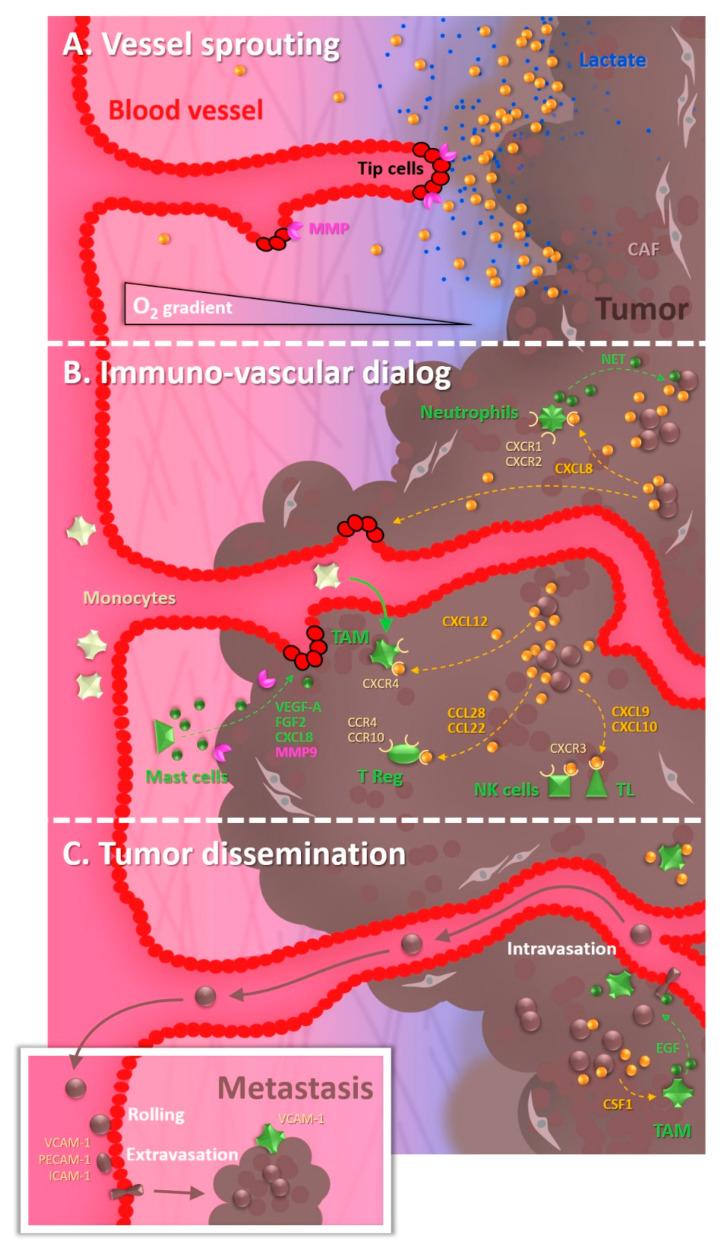
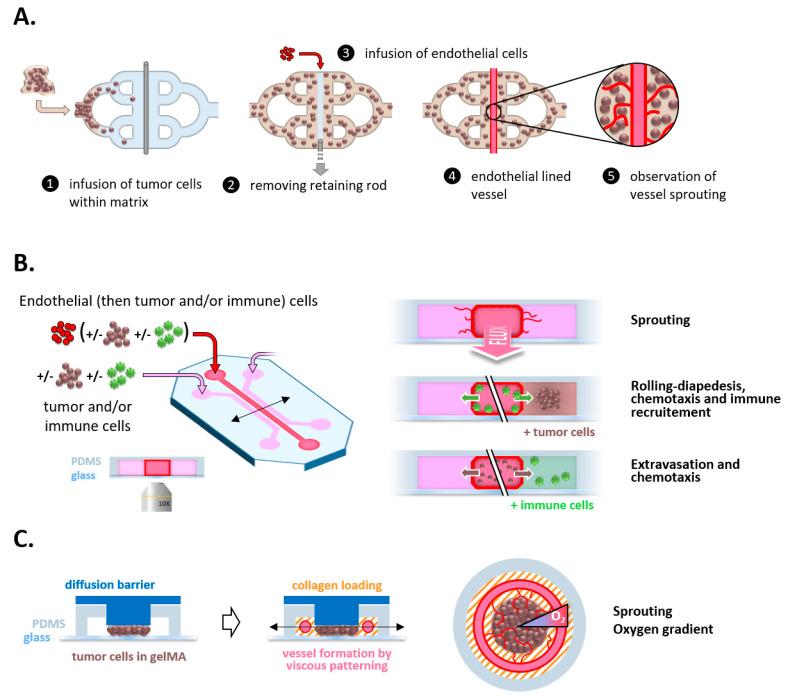
Cancer progression occurs in concomitance with a profound remodeling of the cellular microenvironment. Far from being a mere passive event, the re-orchestration of interactions between the various cell types surrounding tumors highly contributes to the progression of the latter. Tumors notably recruit and stimulate the sprouting of new blood vessels through a process called neo-angiogenesis. Beyond helping the tumor cope with an increased metabolic demand associated with rapid growth, this also controls the metastatic dissemination of cancer cells and the infiltration of immune cells in the tumor microenvironment. To decipher this critical interplay for the clinical progression of tumors, the research community has developed several valuable models in the last decades. This review offers an overview of the various instrumental solutions currently available, including microfluidic chips, co-culture models, and the recent rise of organoids. We highlight the advantages of each technique and the specific questions they can address to better understand the tumor immuno-angiogenic ecosystem. Finally, we discuss this development field's fundamental and applied perspectives.
癌症进展与细胞微环境的深刻重塑同时发生。肿瘤周围各种细胞类型之间相互作用的重新编排远非一个单纯的被动事件,它对肿瘤的进展起到了极大的推动作用。肿瘤尤其通过一个称为新生血管生成的过程来招募和刺激新血管的萌发。这不仅有助于肿瘤应对与快速生长相关的代谢需求增加,还控制癌细胞的转移扩散以及免疫细胞在肿瘤微环境中的浸润。为了解开这种对肿瘤临床进展至关重要的相互作用,在过去几十年里,研究界开发了几种有价值的模型。本综述概述了目前可用的各种工具性解决方案,包括微流控芯片、共培养模型以及类器官的近期兴起。我们强调了每种技术的优势以及它们为更好地理解肿瘤免疫血管生成生态系统所能解决的具体问题。最后,我们讨论了这一发展领域的基础和应用前景。


 Zotero 插件