
代谢组学在糖尿病视网膜病变中的研究:从潜在生物标志物到氧化应激的分子基础。
Metabolomics in Diabetic Retinopathy: From Potential Biomarkers to Molecular Basis of Oxidative Stress.
机构信息
National Clinical Research Center for Eye Diseases, Shanghai General Hospital, Shanghai Jiao Tong University School of Medicine, Shanghai 200080, China.
Shanghai Key Laboratory of Ocular Fundus Diseases, Shanghai 200080, China.
出版信息
Cells. 2022 Sep 26;11(19):3005. doi: 10.3390/cells11193005.
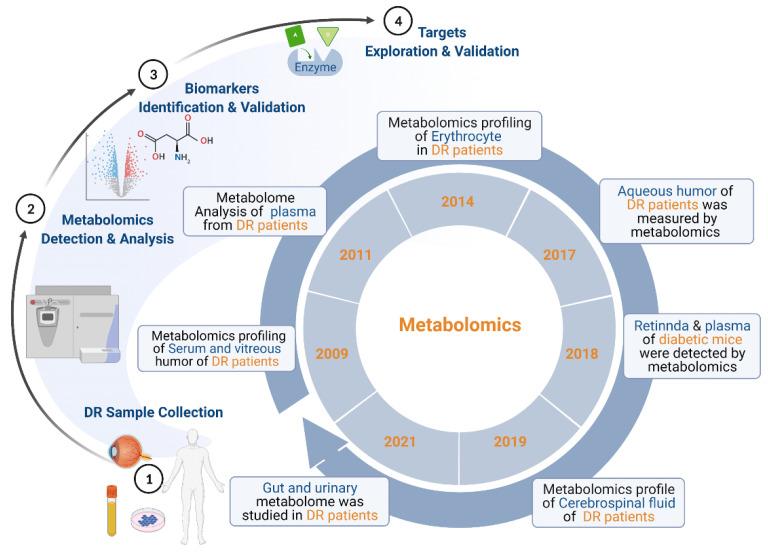
Diabetic retinopathy (DR), the leading cause of blindness in working-age adults, is one of the most common complications of diabetes mellitus (DM) featured by metabolic disorders. With the global prevalence of diabetes, the incidence of DR is expected to increase. Prompt detection and the targeting of anti-oxidative stress intervention could effectively reduce visual impairment caused by DR. However, the diagnosis and treatment of DR is often delayed due to the absence of obvious signs of retina imaging. Research progress supports that metabolomics is a powerful tool to discover potential diagnostic biomarkers and therapeutic targets for the causes of oxidative stress through profiling metabolites in diseases, which provides great opportunities for DR with metabolic heterogeneity. Thus, this review summarizes the latest advances in metabolomics in DR, as well as potential diagnostic biomarkers, and predicts molecular targets through the integration of genome-wide association studies (GWAS) with metabolomics. Metabolomics provides potential biomarkers, molecular targets and therapeutic strategies for controlling the progress of DR, especially the interventions at early stages and precise treatments based on individual patient variations.
糖尿病视网膜病变(DR)是糖尿病(DM)最常见的并发症之一,也是导致工作年龄成年人失明的主要原因,其特征是代谢紊乱。随着全球糖尿病患病率的增加,DR 的发病率预计将会上升。及时发现并针对抗氧化应激进行干预可以有效减少 DR 引起的视力损害。然而,由于视网膜成像缺乏明显迹象,DR 的诊断和治疗往往会被延误。研究进展表明,代谢组学是一种通过对疾病中代谢物进行分析来发现潜在诊断生物标志物和治疗氧化应激原因的有效工具,这为具有代谢异质性的 DR 提供了巨大的机会。因此,本综述总结了代谢组学在 DR 中的最新进展,以及潜在的诊断生物标志物,并通过将全基因组关联研究(GWAS)与代谢组学相结合来预测分子靶点。代谢组学为控制 DR 进展提供了潜在的生物标志物、分子靶点和治疗策略,特别是在早期干预和基于个体患者差异的精准治疗方面。



 Zotero 插件