
将转基因与共生原核生物技术相结合以对抗疟疾。
Combining transgenesis with paratransgenesis to fight malaria.
机构信息
Department of Molecular Microbiology and Immunology, Malaria Research Institute, Johns Hopkins Bloomberg School of Public Health, Baltimore, United States.
Laboratory of Malaria and Vector Research, National Institute of Allergy and Infectious Diseases, National Institutes of Health, Rockville, United States.
出版信息
Elife. 2022 Oct 25;11:e77584. doi: 10.7554/eLife.77584.
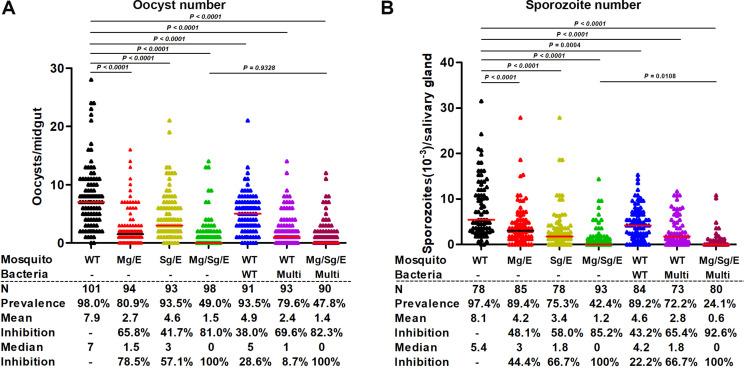
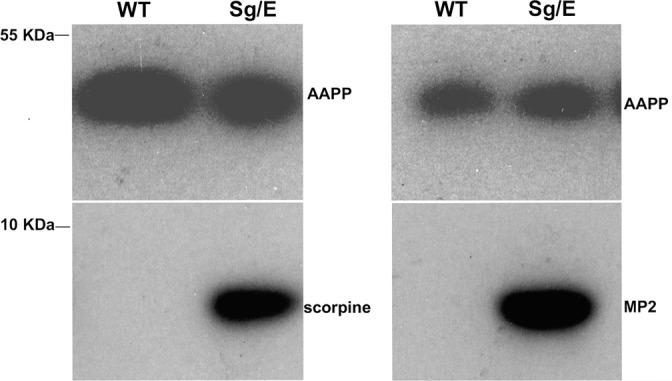
Malaria is among the deadliest infectious diseases, and , the causative agent, needs to complete a complex development cycle in its vector mosquito for transmission to occur. Two promising strategies to curb transmission are transgenesis, consisting of genetically engineering mosquitoes to express antimalarial effector molecules, and paratransgenesis, consisting of introducing into the mosquito commensal bacteria engineered to express antimalarial effector molecules. Although both approaches restrict parasite development in the mosquito, it is not known how their effectiveness compares. Here we provide an in-depth assessment of transgenesis and paratransgenesis and evaluate the combination of the two approaches. Using the Q-system to drive gene expression, we engineered mosquitoes to produce and secrete two effectors - scorpine and the MP2 peptide - into the mosquito gut and salivary glands. We also engineered , a commensal bacterium capable of spreading through mosquito populations to secrete effectors into the mosquito gut. Whereas both mosquito-based and bacteria-based approaches strongly reduced the oocyst and sporozoite intensity, a substantially stronger reduction of development was achieved when transgenesis and paratransgenesis were combined. Most importantly, transmission of from infected to naïve mice was maximally inhibited by the combination of the two approaches. Combining these two strategies promises to become a powerful approach to combat malaria.
疟疾是最致命的传染病之一,其病原体需要在其传播媒介蚊子中完成复杂的发育周期。两种有前途的抑制传播策略是转基因和共生体基因转移,前者包括通过基因工程使蚊子表达抗疟效应分子,后者包括引入经过基因工程改造以表达抗疟效应分子的共生细菌。尽管这两种方法都能限制寄生虫在蚊子中的发育,但尚不清楚它们的效果如何。在这里,我们对转基因和共生体基因转移进行了深入评估,并评估了这两种方法的结合。我们使用 Q 系统驱动基因表达,使蚊子产生并分泌两种效应物——蝎毒素和 MP2 肽——到蚊子的肠道和唾液腺中。我们还设计了一种能够在蚊子种群中传播的共生细菌,使其将效应物分泌到蚊子的肠道中。虽然基于蚊子和细菌的方法都能强烈降低卵囊和子孢子的强度,但当转基因和共生体基因转移结合使用时,对 的发育的抑制作用要强得多。最重要的是,当两种方法结合使用时,从感染蚊子向未感染蚊子的传播被最大程度地抑制。结合这两种策略有望成为对抗疟疾的有力手段。




 Zotero 插件