
探究 COVID-19 大流行反应中的保守主义-厌恶悖论:对政治意识形态、厌恶敏感性和大流行应对之间相互关系的再检验。
Investigating the conservatism-disgust paradox in reactions to the COVID-19 pandemic: A reexamination of the interrelations among political ideology, disgust sensitivity, and pandemic response.
机构信息
University of Kent, Canterbury, United Kingdom.
The Ohio State University, Columbus, Ohio, United States of America.
出版信息
PLoS One. 2022 Nov 4;17(11):e0275440. doi: 10.1371/journal.pone.0275440. eCollection 2022.
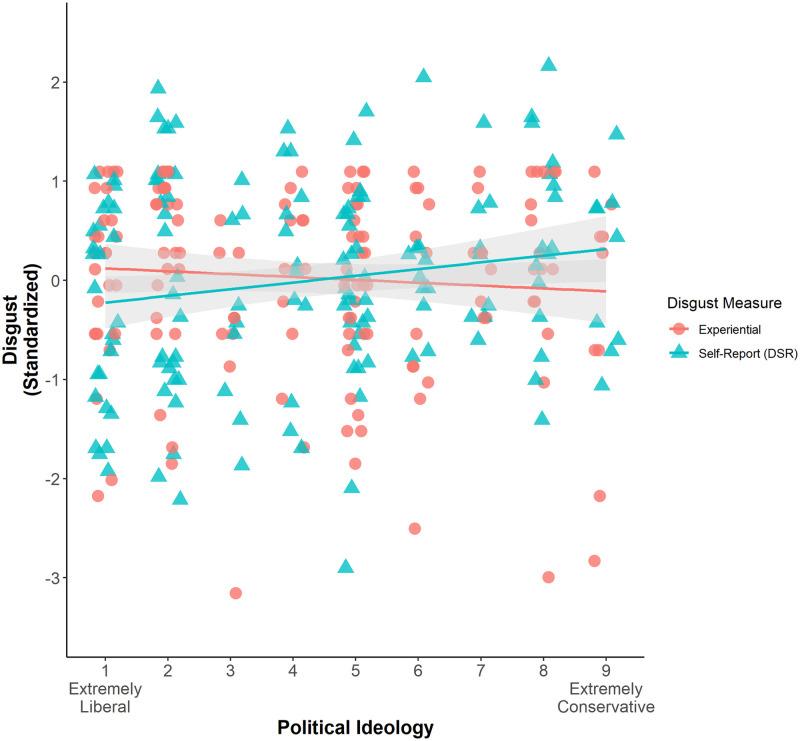
Research has documented robust associations between greater disgust sensitivity and (1) concerns about disease, and (2) political conservatism. However, the COVID-19 disease pandemic raised challenging questions about these associations. In particular, why have conservatives-despite their greater disgust sensitivity-exhibited less concern about the pandemic? Here, we investigate this "conservatism-disgust paradox" and address several outstanding theoretical questions regarding the interrelations among disgust sensitivity, ideology, and pandemic response. In four studies (N = 1,764), we identify several methodological and conceptual factors-in particular, an overreliance on self-report measures-that may have inflated the apparent associations among these constructs. Using non-self-report measures, we find evidence that disgust sensitivity may be a less potent predictor of disease avoidance than is typically assumed, and that ideological differences in disgust sensitivity may be amplified by self-report measures. These findings suggest that the true pattern of interrelations among these factors may be less "paradoxical" than is typically believed.
研究记录了更大的厌恶敏感性与(1)对疾病的担忧,以及(2)政治保守主义之间的强相关性。然而,COVID-19 疾病大流行对这些关联提出了具有挑战性的问题。特别是,为什么保守派——尽管他们的厌恶敏感性更高——对大流行的担忧却更少?在这里,我们调查了这种“保守主义-厌恶悖论”,并解决了几个关于厌恶敏感性、意识形态和大流行应对之间相互关系的悬而未决的理论问题。在四项研究中(N=1764),我们确定了几个方法学和概念性因素——特别是过度依赖自我报告措施——这些因素可能夸大了这些结构之间的明显关联。使用非自我报告措施,我们发现证据表明,厌恶敏感性可能不像通常假设的那样是疾病回避的有力预测因素,而自我报告措施可能放大了厌恶敏感性在意识形态上的差异。这些发现表明,这些因素之间的真实相互关系模式可能不像通常认为的那样“矛盾”。

 Zotero 插件