
大型藻类衍生的多功能生物活性物质:在食品和制药领域的潜在应用
Macroalgae-Derived Multifunctional Bioactive Substances: The Potential Applications for Food and Pharmaceuticals.
作者信息
Guo Jiameng, Qi Mei, Chen Hongyu, Zhou Chengxu, Ruan Roger, Yan Xiaojun, Cheng Pengfei
机构信息
College of Food and Pharmaceutical Sciences, Ningbo University, Ningbo 315211, China.
Center for Biorefining and Department of Bioproducts and Biosystems Engineering, University of Minnesota-Twin Cities, Saint Paul, MN 55108, USA.
出版信息
Foods. 2022 Oct 31;11(21):3455. doi: 10.3390/foods11213455.
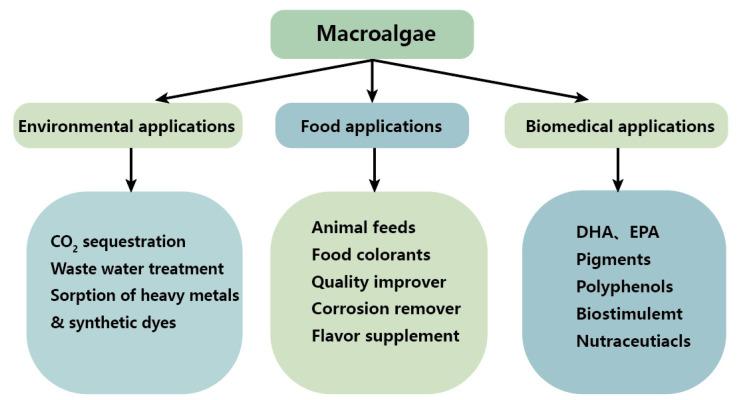
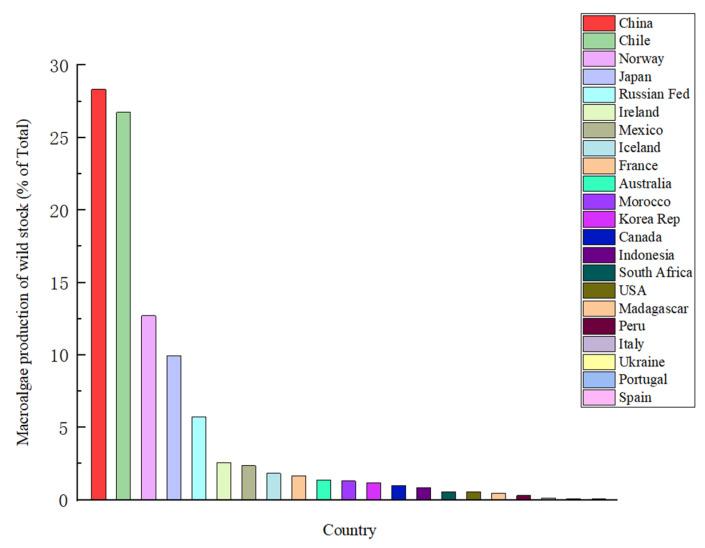
Macroalgae, as one of the important photosynthetic organisms in the marine environment are widely used in various fields, particularly in the production of food and pharmaceuticals. Given their wide distribution, easy accessibility and high efficiency in fixing carbon dioxide through the carbon concentrating mechanism, they can produce abundant nutriments or metabolites. Moreover, macroalgae can assimilate nitrogen and phosphorus bases on the purification of wastewater, and thus further accumulate high levels of bioactive substances. This review mainly introduces the distribution characteristics of macroalgae and their unique bioactive applications in food, medicine and environmental remediation. Their functional ingredients and bioactive substances are beneficial in food production and/or medicine development. Resource utilization of macroalgae coupled with wastewater and waste gas treatment would provide a sustainable path for bioactive substances production.
大型海藻作为海洋环境中重要的光合生物之一,在各个领域有着广泛的应用,尤其是在食品和药品生产方面。鉴于其分布广泛、易于获取且通过碳浓缩机制固定二氧化碳的效率高,它们能够产生丰富的营养物质或代谢产物。此外,大型海藻可以在净化废水的基础上同化氮和磷,从而进一步积累高水平的生物活性物质。本综述主要介绍大型海藻的分布特征及其在食品、医药和环境修复方面独特的生物活性应用。它们的功能成分和生物活性物质有利于食品生产和/或药物开发。大型海藻的资源利用与废水和废气处理相结合,将为生物活性物质的生产提供一条可持续的途径。


 Zotero 插件