
2,3-二氢喹唑啉-4(1H)-酮衍生物在前列腺癌细胞系中的分子和代谢改变。
Molecular and metabolic alterations of 2,3-dihydroquinazolin-4(1H)-one derivatives in prostate cancer cell lines.
机构信息
Department of Pharmaceutical Sciences, School of Pharmacy, The University of Jordan, Queen Rania St, Amman, 11942, Jordan.
Department of Pharmaceutical Sciences, Faculty of Pharmacy, Philadelphia University, Amman, 19392, Jordan.
出版信息
Sci Rep. 2022 Dec 14;12(1):21599. doi: 10.1038/s41598-022-26148-4.
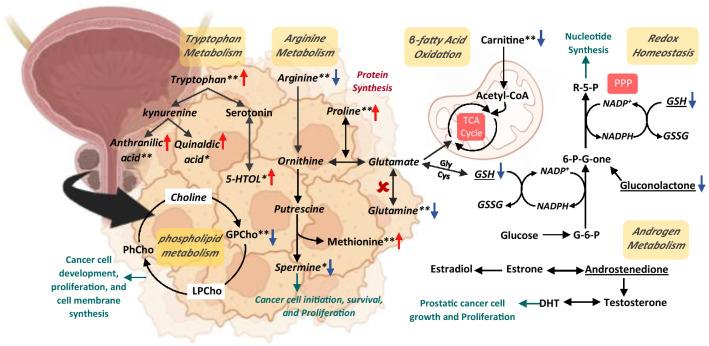
Prostate cancer (PC) is the second most common tumor in males worldwide. The lack of effective medication and the development of multidrug resistance towards current chemotherapeutic agents urge the need to discover novel compounds and therapeutic targets for PC. Herein, seven synthesized 2,3-dihydroquinazolin-4(1H)-one analogues were evaluated for their anticancer activity against PC3 and DU145 cancer cell lines using MTT, scratch-wound healing, adhesion and invasion assays. Besides, a liquid chromatography mass spectrometry (LC-MS)-based metabolomics approach was followed to identify the biochemical pathways altered in DU145 cancer cells upon exposure to dihydroquinazolin derivatives. The seven compounds showed sufficient cytotoxicity and significantly suppressed DU145 and PC3 migration after 48 and 72 h. C2 and C5 had the most potent effect with IC < 15 µM and significantly inhibited PC cell adhesion and invasion. Metabolomics revealed that C5 disturbed the level of metabolites involved in essential processes for cancer cell proliferation, progression and growth including energy production, redox homeostasis, amino acids and polyamine metabolisms and choline phospholipid metabolism. The data presented herein highlighted the importance of these compounds as potential anticancer agents particularly C5, and pointed to the promising role of metabolomics as a new analytical approach to investigate the antiproliferative activity of synthesized compounds and identify new therapeutic targets.
前列腺癌 (PC) 是全球男性第二大常见肿瘤。缺乏有效的药物治疗以及当前化疗药物的多药耐药性的发展,促使人们需要发现用于 PC 的新型化合物和治疗靶点。在此,使用 MTT、划痕愈合、黏附和侵袭测定法,评估了 7 种合成的 2,3-二氢喹唑啉-4(1H)-酮类似物对 PC3 和 DU145 癌细胞系的抗癌活性。此外,还采用基于液相色谱-质谱 (LC-MS) 的代谢组学方法来鉴定暴露于二氢喹唑啉衍生物后 DU145 癌细胞中改变的生化途径。这 7 种化合物表现出足够的细胞毒性,并在 48 和 72 小时后显著抑制 DU145 和 PC3 的迁移。C2 和 C5 具有最强的效果,IC < 15 µM,并显著抑制 PC 细胞的黏附和侵袭。代谢组学表明,C5 扰乱了参与癌细胞增殖、进展和生长的重要过程的代谢物水平,包括能量产生、氧化还原稳态、氨基酸和多胺代谢以及胆碱磷脂代谢。本文提供的数据强调了这些化合物作为潜在抗癌剂的重要性,特别是 C5,并指出代谢组学作为一种新的分析方法在研究合成化合物的抗增殖活性和鉴定新的治疗靶点方面具有广阔的应用前景。


 Zotero 插件