
运动对美国短吻鳄脑脊液压力的影响()
The Influence of Movement on the Cerebrospinal Fluid Pressure of the American Alligator ().
作者信息
Young Bruce A, Cramberg Michael
机构信息
Department of Anatomy, Kirksville College of Osteopathic Medicine, Kirksville, MO 63501, USA.
出版信息
Biology (Basel). 2022 Nov 25;11(12):1702. doi: 10.3390/biology11121702.
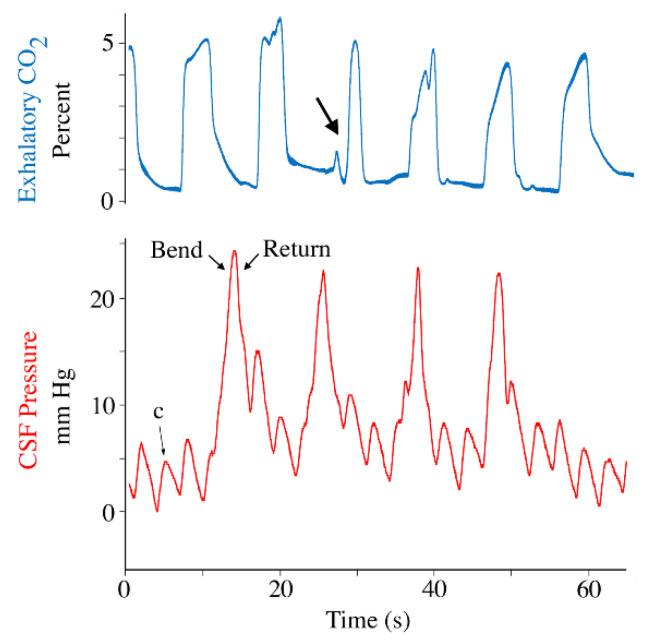
This study was undertaken to document how the cerebrospinal fluid (CSF) pressure varied during movements and physiological activities. Using surgically implanted pressure catheters; the CSF pressure was recorded from sub-adult American alligators () under anesthesia and post-recovery. Pressures were recorded during physiological activities (the cardiac cycle; passive and active ventilation); manual manipulation of the anesthetized animals (foot sweeps; tail oscillations; and body bends); as well as voluntary movements post-recovery (changes in body tone; defensive strikes; and locomotion). The CSF pulsations associated with the cardiac cycle had the lowest mean amplitude (3.7 mm Hg); during active ventilation and defensive strikes; the alligators routinely generated CSF pressure spikes in excess of 100 mm Hg. The recorded CSF pressures appear to be caused by a variety of mechanisms including vascular pressure; fluid inertia; and possible physical displacement of the spinal cord. The results of the study suggest that any model of CSF dynamics or perfusion should incorporate the episodic high-pressure CSF pulsations associated with movement.
本研究旨在记录脑脊液(CSF)压力在运动和生理活动期间是如何变化的。使用手术植入的压力导管,在麻醉状态下和恢复后,从亚成年美国短吻鳄身上记录脑脊液压力。在生理活动(心动周期、被动和主动通气)、对麻醉动物的手动操作(足部扫动、尾部摆动和身体弯曲)以及恢复后的自主运动(身体张力变化、防御性攻击和运动)过程中记录压力。与心动周期相关的脑脊液搏动平均幅度最低(3. mmHg);在主动通气和防御性攻击期间,短吻鳄通常会产生超过100 mmHg的脑脊液压力峰值。记录到的脑脊液压力似乎是由多种机制引起的,包括血管压力、流体惯性以及脊髓可能的物理位移。该研究结果表明,任何脑脊液动力学或灌注模型都应纳入与运动相关的间歇性高压脑脊液搏动。




 Zotero 插件