
转录组学和共表达网络分析揭示彩绒革盖菌漆酶活性的候选基因。
Transcriptomics and co-expression network analysis revealing candidate genes for the laccase activity of Trametes gibbosa.
机构信息
Northeast Forestry University, Harbin, China.
Wageningen University & Research, Wageningen, Netherlands.
出版信息
BMC Microbiol. 2023 Jan 26;23(1):29. doi: 10.1186/s12866-022-02727-3.
BACKGROUND
Trametes gibbosa, which is a white-rot fungus of the Polyporaceae family found in the cold temperate zone, causes spongy white rot on wood. Laccase can oxidize benzene homologs and is one of the important oxidases for white rot fungi to degrade wood. However, the pathway of laccase synthesis in white rot fungi is unknown.
RESULTS
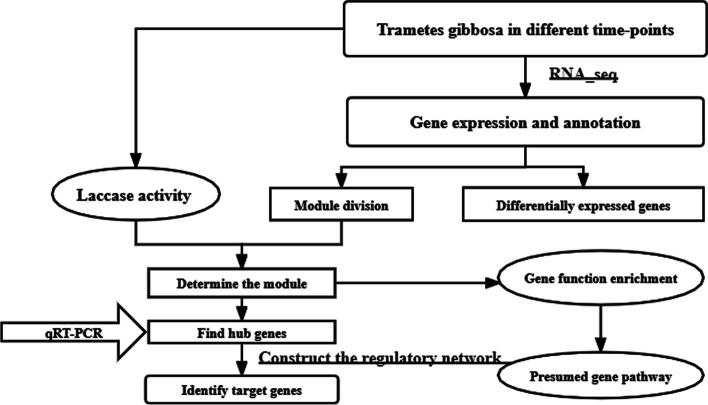
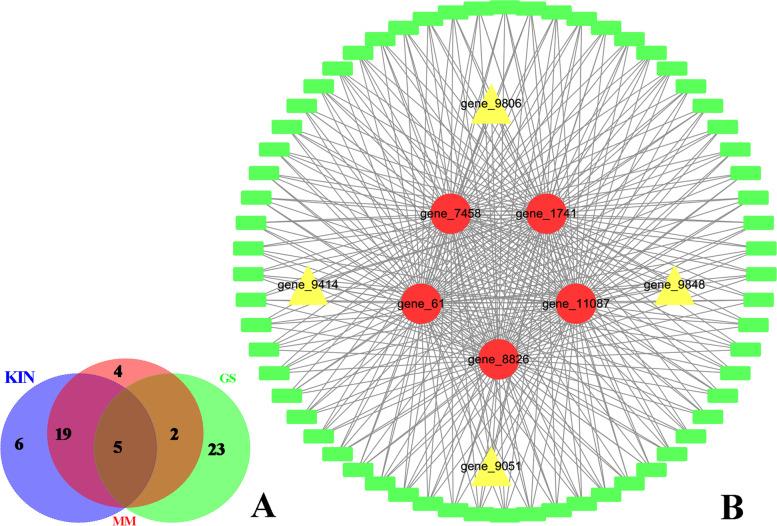
The peak value of laccase activity reached 135.75 U/min/L on the 9th day. For laccase activity and RNA-seq data, gene expression was segmented into 24 modules. Turquoise and blue modules had greater associations with laccase activity (positively 0.94 and negatively -0.86, respectively). For biology function, these genes were concentrated on the cell cycle, citrate cycle, nicotinate, and nicotinamide metabolism, succinate dehydrogenase activity, flavin adenine dinucleotide binding, and oxidoreductase activity which are highly related to the laccase synthetic pathway. Among them, gene_8826 (MW199767), gene_7458 (MW199766), gene_61 (MW199765), gene_1741 (MH257605), and gene_11087 (MK805159) were identified as central genes.
CONCLUSION
Laccase activity steadily increased in wood degradation. Laccase oxidation consumes oxygen to produce hydrogen ions and water during the degradation of wood. Some of the hydrogen ions produced can be combined by Flavin adenine dinucleotide (FAD) to form reduced Flavin dinucleotide (FADH2), which can be transmitted. Also, the fungus was starved of oxygen throughout fermentation, and the NADH and FADH2 are unable to transfer hydrogen under hypoxia, resulting in the inability of NAD and FAD to regenerate and inhibit the tricarboxylic acid cycle of cells. These key hub genes related to laccase activity play important roles in the molecular mechanisms of laccase synthesis for exploring industrial excellent strains.
背景
云芝,属于多孔菌科白腐真菌,生长在寒温带,引起木材海绵状白腐。漆酶可以氧化苯同系物,是白腐真菌降解木材的重要氧化酶之一。然而,白腐真菌中漆酶的合成途径尚不清楚。
结果
第 9 天漆酶活性峰值达到 135.75 U/min/L。对于漆酶活性和 RNA-seq 数据,基因表达被分为 24 个模块。绿松石和蓝色模块与漆酶活性的相关性更大(分别为正相关 0.94 和负相关-0.86)。对于生物学功能,这些基因主要集中在细胞周期、柠檬酸循环、烟酸和烟酰胺代谢、琥珀酸脱氢酶活性、黄素腺嘌呤二核苷酸结合和氧化还原酶活性,这些都与漆酶合成途径密切相关。其中,基因_8826(MW199767)、基因_7458(MW199766)、基因_61(MW199765)、基因_1741(MH257605)和基因_11087(MK805159)被鉴定为核心基因。
结论
在木材降解过程中,漆酶活性稳步增加。漆酶氧化在木材降解过程中消耗氧气产生氢离子和水。产生的一些氢离子可以与黄素腺嘌呤二核苷酸(FAD)结合形成还原黄素二核苷酸(FADH2),从而可以传递。此外,真菌在发酵过程中缺氧,NADH 和 FADH2 在缺氧下无法转移氢,导致 NAD 和 FAD 无法再生,抑制细胞的三羧酸循环。这些与漆酶活性相关的关键枢纽基因在探索工业优良菌株的漆酶合成分子机制中发挥着重要作用。





 Zotero 插件