
DNA甲基化变化是牙周炎与动脉粥样硬化性心血管疾病之间长期关联的基础。
DNA methylation changes underlie the long-term association between periodontitis and atherosclerotic cardiovascular disease.
作者信息
Omar Mohamed, Alexiou Maria, Rekhi Umar R, Lehmann Konrad, Bhardwaj Aneesh, Delyea Cole, Elahi Shokrollah, Febbraio Maria
机构信息
School of Dentistry, College of Life Sciences, University of Alberta, Edmonton, AB, Canada.
出版信息
Front Cardiovasc Med. 2023 Apr 21;10:1164499. doi: 10.3389/fcvm.2023.1164499. eCollection 2023.
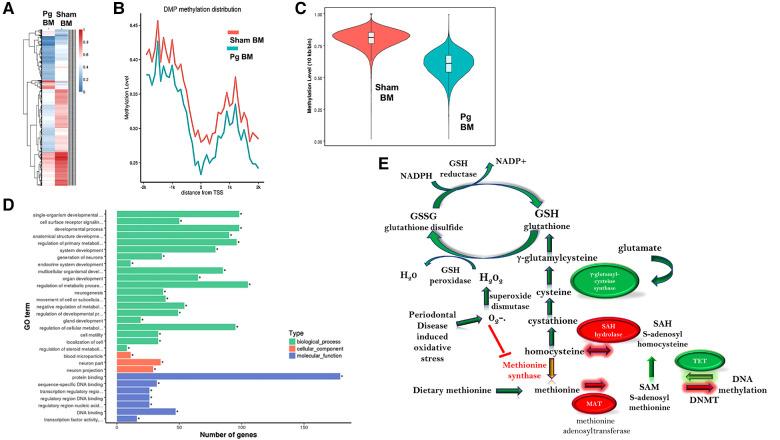
Periodontitis, the leading cause of adult tooth loss, has been identified as an independent risk factor for cardiovascular disease (CVD). Studies suggest that periodontitis, like other CVD risk factors, shows the persistence of increased CVD risk even after mitigation. We hypothesized that periodontitis induces epigenetic changes in hematopoietic stem cells in the bone marrow (BM), and such changes persist after the clinical elimination of the disease and underlie the increased CVD risk. We used a BM transplant approach to simulate the clinical elimination of periodontitis and the persistence of the hypothesized epigenetic reprogramming. Using the low-density lipoprotein receptor knockout ( ) atherosclerosis mouse model, BM donor mice were fed a high-fat diet to induce atherosclerosis and orally inoculated with (), a keystone periodontal pathogen; the second group was sham-inoculated. Naïve mice were irradiated and transplanted with BM from one of the two donor groups. Recipients of BM from -inoculated donors developed significantly more atherosclerosis, accompanied by cytokine/chemokines that suggested BM progenitor cell mobilization and were associated with atherosclerosis and/or PD. Using whole-genome bisulfite sequencing, 375 differentially methylated regions (DMRs) and global hypomethylation in recipients of BM from -inoculated donors were observed. Some DMRs pointed to the involvement of enzymes with major roles in DNA methylation and demethylation. In validation assays, we found a significant increase in the activity of ten-eleven translocase-2 and a decrease in the activity of DNA methyltransferases. Plasma S-adenosylhomocysteine levels were significantly higher, and the S-adenosylmethionine to S-adenosylhomocysteine ratio was decreased, both of which have been associated with CVD. These changes may be related to increased oxidative stress as a result of infection. These data suggest a novel and paradigm-shifting mechanism in the long-term association between periodontitis and atherosclerotic CVD.
牙周炎是成人牙齿脱落的主要原因,已被确定为心血管疾病(CVD)的独立危险因素。研究表明,牙周炎与其他CVD危险因素一样,即使在病情缓解后,CVD风险增加的情况仍会持续。我们假设牙周炎会诱导骨髓(BM)中造血干细胞的表观遗传变化,并且这些变化在疾病临床消除后仍会持续,并构成CVD风险增加的基础。我们使用骨髓移植方法来模拟牙周炎的临床消除以及假设的表观遗传重编程的持续存在。使用低密度脂蛋白受体敲除( )动脉粥样硬化小鼠模型,给骨髓供体小鼠喂食高脂饮食以诱导动脉粥样硬化,并口服接种 (),一种关键的牙周病原体;第二组进行假接种。将未经处理的 小鼠进行照射,并移植来自两个供体组之一的骨髓。接种 的供体的骨髓受体发生了明显更多的动脉粥样硬化,伴有细胞因子/趋化因子,提示骨髓祖细胞动员,并且与动脉粥样硬化和/或牙周炎相关。使用全基因组亚硫酸氢盐测序,在接种 的供体的骨髓受体中观察到375个差异甲基化区域(DMR)和全基因组低甲基化。一些DMR表明在DNA甲基化和去甲基化中起主要作用的酶的参与。在验证试验中,我们发现十 - 十一转位酶-2的活性显著增加,而DNA甲基转移酶的活性降低。血浆S-腺苷同型半胱氨酸水平显著升高,S-腺苷甲硫氨酸与S-腺苷同型半胱氨酸的比率降低,这两者都与CVD有关。这些变化可能与 感染导致的氧化应激增加有关。这些数据表明牙周炎与动脉粥样硬化性CVD之间长期关联的一种新的、范式转变的机制。



 Zotero 插件