
生活在加拿大城市地区的第一民族、因纽特人和梅蒂斯人及其获得医疗保健的情况:系统评价。
First Nations, Inuit and Métis Peoples Living in Urban Areas of Canada and Their Access to Healthcare: A Systematic Review.
机构信息
Department of Infectious Diseases, Peter Doherty Institute for Infection and Immunity, University of Melbourne, Melbourne, VIC 3010, Australia.
Psychology Department, York University, Toronto, ON M3J 1P3, Canada.
出版信息
Int J Environ Res Public Health. 2023 May 25;20(11):5956. doi: 10.3390/ijerph20115956.
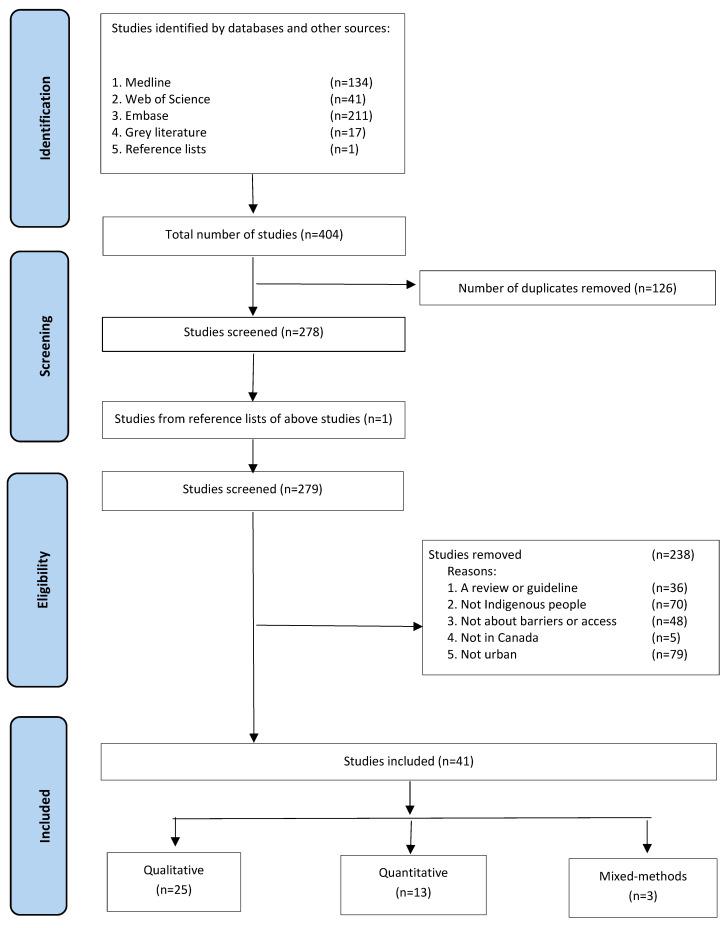
In Canada, approximately 52% of First Nations, Inuit and Métis (Indigenous) peoples live in urban areas. Although urban areas have some of the best health services in the world, little is known about the barriers or facilitators Indigenous peoples face when accessing these services. This review aims to fill these gaps in knowledge. Embase, Medline and Web of Science were searched from 1 January 1981 to 30 April 2020. A total of 41 studies identified barriers or facilitators of health service access for Indigenous peoples in urban areas. Barriers included difficult communication with health professionals, medication issues, dismissal by healthcare staff, wait times, mistrust and avoidance of healthcare, racial discrimination, poverty and transportation issues. Facilitators included access to culture, traditional healing, Indigenous-led health services and cultural safety. Policies and programs that remove barriers and implement the facilitators could improve health service access for Indigenous peoples living in urban and related homelands in Canada.
在加拿大,约有 52%的第一民族、因纽特人和梅蒂斯人(原住民)居住在城市地区。尽管城市地区拥有世界上最好的医疗服务之一,但对于原住民在获取这些服务时面临的障碍或促进因素知之甚少。本综述旨在填补这一知识空白。从 1981 年 1 月 1 日至 2020 年 4 月 30 日,检索了 Embase、Medline 和 Web of Science。总共确定了 41 项研究,这些研究探讨了城市地区原住民获取医疗服务的障碍或促进因素。障碍包括与卫生专业人员沟通困难、用药问题、医护人员解雇、等待时间、对医疗保健的不信任和回避、种族歧视、贫困和交通问题。促进因素包括获得文化、传统治疗、原住民主导的医疗服务和文化安全。消除障碍和实施促进因素的政策和计划可以改善居住在加拿大城市和相关家园的原住民获取医疗服务的机会。
 Zotero 插件