
寒冷暴露期间猪的葡萄糖和脂质代谢特征以及肠道微生物群与结肠黏膜免疫之间的相互作用
Characteristics of glucose and lipid metabolism and the interaction between gut microbiota and colonic mucosal immunity in pigs during cold exposure.
作者信息
Teng Teng, Sun Guodong, Ding Hongwei, Song Xin, Bai Guangdong, Shi Baoming, Shang Tingting
机构信息
College of Animal Science and Technology, Northeast Agricultural University, Harbin, 150030, China.
出版信息
J Anim Sci Biotechnol. 2023 Jul 4;14(1):84. doi: 10.1186/s40104-023-00886-5.
BACKGROUND
Cold regions have long autumn and winter seasons and low ambient temperatures. When pigs are unable to adjust to the cold, oxidative damage and inflammation may develop. However, the differences between cold and non-cold adaptation regarding glucose and lipid metabolism, gut microbiota and colonic mucosal immunological features in pigs are unknown. This study revealed the glucose and lipid metabolic responses and the dual role of gut microbiota in pigs during cold and non-cold adaptation. Moreover, the regulatory effects of dietary glucose supplements on glucose and lipid metabolism and the colonic mucosal barrier were evaluated in cold-exposed pigs.
RESULTS
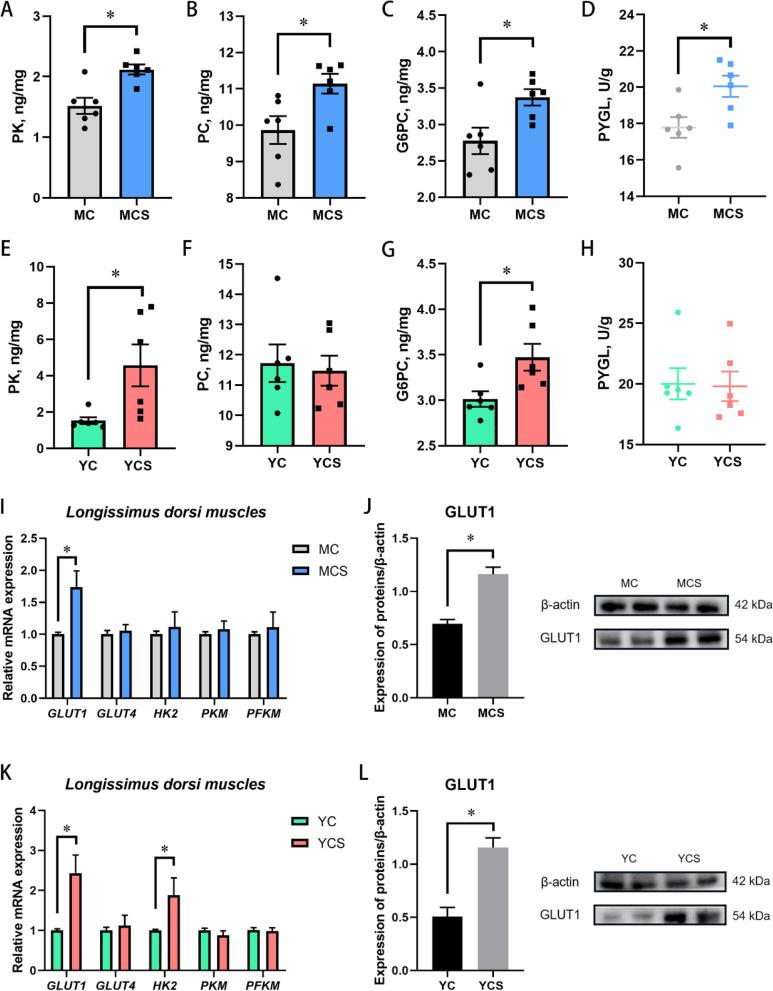
Cold and non-cold-adapted models were established by Min and Yorkshire pigs. Our results exhibited that cold exposure induced glucose overconsumption in non-cold-adapted pig models (Yorkshire pigs), decreasing plasma glucose concentrations. In this case, cold exposure enhanced the ATGL and CPT-1α expression to promote liver lipolysis and fatty acid oxidation. Meanwhile, the two probiotics (Collinsella and Bifidobacterium) depletion and the enrichment of two pathogens (Sutterella and Escherichia-Shigella) in colonic microbiota are not conducive to colonic mucosal immunity. However, glucagon-mediated hepatic glycogenolysis in cold-adapted pig models (Min pigs) maintained the stability of glucose homeostasis during cold exposure. It contributed to the gut microbiota (including the enrichment of the Rikenellaceae RC9 gut group, [Eubacterium] coprostanoligenes group and WCHB1-41) that favored cold-adapted metabolism.
CONCLUSIONS
The results of both models indicate that the gut microbiota during cold adaptation contributes to the protection of the colonic mucosa. During non-cold adaptation, cold-induced glucose overconsumption promotes thermogenesis through lipolysis, but interferes with the gut microbiome and colonic mucosal immunity. Furthermore, glucagon-mediated hepatic glycogenolysis contributes to glucose homeostasis during cold exposure.
背景
寒冷地区秋冬季节漫长,环境温度较低。当猪无法适应寒冷时,可能会发生氧化损伤和炎症。然而,猪在寒冷适应和非寒冷适应状态下,其葡萄糖和脂质代谢、肠道微生物群以及结肠黏膜免疫特征之间的差异尚不清楚。本研究揭示了猪在寒冷适应和非寒冷适应过程中的葡萄糖和脂质代谢反应以及肠道微生物群的双重作用。此外,还评估了日粮补充葡萄糖对冷暴露猪的葡萄糖和脂质代谢以及结肠黏膜屏障的调节作用。
结果
通过民猪和约克夏猪建立了寒冷适应和非寒冷适应模型。我们的结果表明,冷暴露在非寒冷适应猪模型(约克夏猪)中诱导了葡萄糖过度消耗,降低了血浆葡萄糖浓度。在这种情况下,冷暴露增强了ATGL和CPT-1α的表达,以促进肝脏脂肪分解和脂肪酸氧化。同时,结肠微生物群中两种益生菌(柯林斯菌属和双歧杆菌属)的减少以及两种病原体(萨特菌属和埃希氏菌-志贺氏菌属)的富集不利于结肠黏膜免疫。然而,在寒冷适应猪模型(民猪)中,胰高血糖素介导的肝糖原分解在冷暴露期间维持了葡萄糖稳态。它有助于肠道微生物群(包括里肯氏菌科RC9肠道菌群、产粪甾醇真杆菌菌群和WCHB1-41的富集),有利于寒冷适应代谢。
结论
两种模型的结果均表明,寒冷适应期间的肠道微生物群有助于保护结肠黏膜。在非寒冷适应期间,寒冷诱导的葡萄糖过度消耗通过脂肪分解促进产热,但会干扰肠道微生物群和结肠黏膜免疫。此外,胰高血糖素介导的肝糖原分解在冷暴露期间有助于维持葡萄糖稳态。




 Zotero 插件