
SaBrcada:通过维度提升和年龄分层预测乳腺癌患者的生存间隔
SaBrcada: Survival Intervals Prediction for Breast Cancer Patients by Dimension Raising and Age Stratification.
作者信息
Lin Shih-Huan, Chien Ching-Hsuan, Chang Kai-Po, Lu Min-Fang, Chen Yu-Ting, Chu Yen-Wei
机构信息
Ph.D. Program in Medical Biotechnology, National Chung Hsing University, Taichung 40227, Taiwan.
Department of Pathology, China Medical University Hospital, Taichung 404327, Taiwan.
出版信息
Cancers (Basel). 2023 Jul 20;15(14):3690. doi: 10.3390/cancers15143690.
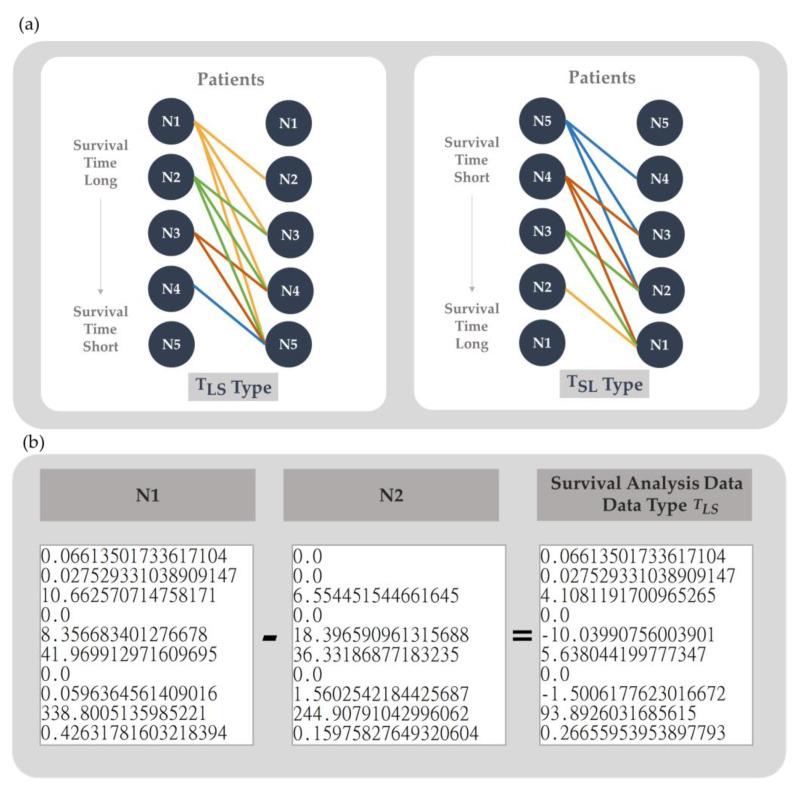
(1) Background: Breast cancer is the second leading cause of cancer death among women. The accurate prediction of survival intervals will help physicians make informed decisions about treatment strategies or the use of palliative care. (2) Methods: Gene expression is predictive and correlates to patient prognosis. To establish a reliable prediction tool, we collected a total of 1187 RNA-seq data points from breast cancer patients (median age 58 years) in Fragments Per Kilobase Million (FPKM) format from the TCGA database. Among them, we selected 144 patients with date of death information to establish the SaBrcada-AD dataset. We first normalized the SaBrcada-AD dataset to TPM to build the survival prediction model SaBrcada. After normalization and dimension raising, we used the differential gene expression data to test eight different deep learning architectures. Considering the effect of age on prognosis, we also performed a stratified random sampling test on all ages between the lower and upper quartiles of patient age, 48 and 69 years; (3) Results: Stratifying by age 61, the performance of SaBrcada built by GoogLeNet was improved to a highest accuracy of 0.798. We also built a free website tool to provide five predicted survival periods: within six months, six months to one year, one to three years, three to five years, or over five years, for clinician reference. (4) Conclusions: We built the prediction model, SaBrcada, and the website tool of the same name for breast cancer survival analysis. Through these models and tools, clinicians will be provided with survival interval information as a basis for formulating precision medicine.
(1) 背景:乳腺癌是女性癌症死亡的第二大主要原因。准确预测生存间隔将有助于医生就治疗策略或姑息治疗的使用做出明智决策。(2) 方法:基因表达具有预测性且与患者预后相关。为建立可靠的预测工具,我们从TCGA数据库收集了总共1187个来自乳腺癌患者(中位年龄58岁)的以每百万碱基中片段数(FPKM)格式表示的RNA测序数据点。其中,我们选择了144例有死亡日期信息的患者来建立SaBrcada - AD数据集。我们首先将SaBrcada - AD数据集归一化为TPM以构建生存预测模型SaBrcada。在归一化和升维后,我们使用差异基因表达数据测试了八种不同的深度学习架构。考虑到年龄对预后的影响,我们还对患者年龄四分位数下限和上限(48岁和69岁)之间的所有年龄进行了分层随机抽样测试;(3) 结果:按61岁分层,由GoogLeNet构建的SaBrcada的性能提高到最高准确率0.798。我们还建立了一个免费的网站工具,为临床医生提供五个预测生存期:六个月内、六个月至一年、一至三年、三至五年或五年以上,以供参考。(4) 结论:我们构建了用于乳腺癌生存分析的预测模型SaBrcada以及同名的网站工具。通过这些模型和工具,将为临床医生提供生存间隔信息,作为制定精准医学的依据。




 Zotero 插件