
视网膜星形胶质细胞形态可预测血管与神经元结构的整合。
Retinal astrocyte morphology predicts integration of vascular and neuronal architecture.
作者信息
Holden Joseph M, Wareham Lauren K, Calkins David J
机构信息
Department of Ophthalmology and Visual Sciences, Vanderbilt University Medical Center, Nashville, TN, United States.
Vanderbilt Neuroscience Graduate Program, Vanderbilt University, Nashville, TN, United States.
出版信息
Front Neurosci. 2023 Aug 9;17:1244679. doi: 10.3389/fnins.2023.1244679. eCollection 2023.
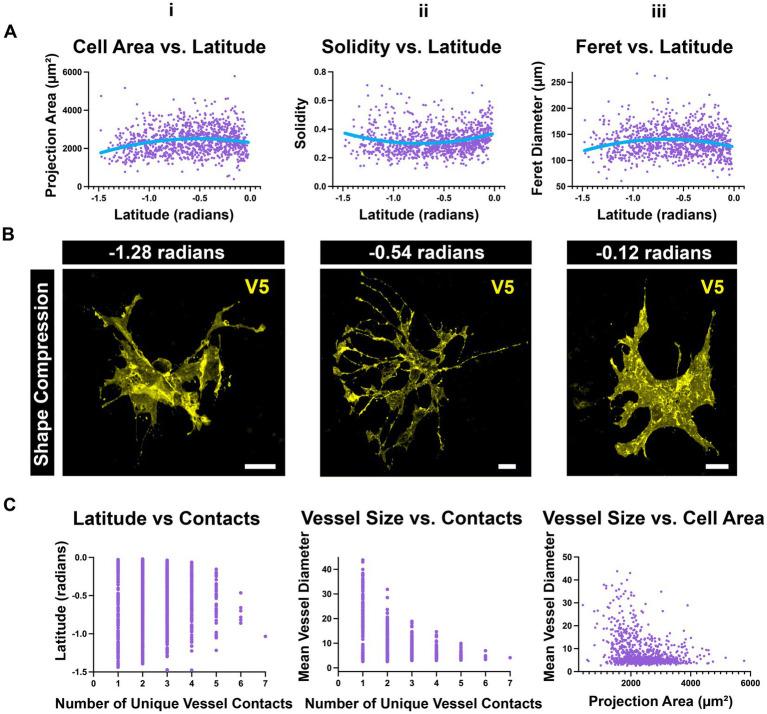
Astrocytes are important regulators of blood flow and play a key role in the response to injury and disease in the central nervous system (CNS). Despite having an understanding that structural changes to these cells have consequences for local neurovascular physiology, individual astrocyte morphology remains largely unexplored in the retina. Here, we used MORF3 mice to capture full membranous morphology for over fifteen hundred individual astrocytes in the mouse retina, a highly metabolically active component of the CNS. We demonstrate that retinal astrocytes have been misrepresented as stellate in morphology due to marker use like GFAP and S100β which underestimates cell complexity. We also find that astrocytes contain recurring morphological motifs which are predictive of the underlying neurovascular architecture of the inner retina and suggestive of function. These motifs predict fine sampling and integration of retinal ganglion cell electrical activity with consequences for blood flow regulation. Additionally, our data shows that astrocytes participate in neurovascular interactions to a much greater degree than currently reported. 100% of cells contact the vasculature through one of three mutually exclusive classes of connections. Similarly, 100% of cells contact some neuronal element, be it an RGC axon or soma. Finally, we report that astrocyte morphology depends on retinal eccentricity, with cells appearing compressed near the nerve head and in the periphery. These results reveal a large degree of astrocyte morphological complexity that informs their contribution to neurovascular coupling in the retina.
星形胶质细胞是血流的重要调节因子,在中枢神经系统(CNS)对损伤和疾病的反应中起关键作用。尽管人们已经认识到这些细胞的结构变化会对局部神经血管生理产生影响,但视网膜中单个星形胶质细胞的形态在很大程度上仍未被探索。在这里,我们使用MORF3小鼠来捕捉小鼠视网膜中超过1500个单个星形胶质细胞的完整膜形态,视网膜是CNS中一个高度代谢活跃的组成部分。我们证明,由于使用了如GFAP和S100β等标记物,视网膜星形胶质细胞在形态上被错误地描述为星状,这低估了细胞的复杂性。我们还发现星形胶质细胞包含重复出现的形态基序,这些基序可预测视网膜内层的潜在神经血管结构并暗示其功能。这些基序预测视网膜神经节细胞电活动的精细采样和整合,对血流调节有影响。此外,我们的数据表明,星形胶质细胞参与神经血管相互作用的程度比目前报道的要大得多。100%的细胞通过三种相互排斥的连接类型之一与脉管系统接触。同样,100%的细胞接触某些神经元成分,无论是视网膜神经节细胞轴突还是胞体。最后,我们报告星形胶质细胞的形态取决于视网膜离心率,细胞在视神经乳头附近和周边区域似乎被压缩。这些结果揭示了星形胶质细胞在形态上的高度复杂性,这为它们在视网膜神经血管耦合中的作用提供了信息。


 Zotero 插件