
制作移动式抗生素骨水泥间隔物的简单且经济高效的方法:手工制作硅胶模具。
Simple and cost-effective way to make mobile antibiotic cement spacer: hand-made silicone mold.
作者信息
Nguyen Quang Ton Quyen, Vo Ta Hoc, Phan Duc Tri, Truong Nguyen Khanh Hung
机构信息
Department of Orthopedic Surgery, Tam Anh Hospital, Ha Noi, Vietnam.
Orthopedic and Trauma Department, Dong Nai General Hospital, Dong Nai, Vietnam.
出版信息
SICOT J. 2023;9:32. doi: 10.1051/sicotj/2023032. Epub 2023 Nov 8.
BACKGROUND
Two-stage exchange arthroplasty is considered the most common approach for the management of prosthetic joint infections. There has been plentiful evidence to support the superiority of the mobile spacers over the static ones. Unfortunately, articulating options are not available in our low-resource environment, which motivated us to come up with an affordable way to create a mobile cement spacer. After experimenting with a variety of materials and producing methods, we realized that silicone is a favorable material for mold building and established a simple process of making a handmade silicone mold. We demonstrate the clinical outcomes of three prosthetic joint infections by using these spacers in the hope of spreading the idea to our colleagues who work in the circumstances of a developing country. Construction of the spacer molds: The molds, consisting of two parts, were shaped by using high viscosity addition silicone (elite HD+ putty soft, Zhermack SpA, Italy) as material, and previously removed implants as template. They were sterilized using ethylene oxide treatment before being ready for casting antibiotic-loaded bone cement spacer.
CASE REPORT
Three cases of prosthetic infection were treated with two-stage revision, using antibiotic-impregnated cement spacer cast in hand-made silicone molds. We sought to determine intraoperative complications, postoperative range of motion, and functional scores. All the patients were regularly followed up to identify fractures or dislocation of the spacer, and reinfection.
RESULTS
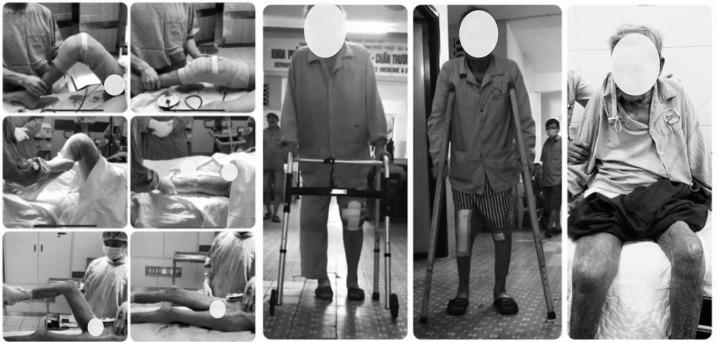
At the end of the follow-up, all three patients had the infection eradicated. The three patients could sit comfortably with bent knees, walk with partial weight-bearing, and achieve 75-80 degrees of knee flexion in the first week after surgery. Follow-up X-rays revealed no fractures or dislocation in any of the spacers.
CONCLUSION
Silicone molds offer a simple and cost-effective alternative to costly commercial products in producing articulating spacers. Treating infected joints arthroplasty with these spacers allows for early motion and partial weight bearing and improves patient satisfaction and life quality before reimplantation without significant complications.
背景
两阶段关节置换术被认为是治疗人工关节感染最常用的方法。有大量证据支持可活动间隔物优于固定间隔物。不幸的是,在我们资源匮乏的环境中没有可活动的选择,这促使我们想出一种经济实惠的方法来制作可活动的骨水泥间隔物。在试验了各种材料和制作方法后,我们意识到硅胶是制作模具的理想材料,并建立了一个制作手工硅胶模具的简单流程。我们展示了使用这些间隔物治疗三例人工关节感染的临床结果,希望能将这个想法传播给在发展中国家环境中工作的同事。间隔物模具的制作:模具由两部分组成,使用高粘度加成型硅胶(elite HD+ 软质腻子,意大利Zhermack SpA公司)作为材料,以先前取出的植入物为模板进行塑形。在准备浇铸载抗生素骨水泥间隔物之前,它们经过环氧乙烷处理进行消毒。
病例报告
三例假体感染患者接受了两阶段翻修手术,使用在手工硅胶模具中浇铸的含抗生素骨水泥间隔物。我们试图确定术中并发症、术后活动范围和功能评分。所有患者均接受定期随访,以确定间隔物是否骨折或脱位以及再感染情况。
结果
随访结束时,所有三名患者的感染均已根除
。三名患者术后第一周能够屈膝舒适就坐,部分负重行走,膝关节屈曲可达75 - 80度。随访X线检查显示所有间隔物均无骨折或脱位。
结论
硅胶模具在生产可活动间隔物方面为昂贵的商业产品提供了一种简单且经济高效的替代方案。用这些间隔物治疗感染关节置换术可实现早期活动和部分负重,并在再次植入前提高患者满意度和生活质量,且无明显并发症。




 Zotero 插件