
钛合金相组成对细胞黏附及表面定植的影响
Influence of the Phase Composition of Titanium Alloys on Cell Adhesion and Surface Colonization.
作者信息
Straumal Boris B, Anisimova Natalia Yu, Kiselevskiy Mikhail V, Novruzov Keryam M, Korneva Anna, Gornakova Alena S, Kilmametov Askar R, Sommadossi Silvana, Davdian Gregory
机构信息
Osipyan Institute of Solid State Physics, Russian Academy of Sciences, Ac. Osipyan Str. 2, Chernogolovka 142432, Russia.
N.N. Blokhin National Medical Research Center of Oncology of the Ministry of Health of the Russian Federation (N.N. Blokhin NMRCO), Moscow 115478, Russia.
出版信息
Materials (Basel). 2023 Nov 11;16(22):7130. doi: 10.3390/ma16227130.
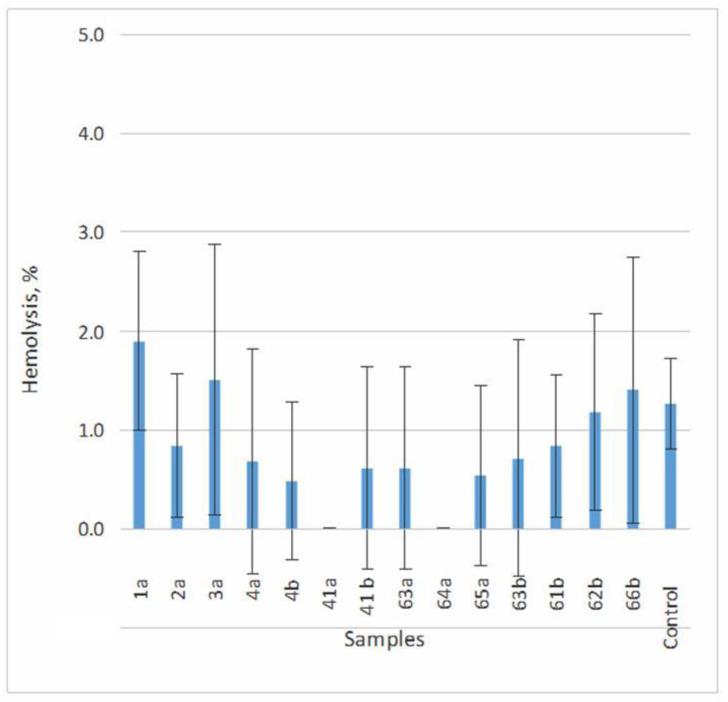
The pivotal role of metal implants within the host's body following reconstructive surgery hinges primarily on the initial phase of the process: the adhesion of host cells to the implant's surface and the subsequent colonization by these cells. Notably, titanium alloys represent a significant class of materials used for crafting metal implants. This study, however, marks the first investigation into how the phase composition of titanium alloys, encompassing the volume fractions of the α, β, and ω phases, influences cell adhesion to the implant's surface. Moreover, the research delves into the examination of induced hemolysis and cytotoxicity. To manipulate the phase composition of titanium alloys, various parameters were altered, including the chemical composition of titanium alloys with iron and niobium, annealing temperature, and high-pressure torsion parameters. By systematically adjusting these experimental parameters, we were able to discern the distinct impact of phase composition. As a result, the study unveiled that the colonization of the surfaces of the examined Ti-Nb and Ti-Fe alloys by human multipotent mesenchymal stromal cells exhibits an upward trend with the increasing proportion of the ω phase, concurrently accompanied by a decrease in the α and β phases. These findings signify a new avenue for advancing Ti-based alloys for both permanent implants and temporary fixtures, capitalizing on the ability to regulate the volume fractions of the α, β, and ω phases. Furthermore, the promising characteristics of the ω phase suggest the potential emergence of a third generation of biocompatible Ti alloys, the ω-based materials, following the first-generation α-Ti alloys and second-generation β alloys.
在重建手术后,金属植入物在宿主体内的关键作用主要取决于该过程的初始阶段:宿主细胞与植入物表面的粘附以及随后这些细胞的定植。值得注意的是,钛合金是用于制造金属植入物的一类重要材料。然而,本研究首次探讨了钛合金的相组成(包括α、β和ω相的体积分数)如何影响细胞与植入物表面的粘附。此外,该研究还深入考察了诱导溶血和细胞毒性。为了控制钛合金的相组成,改变了各种参数,包括含钛和铌的钛合金的化学成分、退火温度和高压扭转参数。通过系统地调整这些实验参数,我们能够辨别相组成的不同影响。结果表明,在所研究的Ti-Nb和Ti-Fe合金表面,随着ω相比例的增加,人多能间充质基质细胞的定植呈上升趋势,同时α相和β相减少。这些发现为推进用于永久植入物和临时固定装置的钛基合金开辟了一条新途径,利用了调节α、β和ω相体积分数的能力。此外,ω相的良好特性表明,继第一代α-Ti合金和第二代β合金之后,可能会出现第三代生物相容性钛合金,即ω基材料。




 Zotero 插件