
自身免疫性脑炎的结局与后遗症
Outcome and Sequelae of Autoimmune Encephalitis.
作者信息
Kvam Kathryn A, Stahl Jean-Paul, Chow Felicia C, Soldatos Ariane, Tattevin Pierre, Sejvar James, Mailles Alexandra
机构信息
Department of Neurology & Neurological Sciences, Center for Academic Medicine, Stanford University, Stanford, CA, USA.
Grenoble Alpes University, Grenoble, France.
出版信息
J Clin Neurol. 2024 Jan;20(1):3-22. doi: 10.3988/jcn.2023.0242.
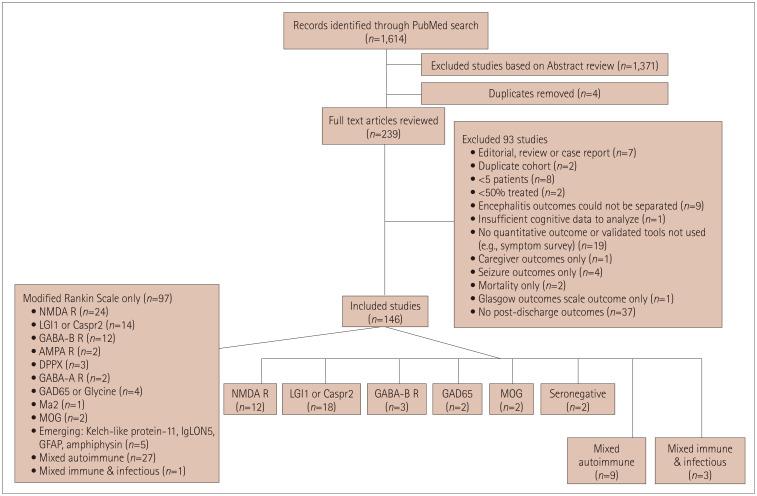
Autoimmune etiologies are a common cause for encephalitis. The clinical syndromes consistent with autoimmune encephalitis are both distinct and increasingly recognized, but less is known about persisting sequelae or outcomes. We searched PubMed for reports on outcomes after autoimmune encephalitis. Studies assessing validated, quantitative outcomes were included. We performed a narrative review of the published literature of outcomes after autoimmune encephalitis. We found 146 studies that produced outcomes data. The mortality rates were 6%-19% and the relapse risks were 10%-62%. Most patients achieved a good outcome based on a score on the modified Rankin Scale (mRS) of ≤2. Forty-nine studies evaluated outcomes beyond mRS; these studies investigated cognitive outcome, psychiatric sequelae, neurological deficits, global function, and quality-of-life/patient-reported outcomes using various tools at varying time points after the index hospital discharge. These more-detailed assessments revealed that most patients had persistent impairments, with frequent deficits in cognitive function, especially memory and attention. Depression and anxiety were also common. Many of these sequelae continued to improve over months or even years after the acute illness. While we found that lasting impairments were common among survivors of autoimmune encephalitis, additional research is needed to better understand the nature and impact of these sequelae. Standardized evaluation protocols are needed to improve the ability to compare outcomes across studies, guide rehabilitation strategies, and inform outcomes of interest in treatment trials as the field advances.
自身免疫性病因是脑炎的常见病因。与自身免疫性脑炎相符的临床综合征既独特又日益得到认可,但对于持续的后遗症或预后情况却知之甚少。我们在PubMed上搜索了关于自身免疫性脑炎预后的报告。纳入了评估经过验证的定量预后的研究。我们对已发表的关于自身免疫性脑炎预后的文献进行了叙述性综述。我们找到了146项产生预后数据的研究。死亡率为6%-19%,复发风险为10%-62%。基于改良Rankin量表(mRS)评分≤2,大多数患者取得了良好的预后。49项研究评估了mRS以外的预后;这些研究在首次出院后的不同时间点,使用各种工具调查了认知预后、精神后遗症、神经功能缺损、整体功能以及生活质量/患者报告的预后。这些更详细的评估显示,大多数患者存在持续的损伤,认知功能频繁出现缺陷,尤其是记忆和注意力方面。抑郁和焦虑也很常见。许多这些后遗症在急性疾病后的数月甚至数年中持续改善。虽然我们发现自身免疫性脑炎幸存者中持续损伤很常见,但仍需要进一步研究以更好地了解这些后遗症的性质和影响。随着该领域的发展,需要标准化的评估方案来提高跨研究比较预后的能力、指导康复策略并为治疗试验中的预后提供信息。
 Zotero 插件