
家族性阿尔茨海默病患者的间充质干细胞表达不同的 microRNA。
Mesenchymal Stem Cells from Familial Alzheimer's Patients Express MicroRNA Differently.
机构信息
Departamento de Biomedicina Molecular, Centro de Investigación y de Estudios Avanzados del Instituto Politécnico Nacional, Instituto Politécnico Nacional 2508, Ciudad de México 07360, Mexico.
Departamento de Biotecnología, Centro de Investigación y de Estudios Avanzados del Instituto Politécnico Nacional, Instituto Politécnico Nacional 2508, Ciudad de México 07360, Mexico.
出版信息
Int J Mol Sci. 2024 Jan 27;25(3):1580. doi: 10.3390/ijms25031580.
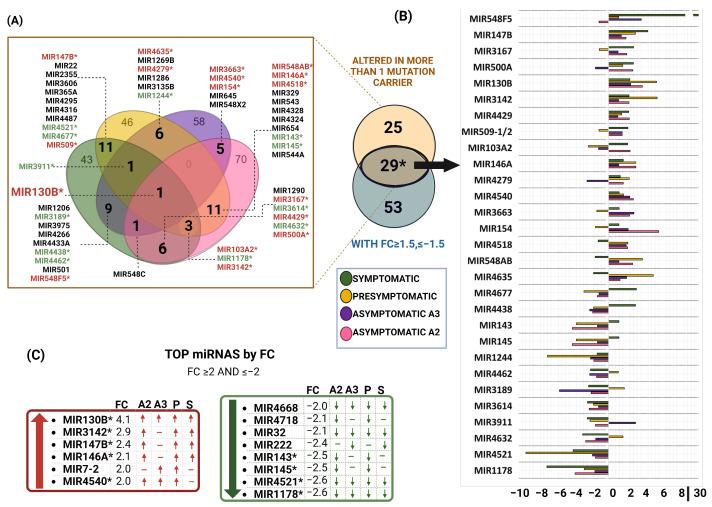
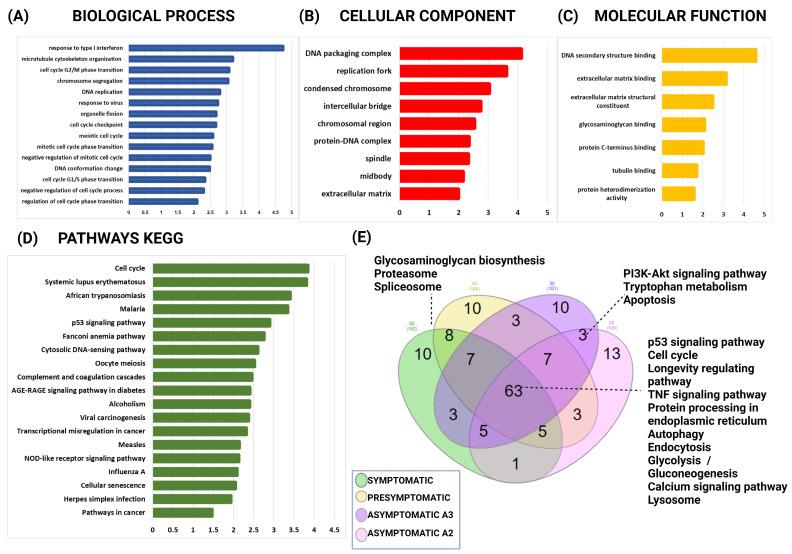
Alzheimer's disease (AD) is a progressive neurodegenerative disorder and the predominant form of dementia globally. No reliable diagnostic, predictive techniques, or curative interventions are available. MicroRNAs (miRNAs) are vital to controlling gene expression, making them valuable biomarkers for diagnosis and prognosis. This study examines the transcriptome of olfactory ecto-mesenchymal stem cells (MSCs) derived from individuals with the PSEN1(A431E) mutation (Jalisco mutation). The aim is to determine whether this mutation affects the transcriptome and expression profile of miRNAs and their target genes at different stages of asymptomatic, presymptomatic, and symptomatic conditions. Expression microarrays compare the MSCs from mutation carriers with those from healthy donors. The results indicate a distinct variation in the expression of miRNAs and mRNAs among different symptomatologic groups and between individuals with the mutation. Using bioinformatics tools allows us to identify target genes for miRNAs, which in turn affect various biological processes and pathways. These include the cell cycle, senescence, transcription, and pathways involved in regulating the pluripotency of stem cells. These processes are closely linked to inter- and intracellular communication, vital for cellular functioning. These findings can enhance our comprehension and monitoring of the disease's physiological processes, identify new disorder indicators, and develop innovative treatments and diagnostic tools for preventing or treating AD.
阿尔茨海默病(AD)是一种进行性神经退行性疾病,也是全球主要的痴呆症形式。目前尚无可靠的诊断、预测技术或治愈干预措施。microRNAs(miRNAs)在控制基因表达中起着至关重要的作用,因此它们是诊断和预后的有价值的生物标志物。本研究检查了源自 PSEN1(A431E)突变(哈利斯科突变)个体的嗅外胚间充质干细胞(MSC)的转录组。目的是确定这种突变是否会影响 miRNA 的转录组和表达谱及其靶基因在无症状、前驱期和有症状条件下的不同阶段。表达微阵列比较了突变携带者和健康供体的 MSC。结果表明,不同症状组和突变个体之间的 miRNA 和 mRNAs 表达存在明显差异。使用生物信息学工具可以识别 miRNA 的靶基因,这些靶基因又会影响各种生物学过程和途径。这些途径包括细胞周期、衰老、转录以及调节干细胞多能性的途径。这些过程与细胞内外通讯密切相关,对细胞功能至关重要。这些发现可以增强我们对疾病生理过程的理解和监测,识别新的疾病指标,并开发创新的治疗方法和诊断工具,以预防或治疗 AD。



 Zotero 插件