
整合转录组学和代谢组学分析揭示切割对中药材中黄酮类和皂苷类合成的影响
Integrated Transcriptomics and Metabolomics Analysis Reveals the Effects of Cutting on the Synthesis of Flavonoids and Saponins in Chinese Herbal Medicine .
作者信息
Guo Xu, Yan Xiang, Wang Yuanyuan, Shi Zhiyong, Niu Jingping, Liang Jianping, Jia Xiaoyun
机构信息
College of Life Sciences, Shanxi Agricultural University, Jinzhong 030801, China.
Shanxi Key Laboratory of Chinese Veterinary Medicine Modernization, Shanxi Agricultural University, Jinzhong 030801, China.
出版信息
Metabolites. 2024 Jan 30;14(2):97. doi: 10.3390/metabo14020097.
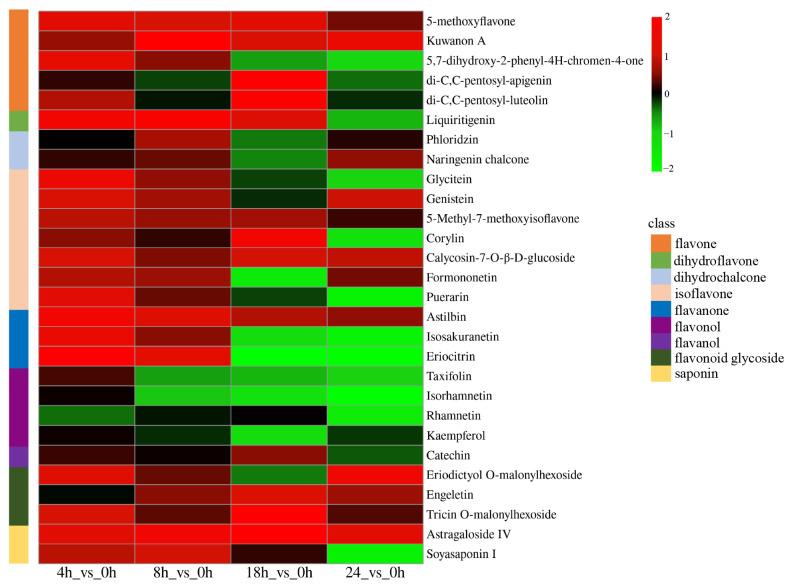
Astragali Radix, derived from the roots of , is a traditional Chinese medicine containing flavonoids and saponins as its key ingredients. With a shortage in the wild sources of the herbal plant, it is especially important to explore a cultivation mode for for medicinal purposes. Cutting, a physical environmental stress method, was used in this study with the objective of improving the quality of this herbal legume. We found that cutting of the top 1/3 of the aboveground part of during the fruiting period resulted in a significant increase in the content of flavonoids and saponins, as well as in root growth, including length, diameter, and dry weight. Furthermore, the leaves were sampled and analyzed using a combined transcriptome and metabolome analysis approach at five different time points after the treatment. Sixteen differentially expressed unigenes (DEGs) involved in the biosynthesis of flavonoids were identified; these were found to stimulate the synthesis of flavonoids such as formononetin and calycosin-7-O-β-D-glucoside. Moreover, we identified 10 DEGs that were associated with the biosynthesis of saponins, including astragaloside IV and soyasaponin I, and found that they only regulated the mevalonic acid (MVA) pathway. These findings provide new insights into cultivating high-quality , which could potentially alleviate the scarcity of this valuable medicinal plant.
黄芪根源于黄芪属植物的根,是一种以黄酮类化合物和皂苷为主要成分的传统中药。由于这种草本植物的野生资源短缺,探索其药用栽培模式尤为重要。本研究采用切割这种物理环境胁迫方法,目的是提高这种豆科药用植物的品质。我们发现,在结果期切割地上部分的顶部1/3,会使黄酮类化合物和皂苷的含量显著增加,同时根系生长,包括长度、直径和干重也会增加。此外,在处理后的五个不同时间点对叶片进行采样,并采用转录组和代谢组联合分析方法进行分析。鉴定出16个参与黄酮类生物合成的差异表达单基因(DEGs);发现这些基因能刺激芒柄花黄素和毛蕊花糖苷等黄酮类化合物的合成。此外,我们鉴定出10个与皂苷生物合成相关的DEGs,包括黄芪甲苷IV和大豆皂苷I,并发现它们只调控甲羟戊酸(MVA)途径。这些发现为培育高品质黄芪提供了新的见解,这可能会缓解这种珍贵药用植物的稀缺状况。



 Zotero 插件