
用于训练基于人工智能的中子图像分割的数据驱动模拟。
Data-driven simulations for training AI-based segmentation of neutron images.
作者信息
Sathe Pushkar S, Wolf Caitlyn M, Kim Youngju, Robinson Sarah M, Daugherty M Cyrus, Murphy Ryan P, LaManna Jacob M, Huber Michael G, Jacobson David L, Kienzle Paul A, Weigandt Katie M, Klimov Nikolai N, Hussey Daniel S, Bajcsy Peter
机构信息
Information Technology Laboratory, NIST, Gaithersburg, MD, 20899, USA.
NIST Center for Neutron Research, Gaithersburg, MD, 20899, USA.
出版信息
Sci Rep. 2024 Mar 19;14(1):6614. doi: 10.1038/s41598-024-56409-3.
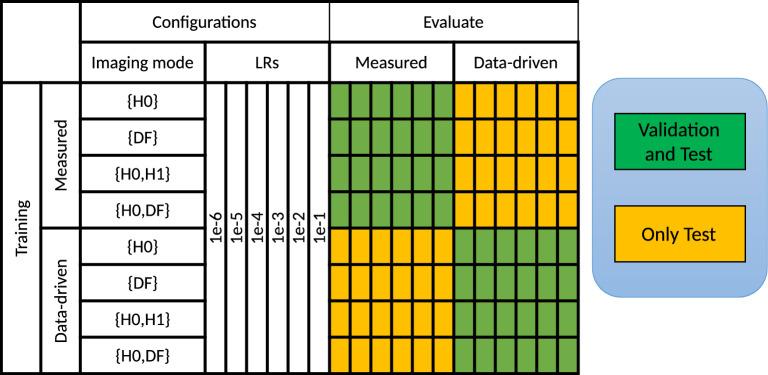
Neutron interferometry uniquely combines neutron imaging and scattering methods to enable characterization of multiple length scales from 1 nm to 10 µm. However, building, operating, and using such neutron imaging instruments poses constraints on the acquisition time and on the number of measured images per sample. Experiment time-constraints yield small quantities of measured images that are insufficient for automating image analyses using supervised artificial intelligence (AI) models. One approach alleviates this problem by supplementing annotated measured images with synthetic images. To this end, we create a data-driven simulation framework that supplements training data beyond typical data-driven augmentations by leveraging statistical intensity models, such as the Johnson family of probability density functions (PDFs). We follow the simulation framework steps for an image segmentation task including Estimate PDFs Validate PDFs Design Image Masks Generate Intensities Train AI Model for Segmentation. Our goal is to minimize the manual labor needed to execute the steps and maximize our confidence in simulations and segmentation accuracy. We report results for a set of nine known materials (calibration phantoms) that were imaged using a neutron interferometer acquiring four-dimensional images and segmented by AI models trained with synthetic and measured images and their masks.
中子干涉测量法独特地结合了中子成像和散射方法,能够对从1纳米到10微米的多个长度尺度进行表征。然而,建造、操作和使用此类中子成像仪器对采集时间以及每个样品的测量图像数量都构成了限制。实验时间限制导致测量图像数量较少,不足以使用监督式人工智能(AI)模型自动进行图像分析。一种方法是通过用合成图像补充带注释的测量图像来缓解这一问题。为此,我们创建了一个数据驱动的模拟框架,通过利用统计强度模型(如约翰逊概率密度函数(PDF)族)来补充超出典型数据驱动增强的训练数据。我们按照图像分割任务的模拟框架步骤进行操作,包括估计PDF、验证PDF、设计图像掩码、生成强度、训练用于分割的AI模型。我们的目标是尽量减少执行这些步骤所需的人工劳动,并最大限度地提高我们对模拟和分割准确性的信心。我们报告了一组九种已知材料(校准体模)的结果,这些材料使用中子干涉仪进行成像以获取四维图像,并由使用合成图像和测量图像及其掩码训练的AI模型进行分割。


 Zotero 插件