
脑类器官培养方案及局限性。
Brain organoid protocols and limitations.
作者信息
Zhao Helen H, Haddad Gabriel
机构信息
Department of Pediatrics, University of California, San Diego, La Jolla, CA, United States.
Department of Neurosciences, University of California, San Diego, La Jolla, CA, United States.
出版信息
Front Cell Neurosci. 2024 Mar 20;18:1351734. doi: 10.3389/fncel.2024.1351734. eCollection 2024.
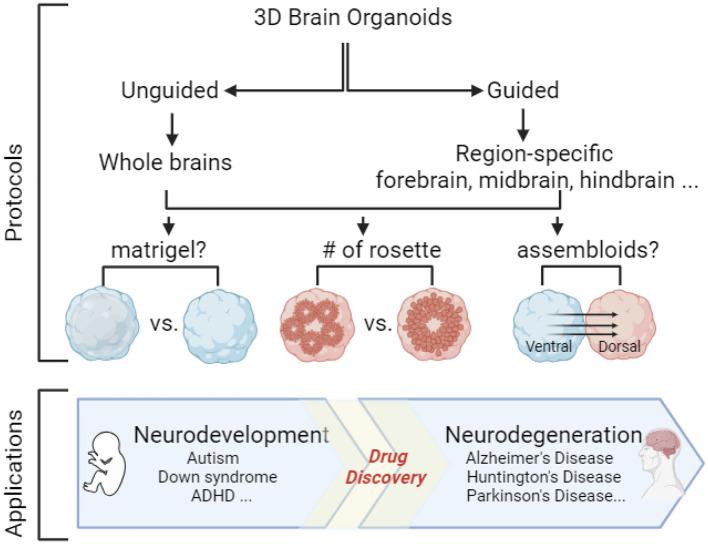
Stem cell-derived organoid technology is a powerful tool that revolutionizes the field of biomedical research and extends the scope of our understanding of human biology and diseases. Brain organoids especially open an opportunity for human brain research and modeling many human neurological diseases, which have lagged due to the inaccessibility of human brain samples and lack of similarity with other animal models. Brain organoids can be generated through various protocols and mimic whole brain or region-specific. To provide an overview of brain organoid technology, we summarize currently available protocols and list several factors to consider before choosing protocols. We also outline the limitations of current protocols and challenges that need to be solved in future investigation of brain development and pathobiology.
干细胞衍生类器官技术是一项强大的工具,它彻底改变了生物医学研究领域,并扩展了我们对人类生物学和疾病的理解范围。脑类器官尤其为人类大脑研究以及模拟多种人类神经疾病提供了契机,这些研究由于人类大脑样本难以获取且与其他动物模型缺乏相似性而滞后。脑类器官可以通过各种方案生成,并模拟全脑或特定区域。为了概述脑类器官技术,我们总结了当前可用的方案,并列出了选择方案之前需要考虑的几个因素。我们还概述了当前方案的局限性以及未来在脑发育和病理生物学研究中需要解决的挑战。
 Zotero 插件