
基于深度学习的实时阿拉伯字母手写识别
Real-Time Air-Writing Recognition for Arabic Letters Using Deep Learning.
机构信息
Department of Computer Science and Artificial Intelligence, College of Computing, Umm Al-Qura University, Makkah 21955, Saudi Arabia.
Department of Software Engineering, College of Computing, Umm Al-Qura University, Makkah 21955, Saudi Arabia.
出版信息
Sensors (Basel). 2024 Sep 20;24(18):6098. doi: 10.3390/s24186098.
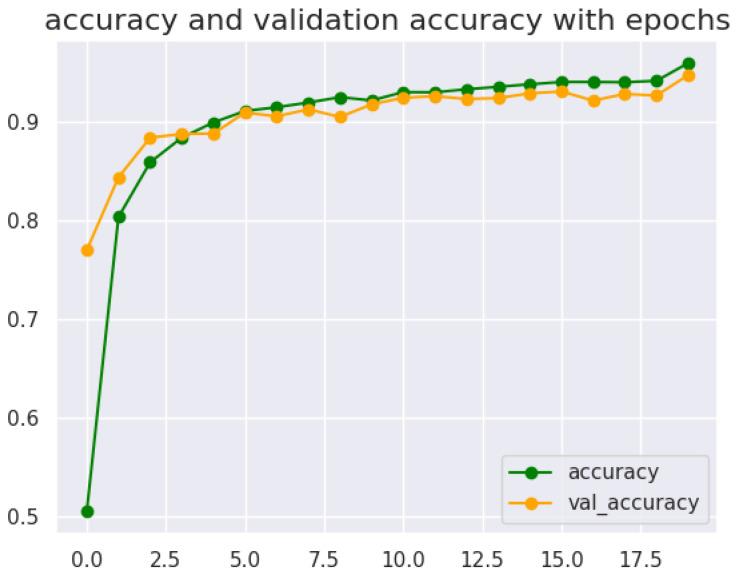
Learning to write the Arabic alphabet is crucial for Arab children's cognitive development, enhancing their memory and retention skills. However, the lack of Arabic language educational applications may hamper the effectiveness of their learning experience. To bridge this gap, SamAbjd was developed, an interactive web application that leverages deep learning techniques, including air-writing recognition, to teach Arabic letters. SamAbjd was tailored to user needs through extensive surveys conducted with mothers and teachers, and a comprehensive literature review was performed to identify effective teaching methods and models. The development process involved gathering data from three publicly available datasets, culminating in a collection of 31,349 annotated images of handwritten Arabic letters. To enhance the dataset's quality, data preprocessing techniques were applied, such as image denoising, grayscale conversion, and data augmentation. Two models were experimented with using a convolution neural network (CNN) and Visual Geometry Group (VGG16) to evaluate their effectiveness in recognizing air-written Arabic characters. Among the CNN models tested, the standout performer was a seven-layer model without dropout, which achieved a high testing accuracy of 96.40%. This model also demonstrated impressive precision and F1-score, both around 96.44% and 96.43%, respectively, indicating successful fitting without overfitting. The web application, built using Flask and PyCharm, offers a robust and user-friendly interface. By incorporating deep learning techniques and user feedback, the web application meets educational needs effectively.
学习书写阿拉伯字母对于阿拉伯儿童的认知发展至关重要,能够提高他们的记忆力和保持力。然而,缺乏阿拉伯语教育应用程序可能会影响他们的学习效果。为了解决这个问题,开发了一个名为 SamAbjd 的互动网络应用程序,它利用深度学习技术,包括手写识别,来教授阿拉伯字母。SamAbjd 通过与母亲和教师进行广泛的调查来满足用户的需求,并进行了全面的文献综述,以确定有效的教学方法和模型。开发过程涉及从三个公开可用的数据集收集数据,最终收集了 31349 张手写阿拉伯字母的注释图像。为了提高数据集的质量,应用了数据预处理技术,如图像去噪、灰度转换和数据增强。使用卷积神经网络(CNN)和视觉几何组(VGG16)实验了两个模型,以评估它们在识别手写阿拉伯字符方面的有效性。在测试的 CNN 模型中,表现出色的是一个没有辍学的七层模型,其测试准确率高达 96.40%。该模型还展示了令人印象深刻的精度和 F1 分数,分别约为 96.44%和 96.43%,表明拟合成功而没有过度拟合。该网络应用程序使用 Flask 和 PyCharm 构建,提供了一个强大而用户友好的界面。通过结合深度学习技术和用户反馈,该网络应用程序有效地满足了教育需求。


 Zotero 插件