
探索人工智能辅助技术在关节活动度测量中的潜力:一项可靠性研究。
Exploring the Potential of AI-Assisted Technology in Joint Range-of-Motion Measurements: A Reliability Study.
作者信息
Lee Gisoo, Tan Eric W
机构信息
Department of Orthopedic Surgery, Chungnam National University School of Medicine, Daejeon 34134, Republic of Korea.
Department of Orthopedic Surgery, The Keck School of Medicine of USC, Los Angeles, CA 90033, USA.
出版信息
Medicina (Kaunas). 2025 Jan 14;61(1):119. doi: 10.3390/medicina61010119.
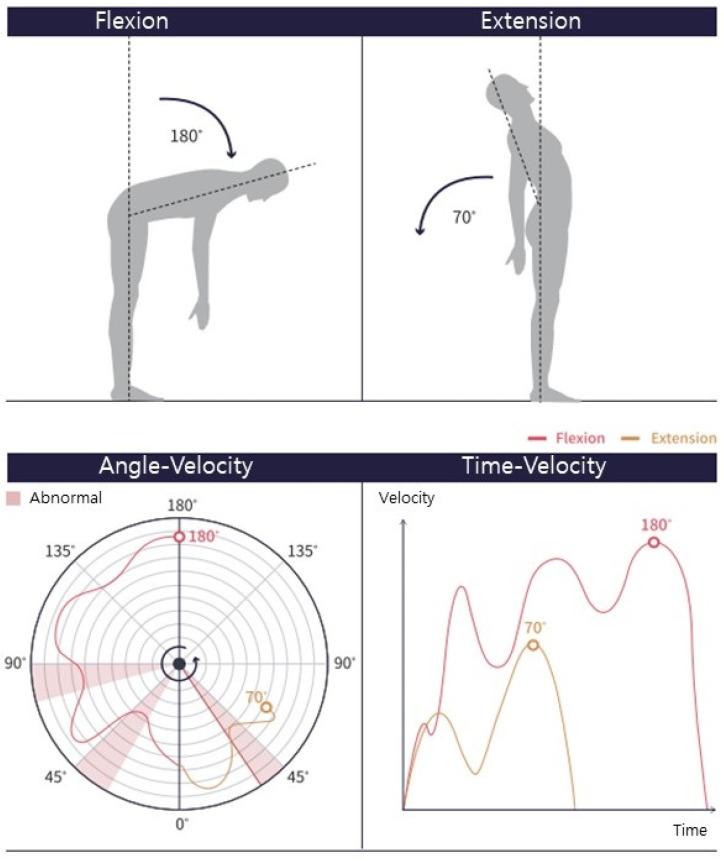
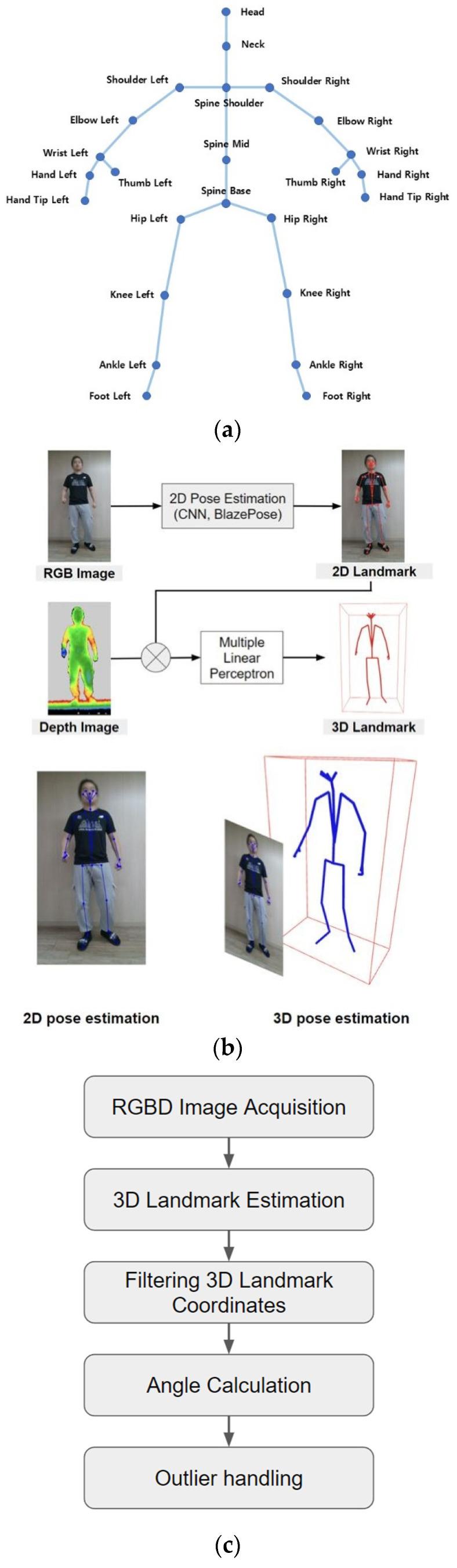
: Measuring joint range of motion (ROM) is essential for diagnosing and treating musculoskeletal diseases. However, most clinical measurements are conducted using conventional devices, and their reliability may significantly depend on the tester. This study implemented an RGB-D (red/green/blue-depth) sensor-based artificial intelligence (AI) device to measure joint ROM and compared its reliability with that of a universal goniometer (UG). : A single-center study was conducted from January 2022 to December 2022 on participants visiting the Chung-nam National University Hospital to compare the reliability of the RGB-D sensor-based AI device with that of the UG for measuring ROM. The ROM of the shoulder, hip, and lumbar spine joints was measured in 35 healthy participants in our hospital. The ROM was measured during active motion by the participants in the standing position. The ROM was measured twice consecutively using the RGB-D sensor-based AI device, and the mean values were obtained along with other values. A clinician also measured the ROM twice using a UG. Bland-Altman analysis was performed to evaluate the reliability of the measurements, which was assessed using intra-class correlation coefficient (ICC). An ICC value greater than 0.90 indicates excellent reliability. : Both methods achieved good-to-excellent intra-test reliability results (ICC > 0.75) for all the joints, with the reliability being slightly higher for the RGB-D sensor-based AI method than for the UG measurements. Moreover, for both methods, the inter-test reliability was higher than good (ICC > 0.75) for shoulder and lumbar joint ROM measurements but lower than good (ICC < 0.75) for hip ROM measurements. : This study compared the efficacies of the RGB-D sensor-based AI method and UG in measuring ROM. In the future, this RGB-D sensor-based AI method should be technologically improved, and the measurement methods and protocols should be standardized.
测量关节活动范围(ROM)对于诊断和治疗肌肉骨骼疾病至关重要。然而,大多数临床测量是使用传统设备进行的,其可靠性可能很大程度上取决于测试者。本研究采用基于RGB-D(红/绿/蓝-深度)传感器的人工智能(AI)设备来测量关节ROM,并将其可靠性与通用测角仪(UG)进行比较。
2022年1月至2022年12月在忠南国立大学医院进行了一项单中心研究,比较基于RGB-D传感器的AI设备与UG测量ROM的可靠性。在我院35名健康参与者中测量了肩部、髋部和腰椎关节的ROM。参与者在站立位主动运动时测量ROM。使用基于RGB-D传感器的AI设备连续测量ROM两次,并获取平均值以及其他值。一名临床医生也使用UG测量ROM两次。进行Bland-Altman分析以评估测量的可靠性,使用组内相关系数(ICC)进行评估。ICC值大于0.90表示可靠性极佳。
两种方法在所有关节的测试内可靠性结果均达到良好至优秀(ICC>0.75),基于RGB-D传感器的AI方法的可靠性略高于UG测量。此外,对于两种方法,肩部和腰椎关节ROM测量的测试间可靠性高于良好(ICC>0.75),但髋部ROM测量的测试间可靠性低于良好(ICC<0.75)。
本研究比较了基于RGB-D传感器的AI方法和UG在测量ROM方面的有效性。未来,应在技术上改进这种基于RGB-D传感器的AI方法,并规范测量方法和方案。



 Zotero 插件