
废弃花卉的热解行为、动力学分析及生物炭制备
Pyrolysis Behavior, Kinetic Analysis, and Biochar Production from Waste Flowers.
作者信息
Gupta Richa, Mishra Ranjeet Kumar, Mohanty Kaustubha
机构信息
Department of Chemical Engineering, Indian Institute of Technology Guwahati, Guwahati, Assam 781039, India.
Department of Chemical Engineering, Manipal Institute of Technology, Manipal Academy of Higher Education, Manipal, Karnataka 576104, India.
出版信息
ACS Omega. 2025 Feb 18;10(8):8484-8498. doi: 10.1021/acsomega.4c10700. eCollection 2025 Mar 4.
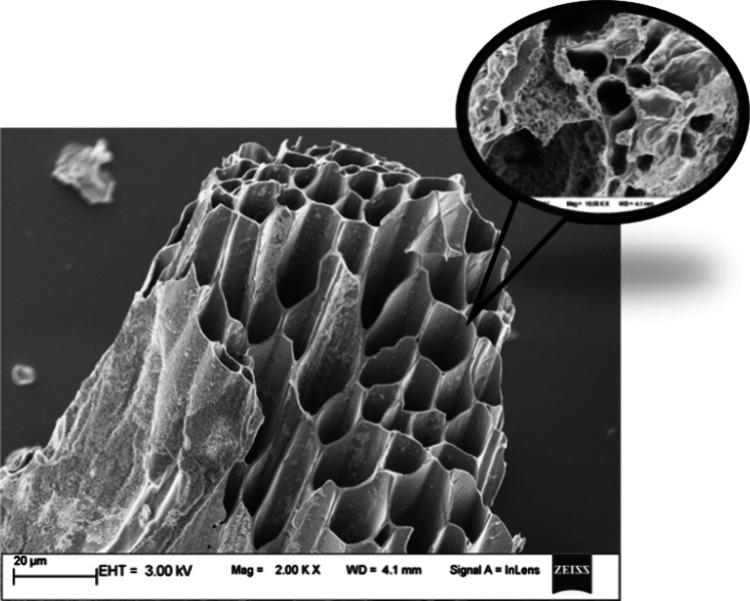
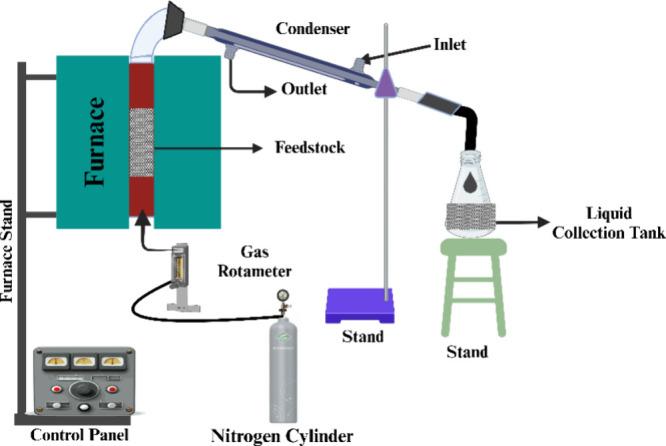
Waste flowers constitute a significant portion of organic waste, offering the potential for sustainable waste management through pyrolysis. This study explores the pyrolysis behavior, kinetic parameters, and biochar production from waste flowers. Thermogravimetric analysis (TGA) was employed to examine thermal degradation characteristics under varying heating rates (10, 20, and 50 °C min). Kinetic analysis was performed using model-free methods such as the Friedman method (FM), Ozawa-Flynn-Wall (OFW), Starink method (STM), Kissinger-Akahira-Sunose (KAS), and Criado model to determine the pyrolysis kinetic parameters. Further, the biochar was produced in a semibatch reactor at 450 °C with a 10 °C min heating rate and 100 mL min nitrogen flow rate. The characterization of the biochar included proximate and elemental analysis, calorific value, bulk density, Brunauer-Emmett-Teller (BET) surface area, pH, Fourier transform infrared spectroscopy (FTIR), field emission scanning electron microscopy (FESEM), energy-dispersive X-ray (EDX) analysis, and water-holding capacity. The decomposition results were confirmed in three stages: moisture removal, active pyrolysis, and residue formation. Kinetic results revealed a multistep reaction mechanism, with average activation energies of 236.35, 232.29, 234.74, and 221.50 kJ mol derived from KAS, OFW, STM, and FM, respectively. Pyrolysis of marigold flowers (MG) yielded 36.64 wt % biochar at 450 and 10 °C min heating rate. Further, the biochar exhibited a 57.10% carbon content, 33.57 MJ kg higher heating value (HHV), 9.96 m g BET surface area, and 29.14 mV zeta potential, demonstrating its potential for soil amendment, carbon sequestration, and pollutant adsorption. This study emphasizes the value of MG as a feedstock for biochar production, contributing to circular economy initiatives.
废弃花卉构成了有机废弃物的很大一部分,通过热解为可持续废弃物管理提供了潜力。本研究探讨了废弃花卉的热解行为、动力学参数和生物炭的生产。采用热重分析(TGA)来研究在不同加热速率(10、20和50℃/分钟)下的热降解特性。使用无模型方法进行动力学分析,如弗里德曼方法(FM)、小泽-弗林-沃尔方法(OFW)、斯塔林克方法(STM)、基辛格-赤平-ose方法(KAS)和克里亚多模型,以确定热解动力学参数。此外,生物炭在半间歇式反应器中于450℃、10℃/分钟的加热速率和100毫升/分钟的氮气流速下制备。生物炭的表征包括近似分析和元素分析、热值、堆积密度、布鲁诺尔-埃米特-泰勒(BET)表面积、pH值、傅里叶变换红外光谱(FTIR)、场发射扫描电子显微镜(FESEM)、能量色散X射线(EDX)分析和持水能力。分解结果在三个阶段得到证实:水分去除、活性热解和残渣形成。动力学结果揭示了一个多步反应机制,分别从KAS、OFW、STM和FM得到的平均活化能为236.35、232.29、234.74和221.50千焦/摩尔。在450℃和10℃/分钟的加热速率下,万寿菊花(MG)热解产生了36.64重量%的生物炭。此外,生物炭表现出57.10%的碳含量、33.57兆焦/千克的高热值(HHV)、9.96平方米/克的BET表面积和29.14毫伏的zeta电位,证明了其在土壤改良、碳固存和污染物吸附方面的潜力。本研究强调了MG作为生物炭生产原料的价值,有助于循环经济倡议。


 Zotero 插件