
三级癌症护理中心麻醉前门诊远程医疗的非劣效性:一项随机研究。
The Non-inferiority of Telemedicine in Pre-anesthesia Clinic at a Tertiary Cancer Care Center: A Randomized Study.
作者信息
Maurya Prateek, Gupta Raghav, Mishra Seema, Bharati Sachidanand, Gupta Nishkarsh, Garg Rakesh, Kumar Vinod, Kumar Sunil, Bhatnagar Sushma
机构信息
Department of Onco-Anesthesia and Palliative Medicine, Dr. B. R. Ambedkar Institute Rotary Cancer Hospital, All India Institute of Medical Sciences, New Delhi, New Delhi, IND.
Department of Surgical Oncology, Dr. B. R. Ambedkar Institute Rotary Cancer Hospital, All India Institute of Medical Sciences, New Delhi, New Delhi, IND.
出版信息
Cureus. 2025 Feb 5;17(2):e78596. doi: 10.7759/cureus.78596. eCollection 2025 Feb.
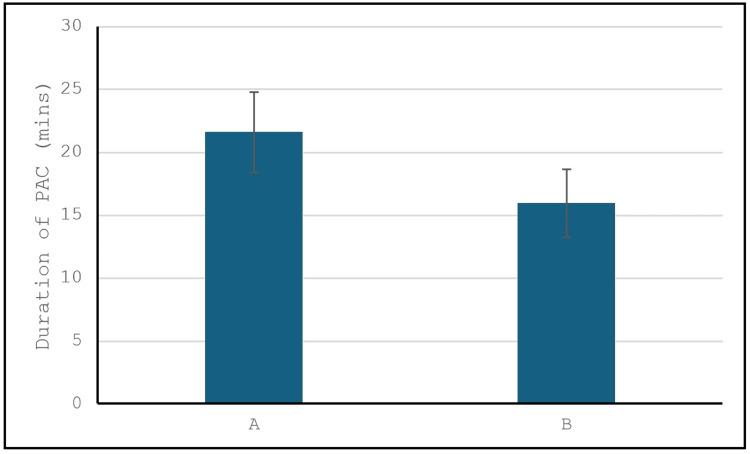
Background With the increasing demand for cancer care and advancements in digital health, telemedicine has emerged as a promising tool to enhance healthcare accessibility and efficiency. Its application in pre-anesthesia consultations (PAC) has the potential to address logistical challenges while maintaining clinical quality. Purpose This study assesses whether telemedicine is a non-inferior alternative to traditional face-to-face pre-anesthesia consultations (PAC) for cancer surgery patients at a tertiary care center and evaluates discrepancies between PAC findings and pre-surgical assessments. Methods This prospective, randomized non-inferiority study included patients aged 20 years or older with access to internet and video calling. The participants were randomly allocated to either a telemedicine PAC or a face-to-face PAC group in a 1:1 ratio. An eight-item questionnaire on a 10-point scale was used to measure patient satisfaction after the consultation, while a 12-item questionnaire on the same scale assessed anesthesiologists' satisfaction. We also compared airway examination findings between the PAC and pre-surgical assessments to detect any discrepancies. Results Of 120 patients assessed, 100 met the inclusion criteria and were randomized (50 per group). Baseline characteristics were similar across groups. Physician satisfaction scores were comparable between telemedicine and face-to-face consultations (7.18 versus 7.58, p=0.113), as were patient satisfaction scores (6.94 versus 7.26, p=0.251). Airway examination findings were consistent, with no significant discrepancies. Conclusion Telemedicine was found to be non-inferior to face-to-face consultations for pre-anesthesia assessments in terms of patient and physician satisfaction, as well as clinical accuracy. These findings support the integration of telemedicine into routine pre-anesthesia practice, particularly in high-demand settings such as cancer care. Further research is warranted to evaluate broader clinical outcomes and cost-effectiveness.
背景 随着癌症护理需求的增加以及数字健康的进步,远程医疗已成为提高医疗可及性和效率的一项有前景的工具。其在麻醉前会诊(PAC)中的应用有潜力解决后勤方面的挑战,同时保持临床质量。目的 本研究评估在三级医疗中心,远程医疗对于癌症手术患者的麻醉前会诊(PAC)是否是传统面对面会诊的非劣效替代方案,并评估PAC结果与术前评估之间的差异。方法 这项前瞻性、随机非劣效性研究纳入了年龄在20岁及以上且能使用互联网和视频通话的患者。参与者以1:1的比例随机分配到远程医疗PAC组或面对面PAC组。使用一份10分制的八项问卷来测量会诊后患者的满意度,同时使用同一份量表的十二项问卷来评估麻醉医生的满意度。我们还比较了PAC与会诊前评估之间的气道检查结果,以发现任何差异。结果 在评估的120例患者中,100例符合纳入标准并被随机分组(每组50例)。各组的基线特征相似。远程医疗会诊和面对面会诊之间的医生满意度评分相当(7.18对7.58,p = 0.113),患者满意度评分也是如此(6.94对7.26,p = 0.251)。气道检查结果一致,无显著差异。结论 在患者和医生满意度以及临床准确性方面,发现远程医疗在麻醉前评估中不劣于面对面会诊。这些发现支持将远程医疗纳入常规麻醉前实践,特别是在癌症护理等高需求环境中。有必要进行进一步研究以评估更广泛的临床结果和成本效益。

 Zotero 插件