
神经囊尾蚴病所致视力丧失:病例报告与系列病例的系统评价
Vision Loss in Neurocysticercosis: A Systematic Review of Case Reports and Series.
作者信息
Garg Ravindra Kumar, Garg Pragati, Paliwal Vimal Kumar, Pandey Shweta
机构信息
Department of Neurology, King George Medical University, Uttar Pradesh, Lucknow, India.
Department of Ophthalmology, All India Institute of Medical Sciences, Rae Bareli, Rae Bareli, India.
出版信息
J Clin Neurol. 2025 Mar;21(2):137-145. doi: 10.3988/jcn.2024.0565.
BACKGROUND AND PURPOSE
Neurocysticercosis is a parasitic infection caused by larvae that leads to various neurological symptoms, including vision loss. This systematic review analyzed cases of vision loss associated with neurocysticercosis to assess its etiology and vision outcomes.
METHODS
Following PRISMA guidelines, the review included reports on human subjects with vision loss due to neurocysticercosis and is registered with PROSPERO (CRD42024556278). The PubMed, Scopus, Embase, and Google Scholar databases were searched.
RESULTS
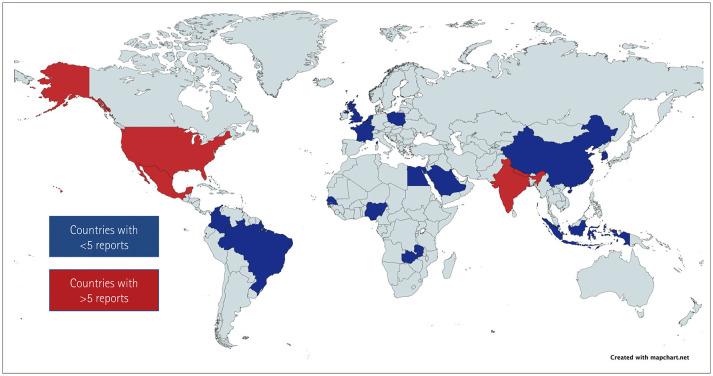
This review included 149 records from 176 patients with a mean age of 27.5 years, comprising 40.3% females, 59.1% males, and 0.6% subjects of unknown sex. Most cases were from Asia, predominantly India. The illness duration varied, but was mostly between 1 and 6 months. In addition to vision loss, common symptoms were headache or orbital pain (30.7%), seizures (12.5%), and altered consciousness (5.7%). Vision loss was mainly unilateral (72.7%). Imaging abnormalities included multiple cystic brain lesions (16.5%), enhanced lesions (4.0%), and calcified lesions (2.3%). Intravitreal and retinal regions were most affected (52.3%), followed by the anterior chamber (6.2%), orbital apex (5.1%), and optic nerve (6.2%). Anticysticercal drugs were the primary treatment, with 57.4% of cases showing improvement. Surgical excision was performed in 40.9% of cases with intravitreal or retinal cysts.
CONCLUSIONS
Vision loss in neurocysticercosis is mainly due to intravitreal and retinal involvement, and is frequently associated with multiple cystic brain lesions. Anticysticercal drugs can produce improvements, though surgical intervention is often needed for intravitreal or retinal cysts. Most of the patients in this review improved, though severe outcomes such as eye loss were reported.
背景与目的
神经囊尾蚴病是一种由幼虫引起的寄生虫感染,可导致多种神经症状,包括视力丧失。本系统评价分析了与神经囊尾蚴病相关的视力丧失病例,以评估其病因及视力预后。
方法
遵循PRISMA指南,本评价纳入了因神经囊尾蚴病导致视力丧失的人类受试者报告,并在PROSPERO(CRD42024556278)注册。检索了PubMed、Scopus、Embase和谷歌学术数据库。
结果
本评价纳入了176例患者的149条记录,平均年龄27.5岁,其中女性占40.3%,男性占59.1%,性别未知者占0.6%。大多数病例来自亚洲,主要是印度。病程各异,但大多在1至6个月之间。除视力丧失外,常见症状有头痛或眼眶疼痛(30.7%)、癫痫发作(12.5%)和意识改变(5.7%)。视力丧失主要为单侧(72.7%)。影像学异常包括多发性脑囊肿病变(16.5%)、强化病变(4.0%)和钙化病变(2.3%)。玻璃体和视网膜区域受影响最严重(52.3%),其次是前房(6.2%)、眶尖(5.1%)和视神经(6.2%)。抗囊尾蚴药物是主要治疗方法,57.4%的病例病情有所改善。40.9%的玻璃体或视网膜囊肿病例进行了手术切除。
结论
神经囊尾蚴病导致的视力丧失主要是由于玻璃体和视网膜受累,且常与多发性脑囊肿病变相关。抗囊尾蚴药物可使病情改善,不过玻璃体或视网膜囊肿通常需要手术干预。本评价中的大多数患者病情有所改善,尽管报告了诸如失明等严重后果。




 Zotero 插件