
灾害期间的运营风险管理:以南非旅游小企业为例。
Operational risk management during disasters: A case of South African tourism small businesses.
作者信息
Mahembe Wonder, Mutezo Ashley T
机构信息
Department of Finance, Risk Management and Banking, College of Economic and Management Sciences, University of South Africa, Pretoria, South Africa.
出版信息
Jamba. 2025 Apr 30;17(1):1761. doi: 10.4102/jamba.v17i1.1761. eCollection 2025.
UNLABELLED
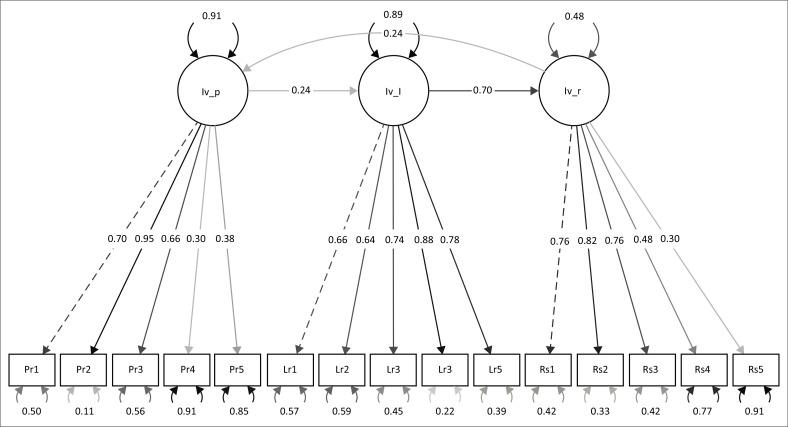
Small businesses, which were disproportionately affected by the COVID-19 pandemic, often lack the resources for effective operational risk management (ORM), with existing frameworks like International Standardization Organization (ISO) 31000 proving too complex and resource-intensive. There is, however, still minimal research into ORM frameworks tailored to the needs of Small, Micro, and Medium Enterprises (SMMEs) facing disaster risks. This study developed and evaluated a tailored ORM framework for SMMEs to manage operational risk exposures from future disasters like COVID-19. A simplified approach was proposed, consisting of three stages: risk identification or disaster preparedness, risk analysis or disaster learning and risk treatment or building enterprise resilience. The framework was empirically tested on data from 208 tourism industry SMMEs using a quantitative research approach. Correlation analysis, structural equation modelling (SEM) and analysis of variance (ANOVA) tests were used to assess the framework's applicability to businesses of different ages, sizes and subsectors. Results from correlations and SEM confirmed the proposed ORM framework's effectiveness in explaining disaster preparedness, learning and resilience for SMMEs. Additionally, ANOVA results showed the framework was equally applicable across business subsectors, but across business age and size, it was not equally applicable. Larger and older businesses were able to implement disaster learning and resilience better than younger and less resourced businesses.
CONTRIBUTION
This research advances ORM within tourism SMMEs, proposing a simplified process validated by empirical findings demonstrating its effectiveness in proactive risk management and resilience during disaster incidents.
未标注
受新冠疫情影响尤为严重的小企业,往往缺乏有效进行运营风险管理(ORM)的资源,国际标准化组织(ISO)31000等现有框架过于复杂且资源密集。然而,针对面临灾害风险的中小企业(SMMEs)需求定制的ORM框架的研究仍然很少。本研究为中小企业开发并评估了一个定制的ORM框架,以管理来自未来诸如新冠疫情等灾害的运营风险敞口。提出了一种简化方法,包括三个阶段:风险识别或灾难准备、风险分析或灾难学习以及风险处理或增强企业复原力。使用定量研究方法,对208家旅游业中小企业的数据进行了实证测试。采用相关分析、结构方程建模(SEM)和方差分析(ANOVA)测试来评估该框架对不同年龄、规模和子行业企业的适用性。相关性分析和结构方程建模的结果证实了所提出的ORM框架在解释中小企业的灾难准备、学习和复原力方面的有效性。此外,方差分析结果表明该框架在各商业子行业中同样适用,但在企业年龄和规模方面并非同样适用。规模较大和成立时间较长的企业比年轻且资源较少的企业能够更好地实施灾难学习和增强复原力。
贡献
本研究推动了旅游业中小企业的运营风险管理,提出了一个简化流程,并通过实证结果验证了其在灾害事件期间的主动风险管理和复原力方面的有效性。

 Zotero 插件