
即时护理细菌荧光成像设备对检测犬猫伤口感染的诊断价值。
Diagnostic value of a point of care bacterial fluorescence imaging device for detecting wound infections in dogs and cats.
作者信息
McCagherty Joanna, Pollock Jolinda, Maddox Tom W, Paterson Gavin K, Hall Jon L
机构信息
University of Glasgow, Small Animal Hospital, Glasgow, UK.
Scotland's Rural College, Veterinary Services, Midlothian, UK.
出版信息
Vet Surg. 2025 Aug;54(6):1218-1228. doi: 10.1111/vsu.14266. Epub 2025 May 15.
OBJECTIVE
To determine if a hand-held point of care imaging device would improve the detection of bacteria on the surface of wounds in dogs and cats in postoperative and traumatic wounds.
STUDY DESIGN
Clinical prospective study.
SAMPLE POPULATION
Three cats and 15 dogs.
METHODS
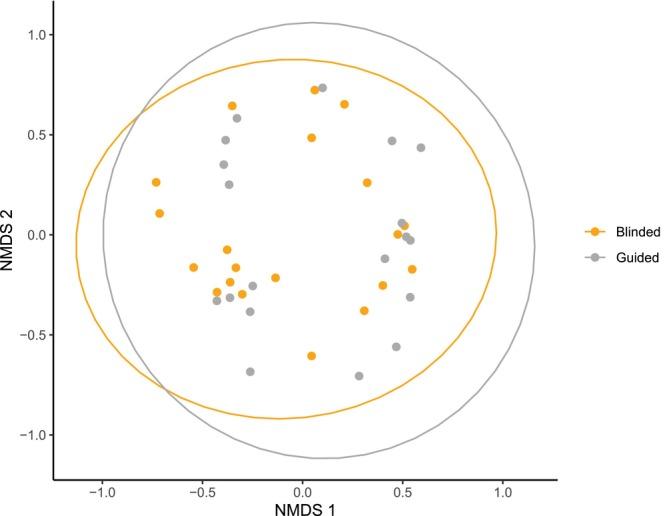
Wounds were swabbed without and with the point of care wound imaging device (WID). Quantitative bacterial culture (QBC), polymerase chain reaction (PCR) and microbiome analysis were performed to assess for any significant difference in the findings of image-guided and non-guided sampling methods.
RESULTS
A total of four feline and 17 canine wounds were evaluated. Bacterial fluorescence was detected in all wounds using the point of care WID. Bacterial infections of wounds in dogs and cats was detected by the fluorescent imaging device. No significant difference was identified between the results of QBC and PCR for image-guided and non-guided wound swabs (p > .05).
CONCLUSION
The WID was able to detect bacteria on the surface of wounds in dogs and cats, accurately confirming the presence of a clinically relevant wound infection at the time of wound evaluation in all wounds but there was no significant difference in the bacterial yield with guided and non-guided swabs.
CLINICAL SIGNIFICANCE
The WID device was able to confirm the presence of a clinically relevant wound infection in real-time, enabling the clinician to initiate appropriate systemic and/or topical antibacterial treatment immediately. This study provides proof of concept of the point of care WID in dogs and cats upon which further studies can be based.
目的
确定一种手持式即时护理成像设备是否能提高对犬猫术后伤口和创伤伤口表面细菌的检测能力。
研究设计
临床前瞻性研究。
样本群体
3只猫和15只狗。
方法
在使用和不使用即时护理伤口成像设备(WID)的情况下对伤口进行拭子采样。进行定量细菌培养(QBC)、聚合酶链反应(PCR)和微生物组分析,以评估图像引导采样方法和非引导采样方法的结果是否存在显著差异。
结果
共评估了4只猫和17只狗的伤口。使用即时护理WID在所有伤口中均检测到细菌荧光。荧光成像设备检测出了犬猫伤口的细菌感染。图像引导和非引导伤口拭子的QBC和PCR结果之间未发现显著差异(p>0.05)。
结论
WID能够检测犬猫伤口表面的细菌,在评估所有伤口时准确确认存在临床相关的伤口感染,但引导拭子和非引导拭子的细菌检出率没有显著差异。
临床意义
WID设备能够实时确认存在临床相关的伤口感染,使临床医生能够立即开始适当的全身和/或局部抗菌治疗。本研究为犬猫即时护理WID提供了概念验证,可作为进一步研究的基础。


 Zotero 插件