
雌激素和孕激素对脂多糖诱导的输卵管上皮细胞炎症及信号通路的抑制作用
Inhibition of LPS-induced inflammation and signaling pathways in fallopian tube epithelial cells by estrogen and progesterone.
作者信息
Li Qianqian, Liu Jianqi, Nashun Bayaer, Bai Sarina, Guo Xiaozhen, Wu Ling, Bao Tuya
机构信息
School of Basic Medicine, Inner Mongolia Medical University, Hohhot, 010110, China.
出版信息
BMC Vet Res. 2025 Jul 2;21(1):421. doi: 10.1186/s12917-025-04874-x.
AIM
The inhibitory effects of estrogen and progesterone on lipopolysaccharide (LPS)-induced inflammation and the nuclear factor-κB (NF-κB), mitogen-activated protein kinase (MAPK), and phosphoinositide-3 kinase (PI3K)/protein kinase B (Akt) signaling pathways in mouse oviductal epithelial cells were investigated.
METHODS
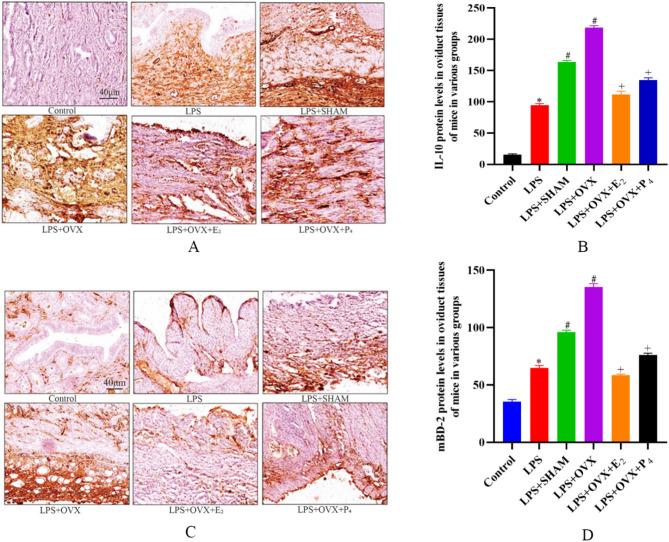
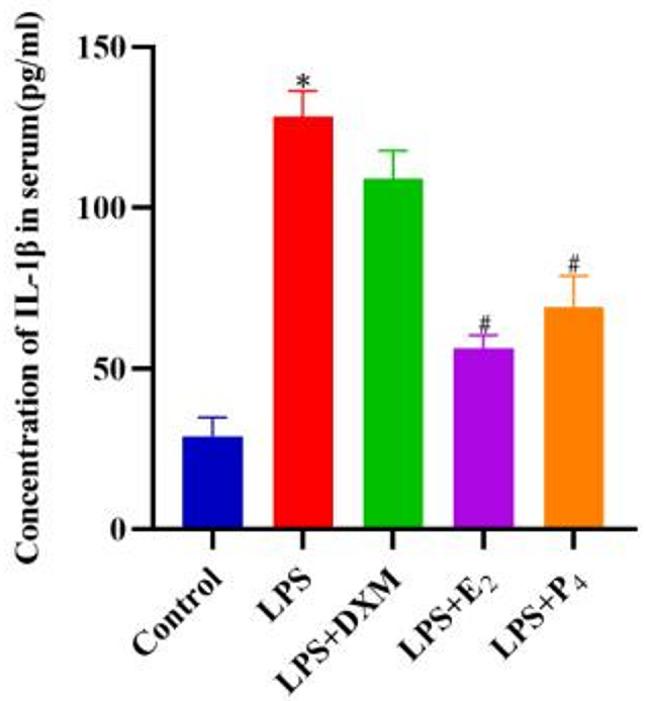
Mouse oviduct epithelial cells were isolated for various in vitro experiments. The CCK-8 method was used to detect the effects of LPS, LPS + Dexamethasone (DXM), LPS + E, and LPS + P on the viability of fallopian tube epithelial cells. RT‒qPCR was used to measure the expression levels of IL-1β, TNF-α, IL-10, and β-defensin-2 (mBD-2) in cells. ELISA was used to measure the levels of IL-1β in cells. Western blotting was used to detect the protein expression of NF-κB p65, IκBα, p38, P-p38, Akt, and P-Akt in cells. Additionally, a salpingitis mouse model was constructed with LPS, and the model mice were treated with estrogen (E), progesterone (P), and DXM. The ovarian tissues were collected and subjected to HE staining. Moreover, IL-10 and mBD-2 expression in the tissue was detected by immunohistochemical staining.
KEY FINDINGS
Estrogen and progesterone significantly inhibited the production of IL-1β, TNF-α, IL-10, and mBD-2, thereby effectively suppressing the inflammatory response induced by LPS. In terms of signaling pathways, estrogen and progesterone significantly inhibited the protein expression of NF-κB, MAPK, and PI3K/Akt pathway members induced by LPS.
SIGNIFICANCE
Estrogen and progesterone can protect against LPS-induced mouse salpingitis by inhibiting the activation of the NF-κB, MAPK, and PI3K/Akt signaling pathways and suppressing the expression of the inflammatory factors IL-1β, TNF-α, IL-10, and mBD-2.
BRIEF SUMMARY
Estrogen and progesterone can effectively reduce the inflammatory response of the fallopian tubes.
STRENGTHS AND LIMITATIONS OF THIS STUDY
The advantages of this study are as follows: high data reliability; a large number of experimental repetitions, resulting in stable outcomes; and a concise and efficient explanation of the issues.
LIMITATION
The research objective is too broad.
SUPPLEMENTARY INFORMATION
The online version contains supplementary material available at 10.1186/s12917-025-04874-x.
目的
研究雌激素和孕激素对脂多糖(LPS)诱导的小鼠输卵管上皮细胞炎症以及核因子-κB(NF-κB)、丝裂原活化蛋白激酶(MAPK)和磷酸肌醇-3激酶(PI3K)/蛋白激酶B(Akt)信号通路的抑制作用。
方法
分离小鼠输卵管上皮细胞用于各种体外实验。采用CCK-8法检测LPS、LPS+地塞米松(DXM)、LPS+雌激素(E)和LPS+孕激素(P)对输卵管上皮细胞活力的影响。采用RT-qPCR法检测细胞中白细胞介素-1β(IL-1β)、肿瘤坏死因子-α(TNF-α)、白细胞介素-10(IL-10)和β-防御素-2(mBD-2)的表达水平。采用酶联免疫吸附测定(ELISA)法检测细胞中IL-1β的水平。采用蛋白质免疫印迹法检测细胞中NF-κB p65、IκBα、p38、磷酸化p38(P-p38)、Akt和磷酸化Akt(P-Akt)的蛋白表达。此外,用LPS构建输卵管炎小鼠模型,并用雌激素(E)、孕激素(P)和DXM对模型小鼠进行治疗。收集卵巢组织进行苏木精-伊红(HE)染色。此外,通过免疫组织化学染色检测组织中IL-10和mBD-2的表达。
主要发现
雌激素和孕激素显著抑制IL-1β、TNF-α、IL-10和mBD-2的产生,从而有效抑制LPS诱导的炎症反应。在信号通路方面,雌激素和孕激素显著抑制LPS诱导的NF-κB、MAPK和PI3K/Akt通路成员的蛋白表达。
意义
雌激素和孕激素可通过抑制NF-κB、MAPK和PI3K/Akt信号通路的激活以及抑制炎症因子IL-1β、TNF-α、IL-10和mBD-2的表达来预防LPS诱导的小鼠输卵管炎。
简要总结
雌激素和孕激素可有效减轻输卵管的炎症反应。
本研究的优点和局限性
本研究的优点如下:数据可靠性高;大量实验重复,结果稳定;对问题的解释简洁高效。
局限性
研究目标过于宽泛。
补充信息
在线版本包含可在10.1186/s12917-025-04874-x获取的补充材料。




 Zotero 插件