
宫颈阴道病:宫颈韧带不稳定和结构异常作为人类症状和疾病病因中迷走神经功能障碍的潜在病因。
Cervicovagopathy: ligamentous cervical instability and dysstructure as a potential etiology for vagus nerve dysfunction in the cause of human symptoms and diseases.
作者信息
Hauser Ross A, Matias Danielle, Rawlings Benjamin Ryan
机构信息
Caring Medical Florida, Fort Myers, FL, United States.
出版信息
Front Neurol. 2025 Jul 2;16:1572863. doi: 10.3389/fneur.2025.1572863. eCollection 2025.
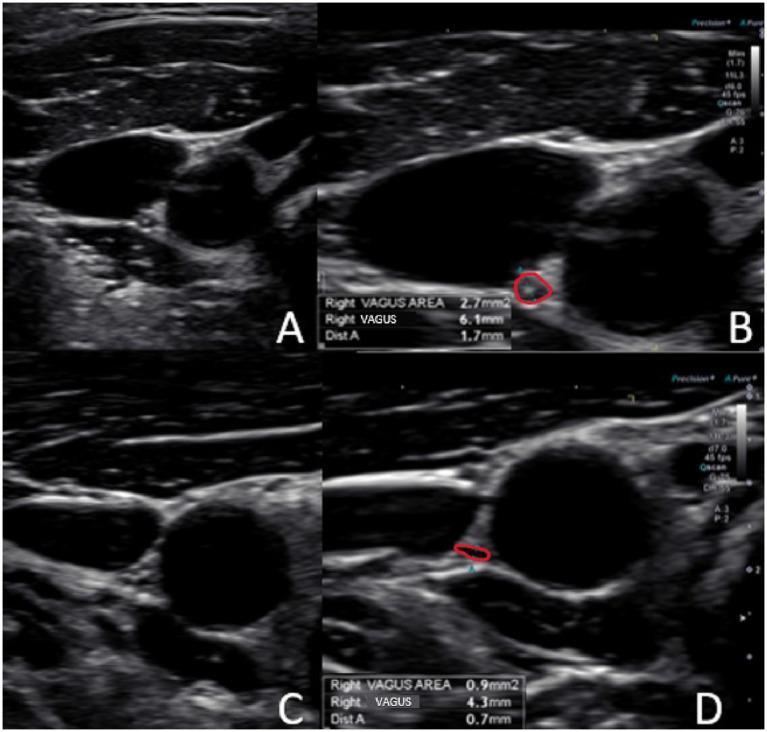
Vagus nerve dysfunction is implicated in the pathophysiology of many different symptoms and diseases that plague humanity. In many cases, the etiology of this condition remains elusive. One potentially implicating factor is cervical spine pathology, as the 2 vagus nerves are located in the carotid sheath just anterior to the cervical vertebrae. We propose that cervicovagopathy occurs primarily by the slow stretching of the posterior cervical ligaments because of a forward head-facedown lifestyle from excessive cell phone and computer usage. While the excessive stretch and compression on the vagus nerve initially just inhibits electrical impulses (conduction block), the condition progresses to ligamentous cervical instability. It ultimately results in a breakdown of the cervical curve (dysstructure), leading to vagus neuron cell death (degeneration), which can be documented by carotid sheath ultrasound. Cervical structural, internal jugular vein, and vagus nerve cross-sectional area measurements are presented from a retrospective chart review of 234 consecutive patients with no obvious cause for 1 of 9 specific symptoms-anxiety, dizziness, fatigue, irritability, lightheadedness, insomnia, sleeping difficulty, neck pain, and neck cracking/popping. Those cases of vagus nerve degeneration from a structural cause require corrective cervical structural therapies such as proper ergonomics, physiotherapy, cervical curve and postural exercises, low-force adjustments, and prolotherapy. A case example is given to demonstrate how cervical structural treatments can open up internal jugular veins and improve a patient's chronic symptoms. Resolution of symptoms that occur alongside improvements in vagus nerve cross-sectional areas (regeneration), correlating with restoration of the cervical lordotic curve and stability, will prove this hypothesis.
迷走神经功能障碍与困扰人类的许多不同症状和疾病的病理生理学有关。在许多情况下,这种病症的病因仍然难以捉摸。一个潜在的相关因素是颈椎病变,因为两条迷走神经位于颈椎前方的颈动脉鞘内。我们认为,由于过度使用手机和电脑导致的头前倾、脸朝下的生活方式,颈椎后韧带缓慢拉伸是导致颈迷走神经病变的主要原因。虽然迷走神经最初受到的过度拉伸和压迫只会抑制电冲动(传导阻滞),但病情会发展为颈椎韧带不稳定。最终会导致颈椎生理曲度破坏(结构紊乱),进而导致迷走神经神经元细胞死亡(变性),这可以通过颈动脉鞘超声检查记录下来。通过对234例连续患者的回顾性病历审查,给出了颈椎结构、颈内静脉和迷走神经横截面积的测量结果,这些患者没有明显原因出现以下9种特定症状中的一种:焦虑、头晕、疲劳、易怒、头晕目眩、失眠、睡眠困难、颈部疼痛以及颈部有弹响。那些由结构原因导致的迷走神经变性病例需要进行矫正颈椎结构的治疗,如适当的人体工程学调整、物理治疗、颈椎生理曲度和姿势锻炼、低力度调整以及注射治疗。给出了一个病例示例,以说明颈椎结构治疗如何能够扩张颈内静脉并改善患者的慢性症状。症状的缓解与迷走神经横截面积的改善(再生)同时出现,且与颈椎前凸曲线和稳定性的恢复相关,将证明这一假设。




 Zotero 插件