
基于人工神经网络的新型三燃料方法实现RCCI发动机的可持续运行。
Sustainable RCCI engine operation with an ANN based novel tri-fuel approach.
作者信息
Elumalai P V, Shieh Chin-Shiuh, Reddy M Sreenivasa, Sree S Rama, Krishnan Shashikumar
机构信息
Department of Mechanical Engineering, Aditya University, Surampalem, AP, India.
Research Institute of IoT Cybersecurity, Department of Electronic Engineering, National Kaohsiung University of Science and Technology, Kaohsiung, Taiwan.
出版信息
Sci Rep. 2025 Jul 29;15(1):27645. doi: 10.1038/s41598-025-09984-y.
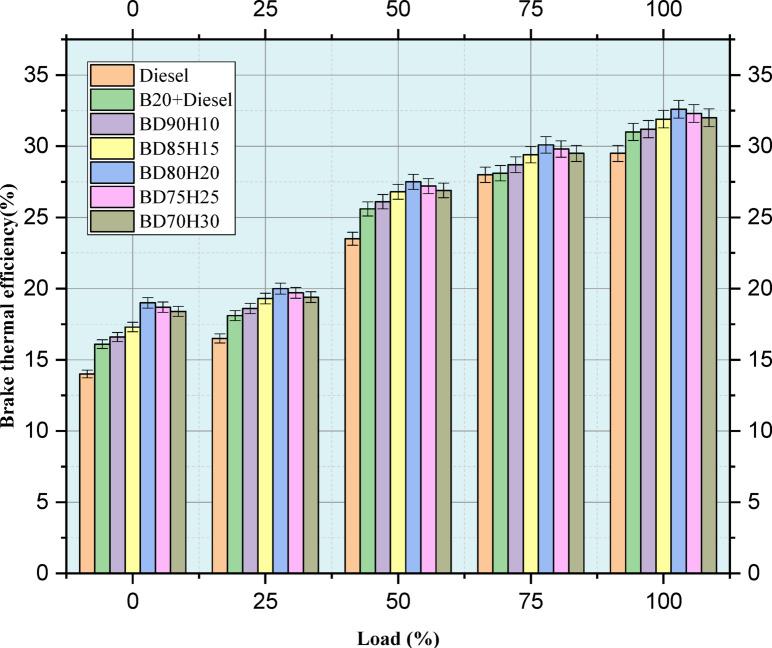
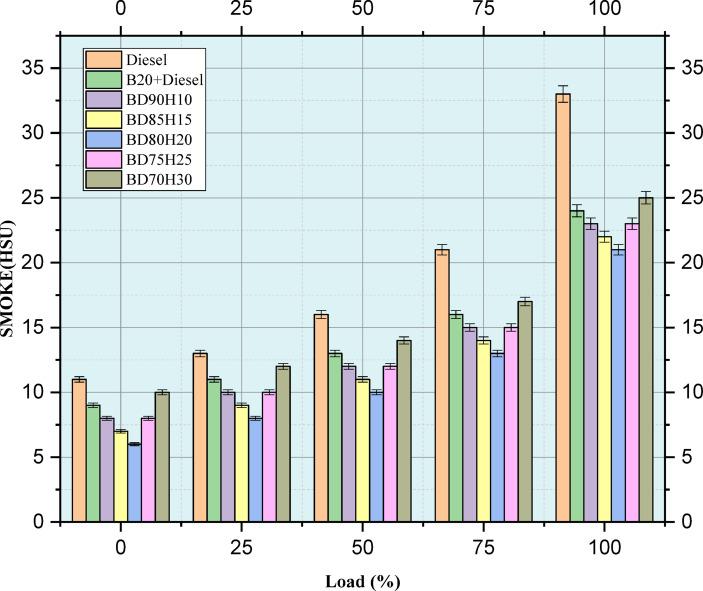
This research delves into a novel tri-fuel RCCI engine strategy that uses diesel as the base fuel, biodiesel from Andropogon narudus, and hydrogen as a reactivity promoter to enhance combustion efficiency and enhance environmental sustainability. The tested blends, BD80H20 and BD70H30, showed a 3-5% improvement in Brake Thermal Efficiency (BTE) compared to conventional diesel at full load operation. Hydrogen-rich blends recorded a 5-8% brake-specific fuel economy improvement over diesel and B20 at both 75% and 100% engine loads. The biodiesel has made a substantial reduction in hydrocarbon (HC) and carbon monoxide (CO) emissions. Specifically, B20 recorded a 15% decrease in HC and 12% decrease in CO emission compared to straight diesel, while hydrogen blends register another decrease of 20-25% in CO emissions. The addition of hydrogen resulted in a rough estimate of 10-15% increase in the emissions of carbon dioxide (CO) and nitrogen oxides (NOx), reflecting an emission trade-off. The smoke opacity decrease varied between 18 and 25% for hydrogen-biodiesel blends, reflecting an increased combustion efficiency level. The increase in in-cylinder peak pressure by 5-10% with hydrogen reflects an accelerated and efficient combustion process. A sustainability analysis by means of a Pugh matrix and Kiviat plot showed that BD80H20 was the most sustainable mixture. The ANN validation proved to be of excellent prediction quality, with RMSE values ranging from 0.9965 to 0.9996, and MPAE less than 4%.
本研究深入探讨了一种新型的三燃料反应控制压燃(RCCI)发动机策略,该策略使用柴油作为基础燃料、来自香根草的生物柴油以及氢气作为反应性促进剂,以提高燃烧效率并增强环境可持续性。测试的混合燃料BD80H20和BD70H30在全负荷运行时,与传统柴油相比,制动热效率(BTE)提高了3 - 5%。在75%和100%发动机负荷下,富含氢气的混合燃料的制动比燃油经济性比柴油和B20提高了5 - 8%。生物柴油大幅减少了碳氢化合物(HC)和一氧化碳(CO)排放。具体而言,与纯柴油相比,B20的HC排放减少了15%,CO排放减少了12%,而氢气混合燃料的CO排放又减少了20 - 25%。氢气的添加导致二氧化碳(CO₂)和氮氧化物(NOx)排放大致增加了10 - 15%,这反映了一种排放权衡。氢气 - 生物柴油混合燃料的烟度降低在18%至25%之间,这反映了燃烧效率水平的提高。氢气使缸内峰值压力提高了5 - 10%,这反映了燃烧过程的加速和高效。通过普格矩阵和基维特图进行的可持续性分析表明,BD80H20是最可持续的混合物。人工神经网络(ANN)验证显示出优异的预测质量,均方根误差(RMSE)值在0.9965至0.9996之间,平均绝对百分比误差(MPAE)小于4%。





 Zotero 插件