
利用基于传感器的物联网和边缘云连续体,对残疾人士的人类活动识别进行智能深度学习。
Intelligent deep learning for human activity recognition in individuals with disabilities using sensor based IoT and edge cloud continuum.
作者信息
Maray Mohammed
机构信息
Department of Information Systems, College of Computer Science, King Khalid University, Abha, Saudi Arabia.
King Salman Center for Disability Research, Riyadh, 11614, Saudi Arabia.
出版信息
Sci Rep. 2025 Aug 13;15(1):29640. doi: 10.1038/s41598-025-09514-w.
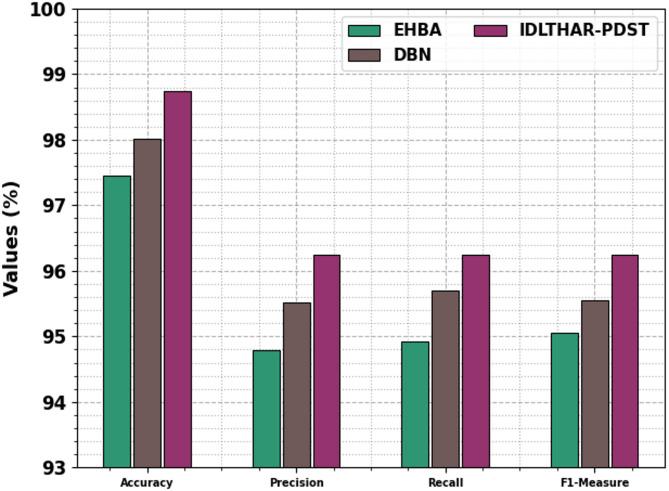
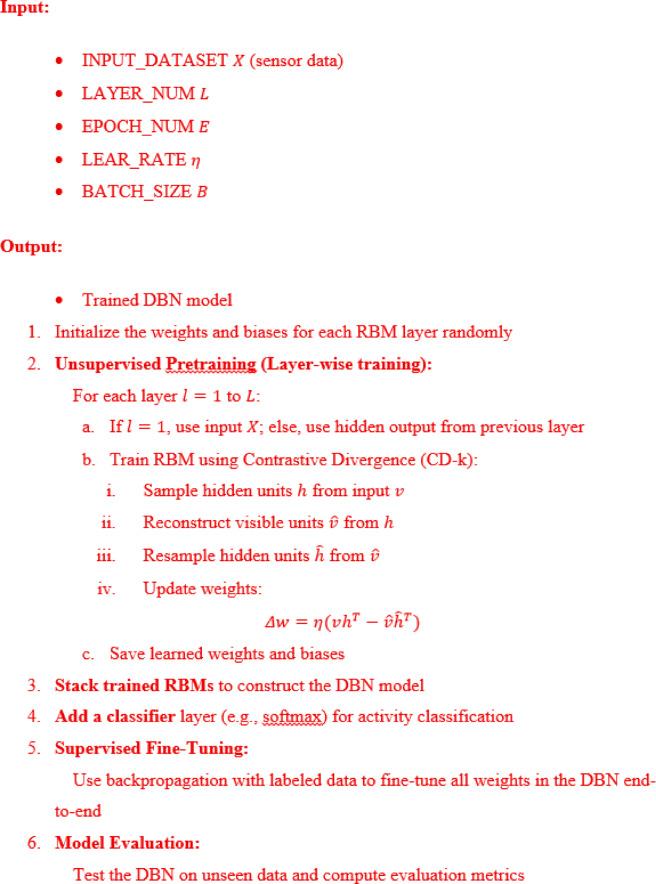
Aging is associated with a reduction in the capability to perform activities of everyday routine and a decline in physical activity, which affects physical and mental health. A human activity recognition (HAR) system can be a valuable tool for elderly individuals or patients, as it monitors their activities and detects any significant changes in behavior or events. When integrated with the Internet of Things (IoT), this system enables individuals to live independently while ensuring their well-being. The IoT-edge-cloud framework enhances this by processing data as close to the source as possible-either on edge devices or directly on the IoT devices themselves. However, the massive number of activity constellations and sensor configurations make the HAR problem challenging to solve deterministically. HAR involves collecting sensor data to classify diverse human activities and is a rapidly growing field. It presents valuable insights into the health, fitness, and overall wellness of individuals outside of hospital settings. Therefore, the machine learning (ML) model is mostly used for the growth of the HAR system to discover the models of human activity from the sensor data. In this manuscript, an Intelligent Deep Learning Technique for Human Activity Recognition of Persons with Disabilities using the Sensors Technology (IDLTHAR-PDST) technique is proposed. The purpose of the IDLTHAR-PDST technique is to efficiently recognize and interpret activities by leveraging sensor technology within a smart IoT-Edge-Cloud continuum. Initially, the IDLTHAR-PDST technique utilizes min-max normalization-based data pre-processing model to optimize sensor data consistency and enhance model performance. For feature subset selection, the enhanced honey badger algorithm (EHBA) model is used to effectively reduce dimensionality while retaining critical activity-related features. Finally, the deep belief network (DBN) model is employed for HAR. To exhibit the improved performance of the existing IDLTHAR-PDST model, a comprehensive simulation study is accomplished. The performance validation of the IDLTHAR-PDST model portrayed a superior accuracy value of 98.75% over existing techniques.
衰老与日常活动能力的下降以及身体活动的减少有关,这会影响身心健康。人体活动识别(HAR)系统对于老年人或患者来说可能是一个有价值的工具,因为它可以监测他们的活动并检测行为或事件中的任何重大变化。当与物联网(IoT)集成时,该系统使个人能够独立生活,同时确保他们的幸福安康。物联网边缘云框架通过在尽可能靠近源的地方处理数据来增强这一点,即在边缘设备上或直接在物联网设备本身上。然而,大量的活动组合和传感器配置使得确定性地解决HAR问题具有挑战性。HAR涉及收集传感器数据以对各种人类活动进行分类,并且是一个快速发展的领域。它为医院环境之外的个人的健康、健身和整体健康状况提供了有价值的见解。因此,机器学习(ML)模型大多用于HAR系统的发展,以从传感器数据中发现人类活动模型。在本手稿中,提出了一种使用传感器技术的残疾人人体活动识别智能深度学习技术(IDLTHAR-PDST)。IDLTHAR-PDST技术的目的是通过在智能物联网边缘云连续体中利用传感器技术来有效地识别和解释活动。最初,IDLTHAR-PDST技术利用基于最小-最大归一化的数据预处理模型来优化传感器数据的一致性并提高模型性能。对于特征子集选择,使用增强型蜜獾算法(EHBA)模型来有效降低维度,同时保留与关键活动相关的特征。最后,采用深度信念网络(DBN)模型进行HAR。为了展示现有IDLTHAR-PDST模型的改进性能,完成了一项全面的模拟研究。IDLTHAR-PDST模型的性能验证表明,与现有技术相比,其准确率高达98.75%。






 Zotero 插件