
新型桌面式免散瞳眼底相机用于单视野糖尿病视网膜病变检测的性能:一项初步研究。
Performance of a New Tabletop Non-mydriatic Fundus Camera for Single-Field Diabetic Retinopathy Detection: A Pilot Study.
作者信息
Padua Winston, Butola Shalini, Nithyanandam Suneetha, Raj Tony, D Dhinagaran, Chidambara Lavanya, Krupa Lakshmi, Bhandarkar Satish, Gunda Aparna
机构信息
Opthalmology, St. John's Medical College Hospital, Bengaluru, IND.
Opthalmology, St. John's Research Institute, Bengaluru, IND.
出版信息
Cureus. 2025 Jul 17;17(7):e88198. doi: 10.7759/cureus.88198. eCollection 2025 Jul.
INTRODUCTION
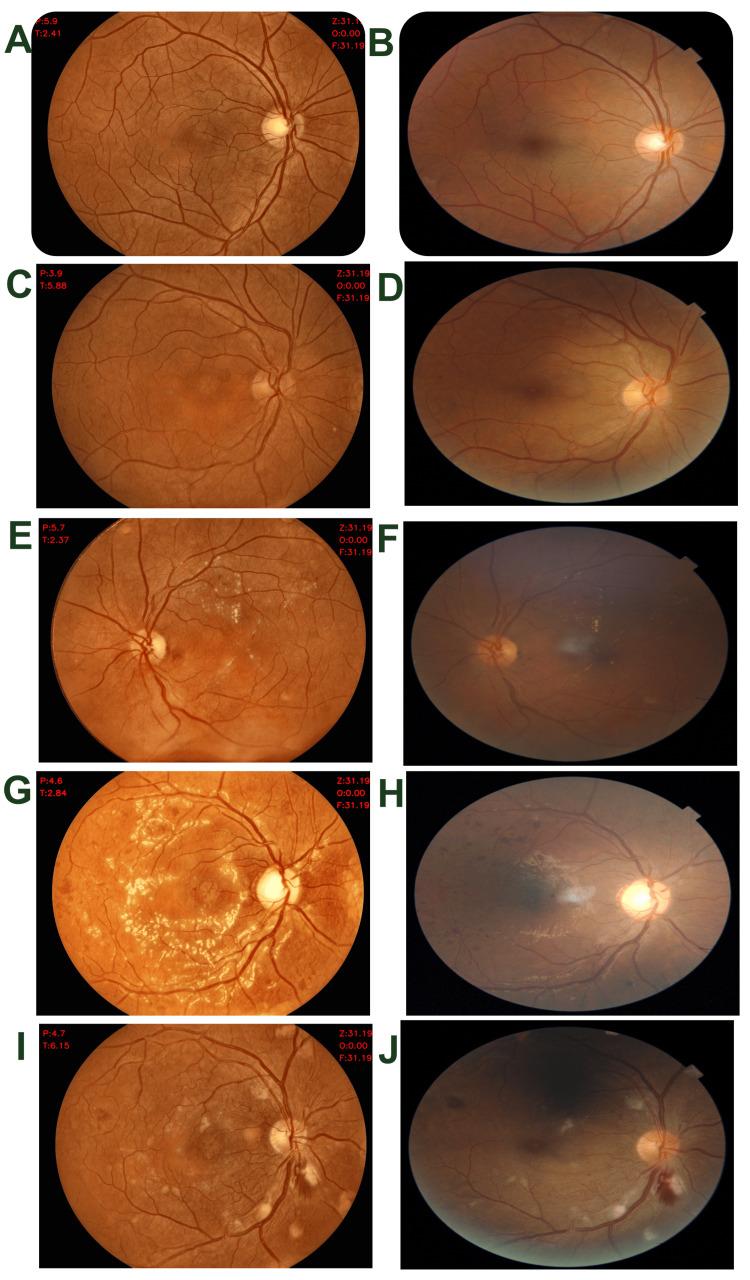
Diabetic retinopathy (DR) detection is made easy with the use of a fundus camera. The evidence of the use of a fundus camera for DR detection in non-mydriatic conditions with limited technical challenges is scarce. This is a pilot study that evaluates the performance of the Oivi fundus camera (Oivi AS, Oslo, Norway), a novel non-mydriatic tabletop fundus camera for DR detection using a single-field, macula-centered imaging approach. Its diagnostic accuracy was compared with that of a standard reference device, the Topcon NW400 fundus camera (Topcon Corporation, Tokyo, Japan).
METHODS
A total of 243 subjects with diabetes mellitus (DM) were recruited. Non-mydriatic macula-centered images were captured using both cameras. Two ophthalmologists independently graded the deidentified images for image quality and DR stage. Discrepancies between their assessments were adjudicated by consensus after review by a senior ophthalmologist. The senior ophthalmologist's grading of images from the standard camera images served as the ground truth for comparative analysis. Inter-modality agreement was evaluated using linear weighted kappa (κ) correlation.
RESULTS
DR was detected in 23% of patients using the standard reference camera (12% of eyes) and in 23.86% using the tabletop camera (12.6%). Identification of moderate non-proliferative diabetic retinopathy (NPDR) (7.2%), severe NPDR (0.4%), and proliferative diabetic retinopathy (PDR) (1.23%) was similar between the two cameras, although not always in the same eyes. The inter-modality agreement (k) for DR was 0.927 (95% CI: 0.88-0.97) (almost perfect). The tabletop camera showed a sensitivity of 92.98% (95% CI, 83-98.05%) and a specificity of 99.47% (95% CI, 98.10-99.94%) for DR. The percentage of usable images was 92.3% with the standard reference camera and 95.2% with the tabletop camera.
CONCLUSIONS
This study provides preliminary evidence that the novel tabletop Oivi fundus camera may offer comparable performance to standard non-mydriatic devices for DR detection in a single-field strategy. Its portability and usability under mesopic conditions suggest potential value for point-of-care screening. Further large-scale studies are warranted to validate these findings and explore their role in screening programs.
引言
使用眼底相机可轻松检测糖尿病视网膜病变(DR)。在技术挑战有限的非散瞳条件下,使用眼底相机检测DR的证据很少。这是一项试点研究,评估了Oivi眼底相机(Oivi AS,挪威奥斯陆)的性能,这是一种新型的非散瞳台式眼底相机,采用单视野、以黄斑为中心的成像方法进行DR检测。将其诊断准确性与标准参考设备Topcon NW400眼底相机(Topcon Corporation,日本东京)进行了比较。
方法
共招募了243名糖尿病(DM)患者。使用两台相机拍摄以黄斑为中心的非散瞳图像。两名眼科医生独立对匿名图像的图像质量和DR阶段进行分级。在一名资深眼科医生复查后,通过共识裁决他们评估之间的差异。资深眼科医生对标准相机图像的图像分级用作比较分析的基本事实。使用线性加权kappa(κ)相关性评估模态间一致性。
结果
使用标准参考相机在23%的患者中检测到DR(12%的眼睛),使用台式相机检测到DR的比例为23.86%(12.6%)。两台相机对中度非增殖性糖尿病视网膜病变(NPDR)(7.2%)、重度NPDR(0.4%)和增殖性糖尿病视网膜病变(PDR)(1.23%)的识别相似,尽管并不总是在同一只眼睛中。DR的模态间一致性(k)为0.927(95%CI:0.88 - 0.97)(几乎完美)。台式相机对DR的敏感性为92.98%(95%CI,83 - 98.05%),特异性为99.47%(95%CI,98.10 - 99.94%)。标准参考相机的可用图像百分比为92.3%,台式相机为95.2%。
结论
本研究提供了初步证据,表明新型台式Oivi眼底相机在单视野策略中检测DR时,可能具有与标准非散瞳设备相当的性能。其在中视条件下的便携性和可用性表明其在即时护理筛查中具有潜在价值。有必要进行进一步的大规模研究来验证这些发现,并探索它们在筛查项目中的作用。


 Zotero 插件