
β-肾上腺素能受体激活的降低会减少猪心脏中的G蛋白表达和β-肾上腺素能受体激酶活性。
Reduced beta-adrenergic receptor activation decreases G-protein expression and beta-adrenergic receptor kinase activity in porcine heart.
作者信息
Ping P, Gelzer-Bell R, Roth D A, Kiel D, Insel P A, Hammond H K
机构信息
Veteran's Affairs Medical Center-San Diego, California 92161.
出版信息
J Clin Invest. 1995 Mar;95(3):1271-80. doi: 10.1172/JCI117777.
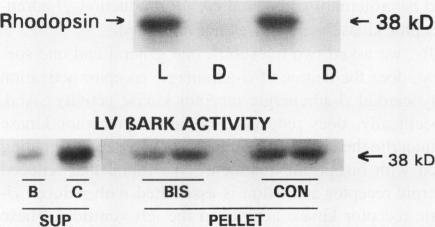
To determine whether beta-adrenergic receptor agonist activation influences guanosine 5'-triphosphate-binding protein (G-protein) expression and beta-adrenergic receptor kinase activity in the heart, we examined the effects of chronic beta 1-adrenergic receptor antagonist treatment (bisoprolol, 0.2 mg/kg per d i.v., 35 d) on components of the myocardial beta-adrenergic receptor-G-protein-adenylyl cyclase pathway in porcine myocardium. Three novel alterations in cardiac adrenergic signaling associated with chronic reduction in beta-adrenergic receptor agonist activation were found. First, there was coordinate downregulation of Gi alpha 2 and Gs alpha mRNA and protein expression in the left ventricle; reduced G-protein content was also found in the right atrium. Second, in the left ventricle, there was a twofold increase in beta-adrenergic receptor-dependent stimulation of adenylyl cyclase and a persistent high affinity state of the beta-adrenergic receptor. Finally, there was a reduction in left ventricular beta-adrenergic receptor kinase activity, suggesting a previously unrecognized association between the degree of adrenergic activation and myocardial beta-adrenergic receptor kinase expression. The heart appears to adapt in response to chronic beta-adrenergic receptor antagonist administration in a manner that would be expected to offset reduced agonist stimulation. The mechanisms for achieving this extend beyond beta-adrenergic receptor upregulation and include alterations in G-protein expression, beta-adrenergic receptor-Gs interaction, and myocardial beta-adrenergic receptor kinase activity.
为了确定β-肾上腺素能受体激动剂激活是否会影响心脏中鸟苷5'-三磷酸结合蛋白(G蛋白)的表达以及β-肾上腺素能受体激酶的活性,我们研究了慢性β1-肾上腺素能受体拮抗剂治疗(比索洛尔,0.2mg/kg静脉注射,每日一次,共35天)对猪心肌中β-肾上腺素能受体-G蛋白-腺苷酸环化酶途径各组分的影响。我们发现了与β-肾上腺素能受体激动剂激活长期减少相关的心脏肾上腺素能信号传导的三种新变化。首先,左心室中Giα2和Gsα的mRNA及蛋白表达协同下调;右心房中也发现G蛋白含量减少。其次,在左心室中,β-肾上腺素能受体依赖性的腺苷酸环化酶刺激增加了两倍,且β-肾上腺素能受体持续处于高亲和力状态。最后,左心室β-肾上腺素能受体激酶活性降低,这表明肾上腺素能激活程度与心肌β-肾上腺素能受体激酶表达之间存在一种此前未被认识到的关联。心脏似乎会以一种预期能抵消激动剂刺激减少的方式,对慢性β-肾上腺素能受体拮抗剂给药做出适应性反应。实现这一目的的机制不仅包括β-肾上腺素能受体上调,还包括G蛋白表达的改变、β-肾上腺素能受体与Gs的相互作用以及心肌β-肾上腺素能受体激酶活性的改变。

 Zotero 插件