• 文献检索
  • 文档翻译
  • 深度研究
  • 学术资讯
  • Suppr Zotero 插件Zotero 插件
  • 邀请有礼
  • 套餐&价格
  • 历史记录
应用&插件
Suppr Zotero 插件Zotero 插件浏览器插件Mac 客户端Windows 客户端微信小程序
定价
高级版会员购买积分包购买API积分包
服务
文献检索文档翻译深度研究API 文档MCP 服务
关于我们
关于 Suppr公司介绍联系我们用户协议隐私条款
关注我们

Suppr 超能文献

核心技术专利:CN118964589B侵权必究
粤ICP备2023148730 号-1Suppr @ 2026

文献检索

告别复杂PubMed语法,用中文像聊天一样搜索,搜遍4000万医学文献。AI智能推荐,让科研检索更轻松。

立即免费搜索

文件翻译

保留排版,准确专业,支持PDF/Word/PPT等文件格式,支持 12+语言互译。

免费翻译文档

深度研究

AI帮你快速写综述,25分钟生成高质量综述,智能提取关键信息,辅助科研写作。

立即免费体验

解析与山茶相关的炭疽菌属物种:利用ApMat和GS基因座解析胶孢炭疽菌复合种中的物种

Unravelling Colletotrichum species associated with Camellia: employing ApMat and GS loci to resolve species in the C. gloeosporioides complex.

作者信息

Liu F, Weir B S, Damm U, Crous P W, Wang Y, Liu B, Wang M, Zhang M, Cai L

机构信息

State Key Laboratory of Mycology, Institute of Microbiology, Chinese Academy of Sciences, Beijing, 100101, China;; Microbiology, Department of Biology, Utrecht University, Padualaan 8, 3584 CH Utrecht, The Netherlands.

Landcare Research, Private Bag 92170 Auckland, New Zealand.

出版信息

Persoonia. 2015 Dec;35:63-86. doi: 10.3767/003158515X687597. Epub 2015 Feb 18.

DOI:10.3767/003158515X687597
PMID:26823629
原文链接:https://pmc.ncbi.nlm.nih.gov/articles/PMC4713112/
Abstract

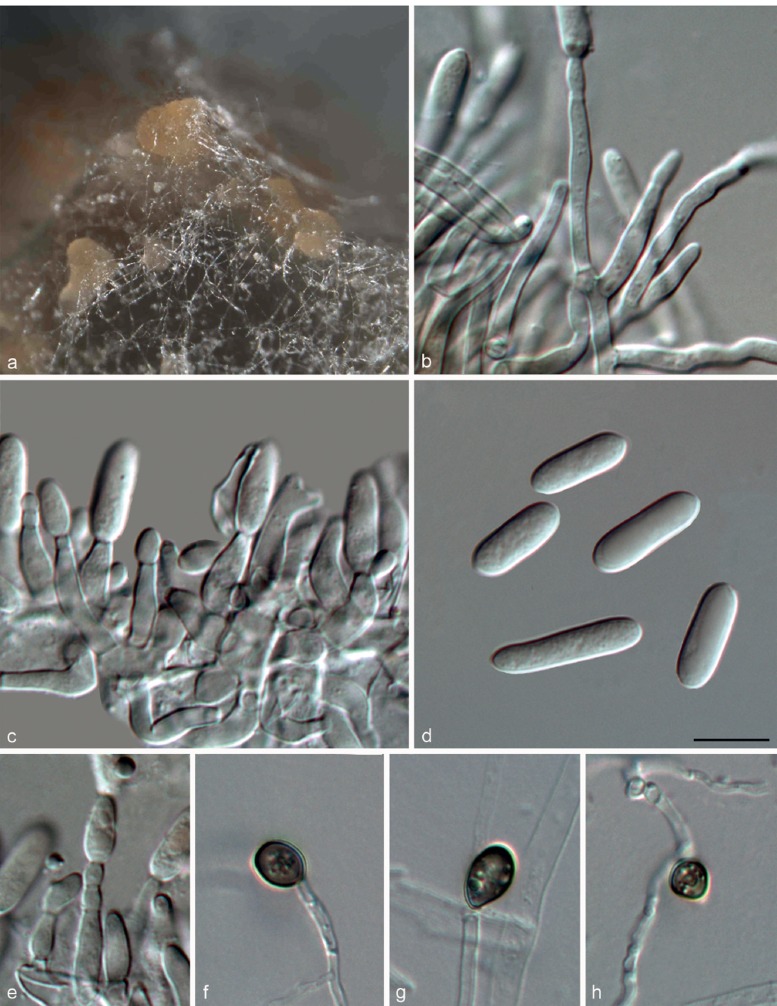
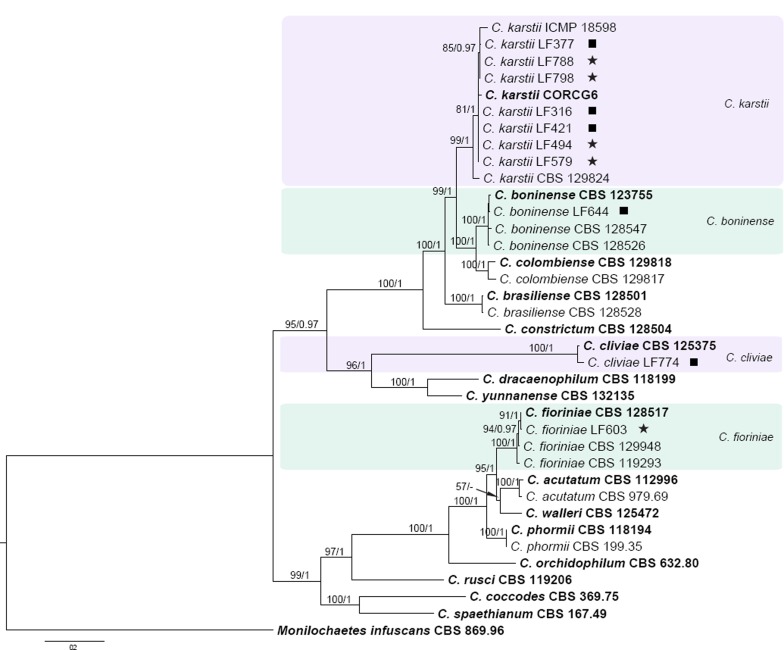
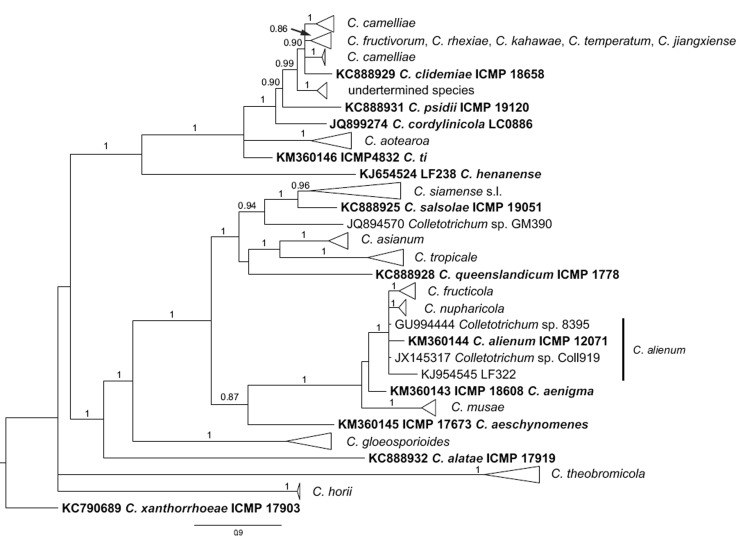
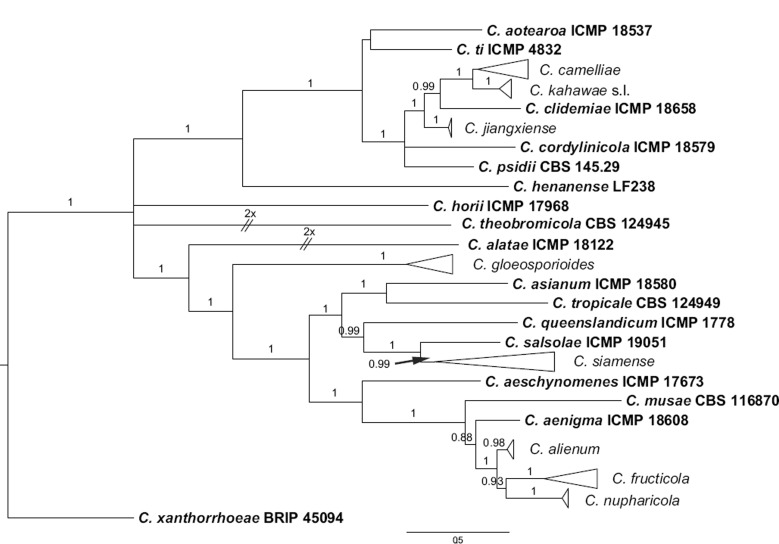
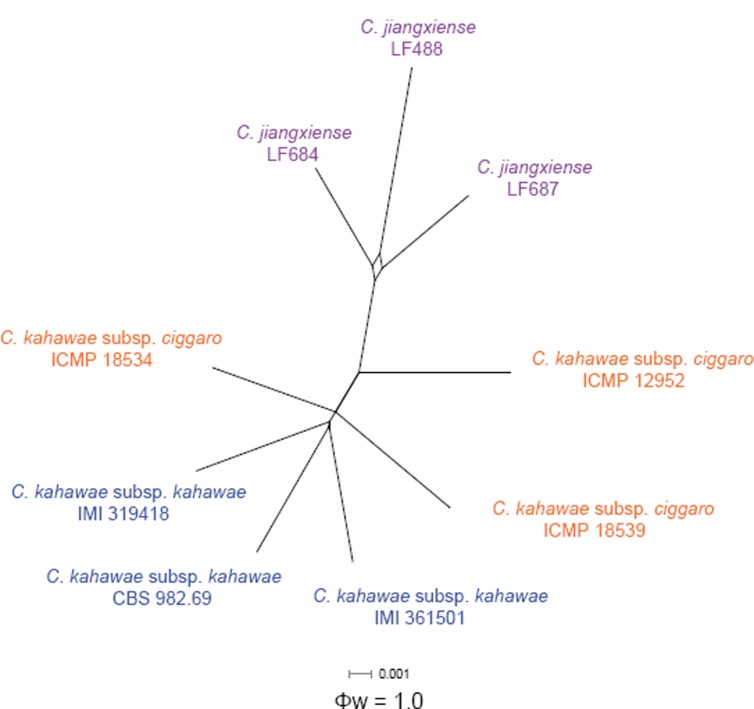
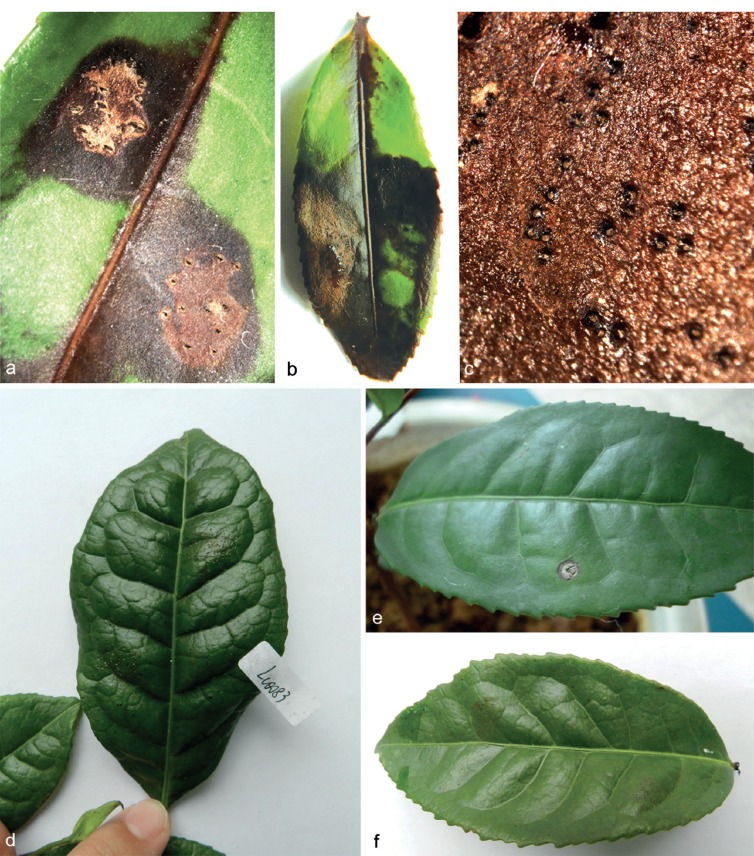
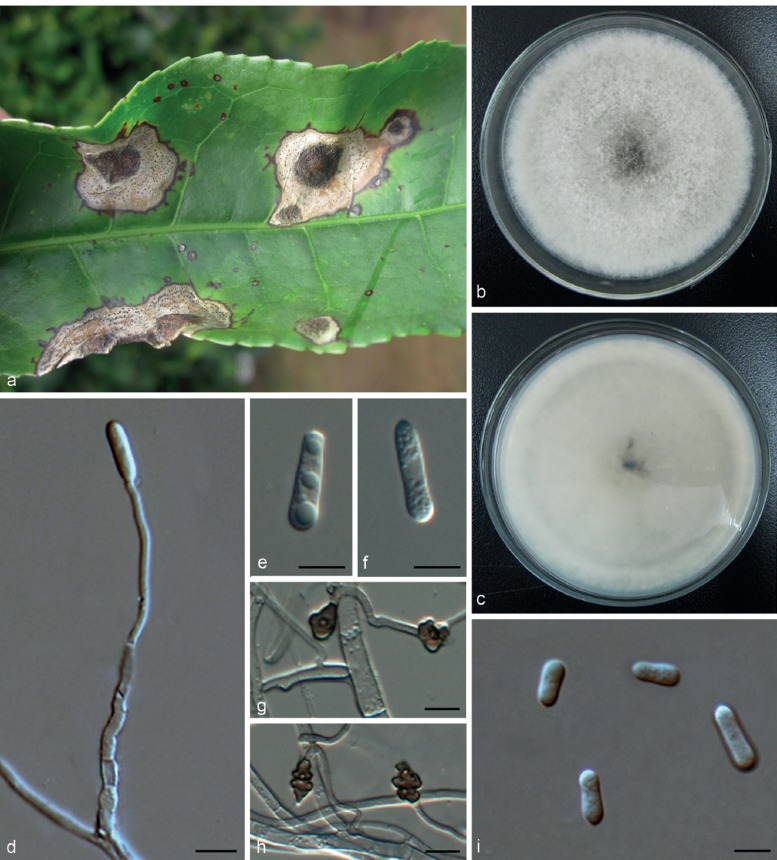
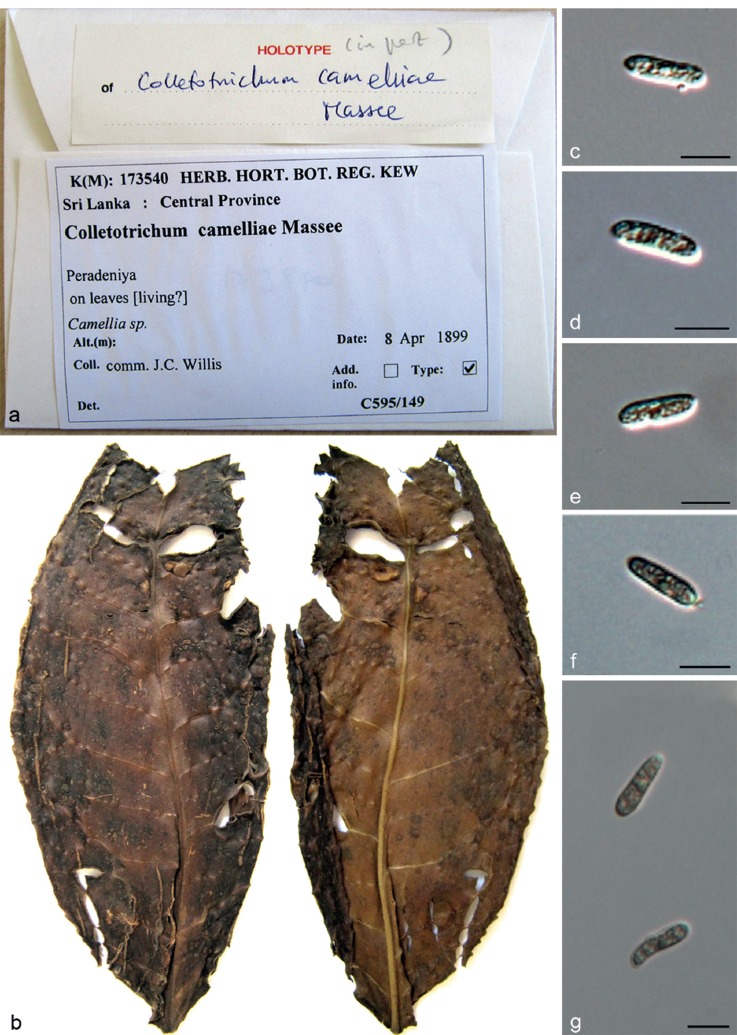
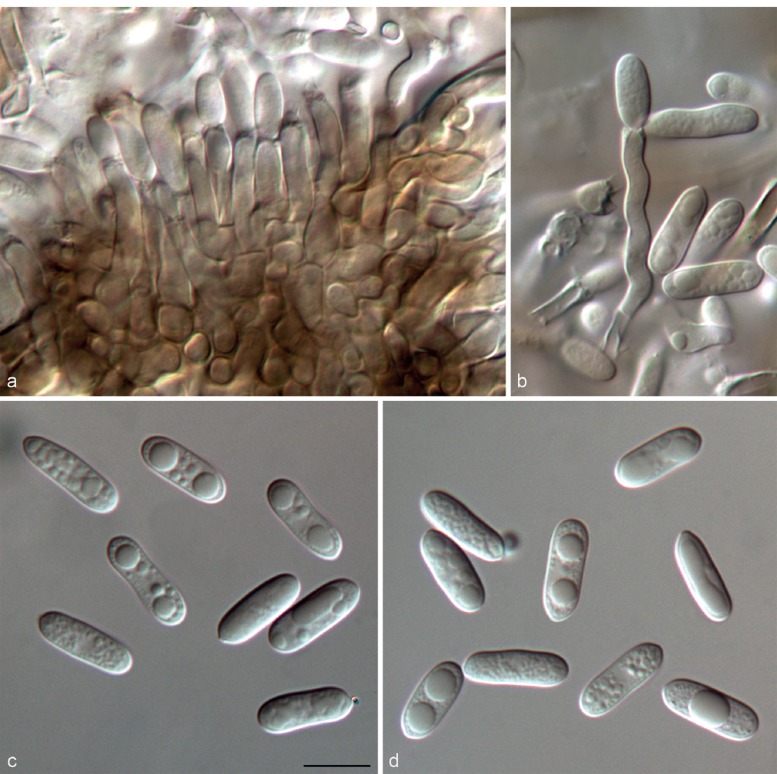
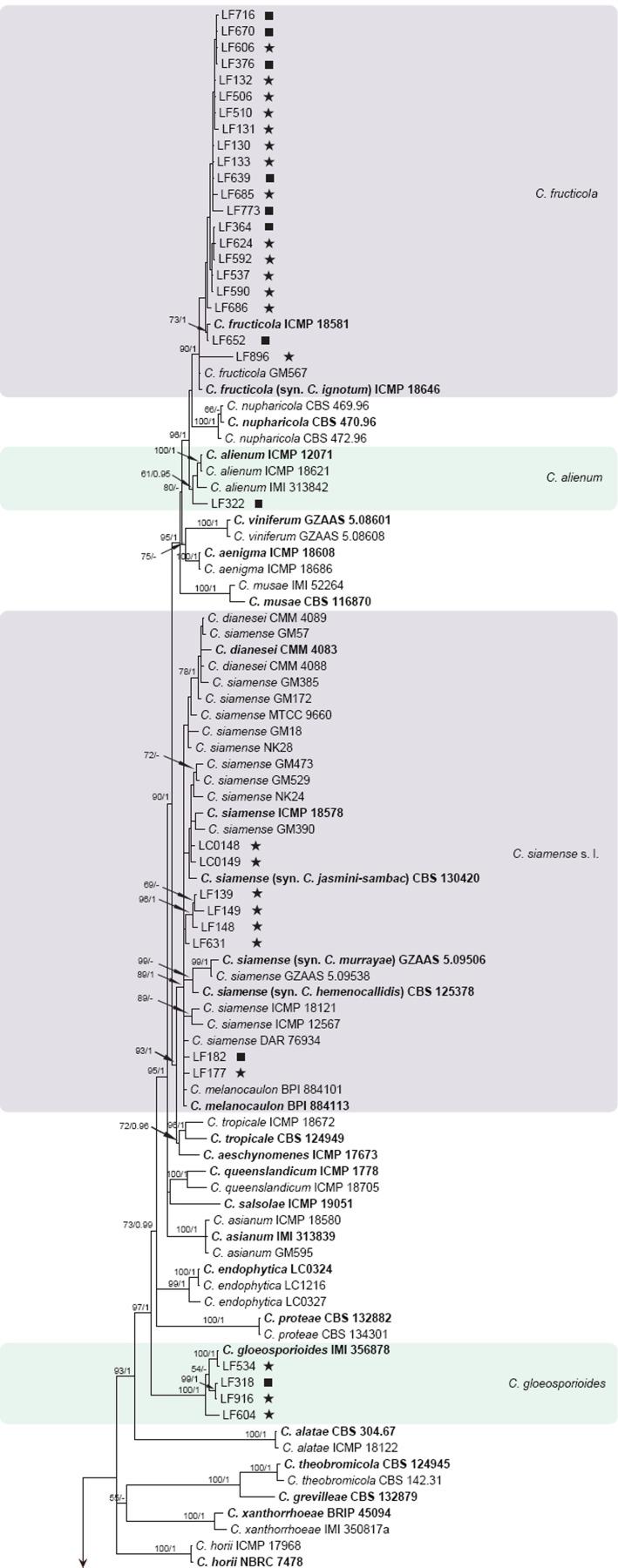
We investigated the phylogenetic diversity of 144 Colletotrichum isolates associated with symptomatic and asymptomatic tissues of Camellia sinensis and other Camellia spp. from seven provinces in China (Fujian, Guizhou, Henan, Jiangxi, Sichuan, Yunnan, Zhejiang), and seven isolates obtained from other countries, including Indonesia, UK, and the USA. Based on multi-locus (ACT, ApMat, CAL, GAPDH, GS, ITS, TUB2) phylogenetic analyses and phenotypic characters, 11 species were distinguished, including nine well-characterised species (C. alienum, C. boninense, C. camelliae, C. cliviae, C. fioriniae, C. fructicola, C. gloeosporioides, C. karstii, C. sia-mense), and two novel species (C. henanense and C. jiangxiense). Of these, C. camelliae proved to be the most dominant and probably host specific taxon occurring on Camellia. An epitype is also designated for the latter species in this study. Colletotrichum jiangxiense is shown to be phylogenetically closely related to the coffee berry pathogen C. kahawae subsp. kahawae. Pathogenicity tests and the pairwise homoplasy index test suggest that C. jiangxiense and C. kahawae subsp. kahawae are two independent species. This study represents the first report of C. alienum and C. cliviae occurring on Camellia sinensis. In addition, our study demonstrated that the combined use of the loci ApMat and GS in a phylogenetic analysis is able to resolve all currently accepted species in the C. gloeosporioides species complex.

摘要

我们调查了来自中国七个省份(福建、贵州、河南、江西、四川、云南、浙江)的与茶树及其他山茶属植物有症状和无症状组织相关的144株炭疽菌分离株的系统发育多样性,以及从其他国家(包括印度尼西亚、英国和美国)获得的7株分离株。基于多位点(ACT、ApMat、CAL、GAPDH、GS、ITS、TUB2)系统发育分析和表型特征,区分出11个物种,包括9个特征明确的物种(异种炭疽菌、骨炭疽菌、茶炭疽菌、君子兰炭疽菌、菲奥里尼炭疽菌、果生炭疽菌、盘长孢炭疽菌、喀斯特炭疽菌、暹罗炭疽菌)和2个新物种(河南炭疽菌和江西炭疽菌)。其中,茶炭疽菌被证明是山茶属植物上最主要且可能具有寄主特异性的分类群。本研究还为后一个物种指定了一个后选模式。江西炭疽菌在系统发育上与咖啡浆果病原菌卡哈瓦炭疽菌卡哈瓦亚种密切相关。致病性测试和成对同塑性指数测试表明,江西炭疽菌和卡哈瓦炭疽菌卡哈瓦亚种是两个独立的物种。本研究首次报道了异种炭疽菌和君子兰炭疽菌在茶树上的出现。此外,我们的研究表明,在系统发育分析中联合使用ApMat和GS位点能够解析盘长孢炭疽菌种复合体内所有目前公认的物种。
https://cdn.ncbi.nlm.nih.gov/pmc/blobs/86c0/4713112/16b419848576/per-35-063-g014.jpg
https://cdn.ncbi.nlm.nih.gov/pmc/blobs/86c0/4713112/dc86e34a0325/per-35-063-g001a.jpg
https://cdn.ncbi.nlm.nih.gov/pmc/blobs/86c0/4713112/291f3b583314/per-35-063-g002.jpg
https://cdn.ncbi.nlm.nih.gov/pmc/blobs/86c0/4713112/62115ef6b830/per-35-063-g003.jpg
https://cdn.ncbi.nlm.nih.gov/pmc/blobs/86c0/4713112/b646f09b215e/per-35-063-g004.jpg
https://cdn.ncbi.nlm.nih.gov/pmc/blobs/86c0/4713112/a7a1cf3be5c7/per-35-063-g005.jpg
https://cdn.ncbi.nlm.nih.gov/pmc/blobs/86c0/4713112/281a4b7e2350/per-35-063-g006.jpg
https://cdn.ncbi.nlm.nih.gov/pmc/blobs/86c0/4713112/452b657d9ff6/per-35-063-g007.jpg
https://cdn.ncbi.nlm.nih.gov/pmc/blobs/86c0/4713112/990720787fa4/per-35-063-g008.jpg
https://cdn.ncbi.nlm.nih.gov/pmc/blobs/86c0/4713112/05c42fc28cc7/per-35-063-g009.jpg
https://cdn.ncbi.nlm.nih.gov/pmc/blobs/86c0/4713112/8ce742fdf9a5/per-35-063-g010.jpg
https://cdn.ncbi.nlm.nih.gov/pmc/blobs/86c0/4713112/b17b21fddb36/per-35-063-g011.jpg
https://cdn.ncbi.nlm.nih.gov/pmc/blobs/86c0/4713112/75531f8443ef/per-35-063-g012.jpg
https://cdn.ncbi.nlm.nih.gov/pmc/blobs/86c0/4713112/7d95f16f0d3b/per-35-063-g013.jpg
https://cdn.ncbi.nlm.nih.gov/pmc/blobs/86c0/4713112/16b419848576/per-35-063-g014.jpg
https://cdn.ncbi.nlm.nih.gov/pmc/blobs/86c0/4713112/dc86e34a0325/per-35-063-g001a.jpg
https://cdn.ncbi.nlm.nih.gov/pmc/blobs/86c0/4713112/291f3b583314/per-35-063-g002.jpg
https://cdn.ncbi.nlm.nih.gov/pmc/blobs/86c0/4713112/62115ef6b830/per-35-063-g003.jpg
https://cdn.ncbi.nlm.nih.gov/pmc/blobs/86c0/4713112/b646f09b215e/per-35-063-g004.jpg
https://cdn.ncbi.nlm.nih.gov/pmc/blobs/86c0/4713112/a7a1cf3be5c7/per-35-063-g005.jpg
https://cdn.ncbi.nlm.nih.gov/pmc/blobs/86c0/4713112/281a4b7e2350/per-35-063-g006.jpg
https://cdn.ncbi.nlm.nih.gov/pmc/blobs/86c0/4713112/452b657d9ff6/per-35-063-g007.jpg
https://cdn.ncbi.nlm.nih.gov/pmc/blobs/86c0/4713112/990720787fa4/per-35-063-g008.jpg
https://cdn.ncbi.nlm.nih.gov/pmc/blobs/86c0/4713112/05c42fc28cc7/per-35-063-g009.jpg
https://cdn.ncbi.nlm.nih.gov/pmc/blobs/86c0/4713112/8ce742fdf9a5/per-35-063-g010.jpg
https://cdn.ncbi.nlm.nih.gov/pmc/blobs/86c0/4713112/b17b21fddb36/per-35-063-g011.jpg
https://cdn.ncbi.nlm.nih.gov/pmc/blobs/86c0/4713112/75531f8443ef/per-35-063-g012.jpg
https://cdn.ncbi.nlm.nih.gov/pmc/blobs/86c0/4713112/7d95f16f0d3b/per-35-063-g013.jpg
https://cdn.ncbi.nlm.nih.gov/pmc/blobs/86c0/4713112/16b419848576/per-35-063-g014.jpg