
风险管理和预防致命性异物吸入的建议:4 例 1.5 至 3 岁儿童病例及文献复习。
Risk Management and Recommendations for the Prevention of Fatal Foreign Body Aspiration: Four Cases Aged 1.5 to 3 Years and Mini-Review of the Literature.
机构信息
Department of Medical, Surgical and Advanced Technologies G.F. Ingrassia, University of Catania, Via S. Sofia 87 Edificio B, 95123 Catania, Italy.
Department of Experimental Medicine, University of Campania "Luigi Vanvitelli", Via Luciano Armanni 5, 80138 Naples, Italy.
出版信息
Int J Environ Res Public Health. 2020 Jun 30;17(13):4700. doi: 10.3390/ijerph17134700.
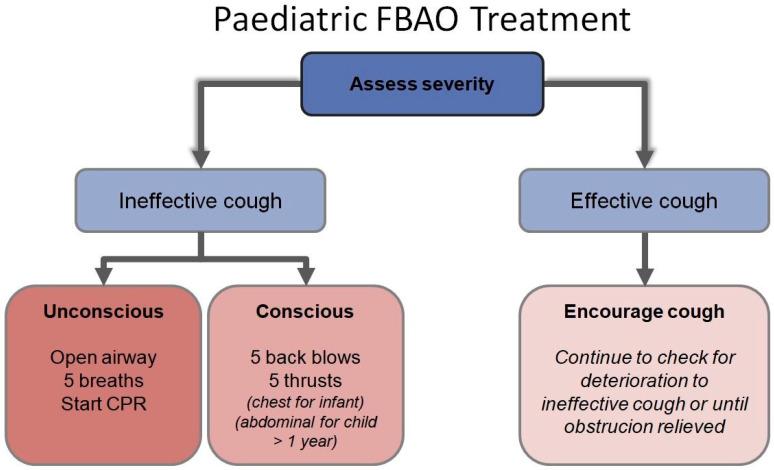
(1) Background: Foreign body aspiration (FBA) is a significant public health concern among the pediatric population, and fatalities are dramatic for families. It typically involves organic foreign bodies (mainly food) aspirated by children under three years old, usually at home or school. This review aimed to focus on the preventive measures around four actual cases of fatal foreign body aspiration, emphasizing the correct execution of the Heimlich maneuver and cardiopulmonary resuscitation, supervised mealtimes, and high-risk foods. (2) Methods: Four fatal cases of foreign body aspiration in children are presented here. The children were in a free environment, such as school, home, and the countryside, and were in the presence of teachers, parents, and a grandmother who did not supervise the children adequately. A literature review was performed via the MEDLINE database using the key terms: "foreign body aspiration," "infant choking, 1.5 to 3 years," "food and foreign body aspiration," "common household," "prevention of foreign body aspiration," "guidelines," "recommendations," "training of caregivers (parents, educators)," "resuscitation," "Heimlich maneuver," and "disengagement of the upper airways." We focused on the prevention of foreign body aspiration. (3) Results: a complete postmortem examination was performed. In three cases, the foreign bodies were food (mozzarella cheese, pear, or raw bean), while in one case, the foreign body was a pebble. (4) Conclusions: This review aimed to discuss recent scientific literature and provide a perspective on the benefits of a dedicated approach to the management of fatal foreign body aspiration in children by caregivers who usually have no experience with the best ways of supervising children in a safe environment, especially regarding the correct execution of resuscitation maneuvers, such as the Heimlich maneuver. Recommendation updates could improve healthcare quality in a pediatric setting and reduce medico-legal implications.
(1) 背景:异物吸入(FBA)是儿科人群中一个重大的公共卫生问题,对家庭来说是灾难性的。它通常涉及 3 岁以下儿童吸入的有机异物(主要是食物),通常发生在家庭或学校。本综述旨在关注四起致命异物吸入的预防措施,强调正确执行海姆利希手法和心肺复苏术、监督用餐时间和高危食物。
(2) 方法:介绍了四起儿童异物吸入的致命病例。这些孩子处于自由环境中,如学校、家庭和农村,在场的有教师、家长和祖母,但他们没有充分监督孩子。通过 MEDLINE 数据库使用关键词进行文献回顾:“异物吸入”、“婴儿窒息,1.5 至 3 岁”、“食物和异物吸入”、“常见家庭”、“异物吸入预防”、“指南”、“建议”、“照料者(父母、教育者)培训”、“复苏”、“海姆利希手法”和“上呼吸道解脱”。我们专注于预防异物吸入。
(3) 结果:进行了全面的尸检。在三例中,异物为食物(马苏里拉奶酪、梨或生豆),而在一例中,异物为卵石。
(4) 结论:本综述旨在讨论最新的科学文献,并提供一个视角,了解照料者对儿童致命异物吸入管理的专门方法的益处,这些照料者通常没有在安全环境中监督儿童的最佳方法方面的经验,特别是在正确执行复苏手法(如海姆利希手法)方面。建议的更新可以提高儿科环境中的医疗质量,并减少医疗法律纠纷。
 Zotero 插件